


Brass Lined Planter Stand
These brass lined planter stand pieces combine rich timber frames with protective metal interiors, built to display indoor greenery or chill bottles with elegance.
Brass Lined Planter Stand
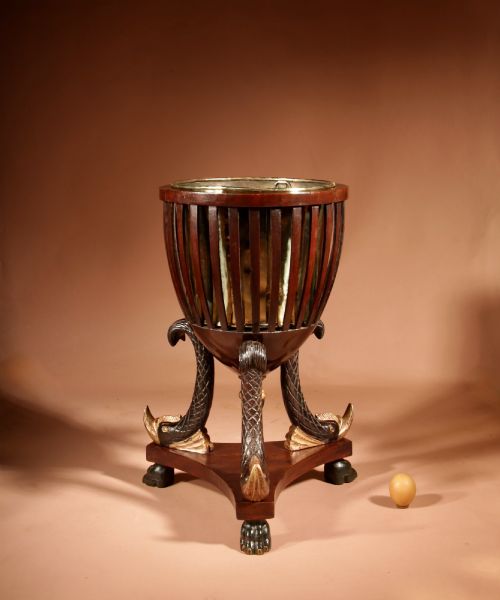
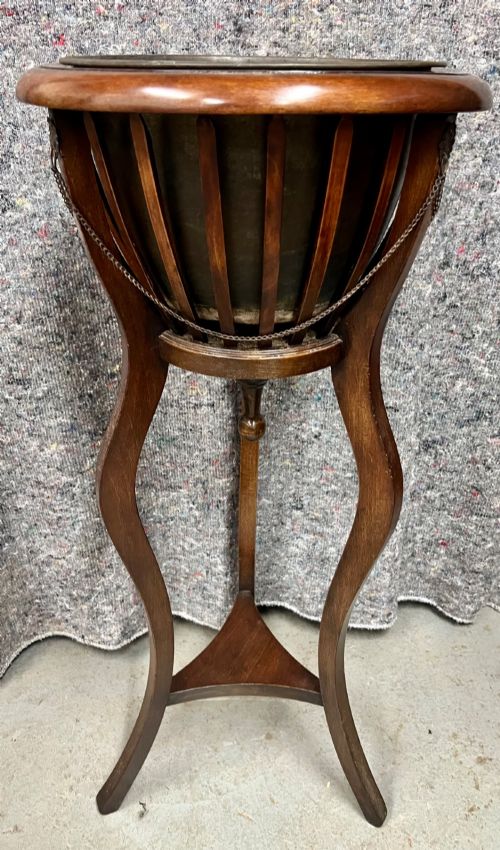
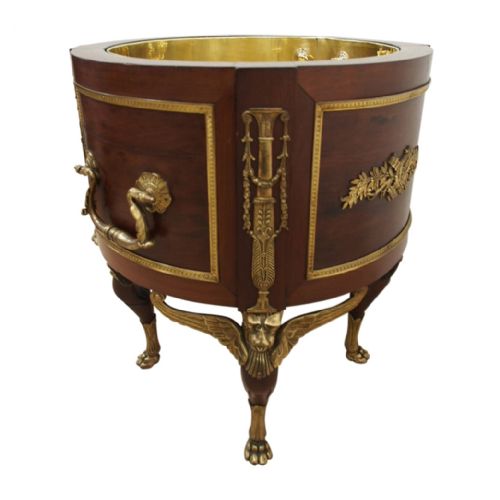
When you search for a brass lined planter stand, you are looking at sophisticated display vessels that bridge botanical decoration and formal interior hosting. The listings on this page span Georgian, Regency, Victorian, and Edwardian periods, showcasing both English and continental European cabinet-making.
You will encounter forms that double as wine coolers, cellarettes, or tea stoves alongside dedicated jardinieres and plant stands. Mahogany, walnut, satinwood, and ebonised wood provide the structural timber frames for these versatile domestic furnishings.
The most frequent examples blend classical revival styles with functional metal liners made from brass or zinc. These pieces bring architectural presence to a room while safely holding potted plants or ice for entertaining.
Materials and construction
Cabinet makers built these stands using dense hardwoods such as mahogany, walnut, and satinwood, frequently employing rosewood and box tree in decorative marquetry details. Ormolu mounts and brass hardware added striking metallic contrast to the warm timber surfaces.
Design influences span Georgian, Regency, Edwardian, and French Louis XV styles, encompassing both English cabinet work and Dutch marquetry.
Judging quality and execution
Quality rests in the precision of the timber selection, the crispness of any marquetry inlay, and the integration of the metal liner. Superior examples feature carefully matched grain patterns across curved staves or panelled sides.
The refinement of the cast or chased ormolu mounts and the thickness of the brass lining distinguish high workshop production from simpler domestic items. Balance and proportion in the leg supports or floor stands complete the assessment.
The Brass Lined Planter Stand Glossary
- Jardiniere
- An ornamental pot or stand designed to hold growing plants indoors. They often feature protective metal inserts to catch drainage water.
- Cellarette
- A lockable container used for storing wine bottles in a dining room. Many double functionally as planters or coolers in later periods.
- Marquetry
- Decorative veneer patterns applied to furniture using thin pieces of wood and other materials. It creates elaborate pictorial or geometric surface designs.
- Ormolu
- Gilded bronze applications used as decorative mounts on fine furniture. The technique was widely favoured in French Empire and Regency design.
- Staves
- The narrow vertical strips of wood joined together to form the curved body of a bucket-style planter. They require tight joinery to remain stable.
Brass Lined Planter Stand: Frequently Asked Questions
What is a brass lined planter stand?
A brass lined planter stand is a decorative wooden vessel equipped with a protective metal interior designed for holding plants or chilling wine. These pieces function as both practical waterproof containers and refined decorative furniture.
They appear across Georgian, Regency, Victorian, and Edwardian periods in forms ranging from bucket shapes on legs to elaborate inlaid stands.
Were these used for plants or wine?
Historical examples served dual purposes depending on the household needs of the period. Many were manufactured specifically as wine coolers or cellarettes to hold bottles in ice during dining.
Others served strictly as jardinieres to display potted palms and ferns within formal reception rooms. The waterproof metal lining accommodated both wet soil and melting ice equally well.
How do I care for the wooden exterior?
Protect the timber by ensuring potted plants sit in saucers inside the metal liner rather than pouring water directly onto the brass base. Regular dusting and occasional application of appropriate furniture wax maintain the finish.
Keep the stands away from direct heat sources and extreme humidity fluctuations to prevent timber movement.
How do I identify a Regency period stand?
Regency stands often display clean classical proportions, dark mahogany or rosewood timbers, and restrained use of brass or ormolu mounts. They frequently echo ancient Greek or Roman vessel forms.
Craftsmanship from this era c.1810 to 1820 prioritises architectural symmetry and refined structural lines over heavy carving.