

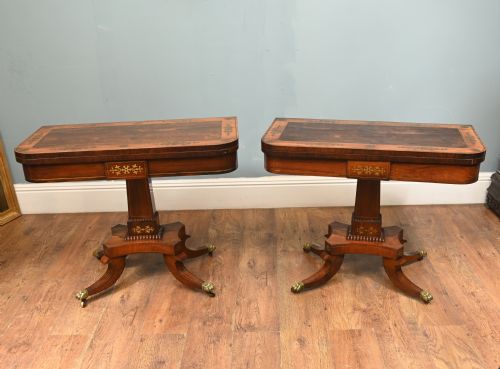


Brass Inlay Games Table
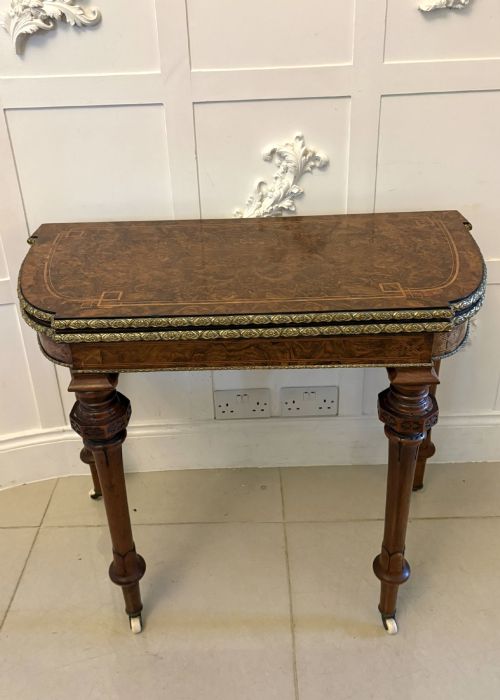
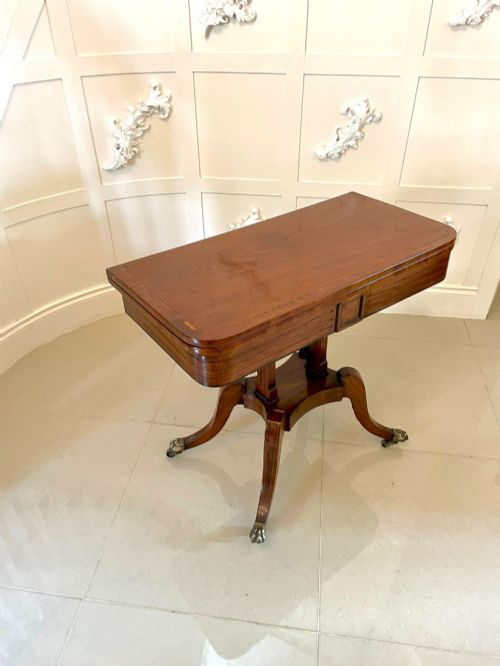
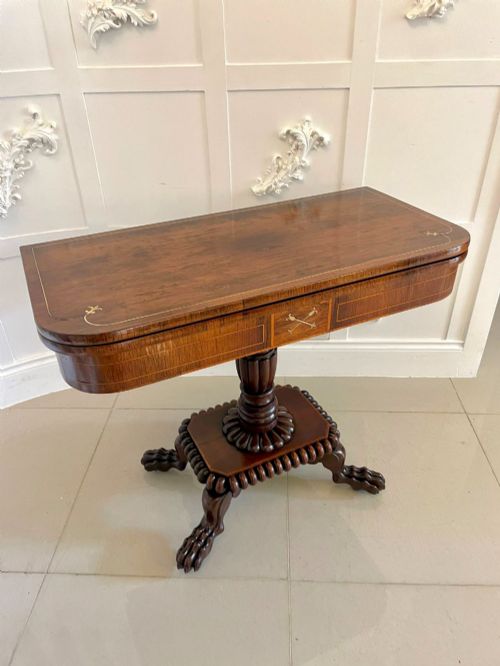
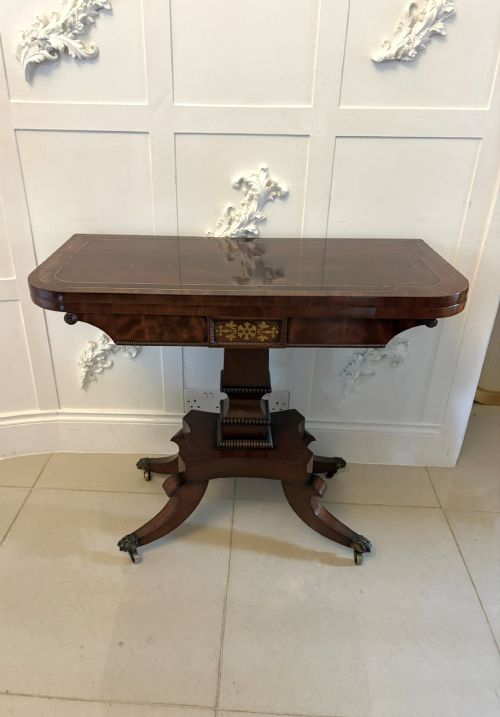
A brass inlay games table brings together precision metalwork and rich timbers like rosewood and mahogany for social evenings.
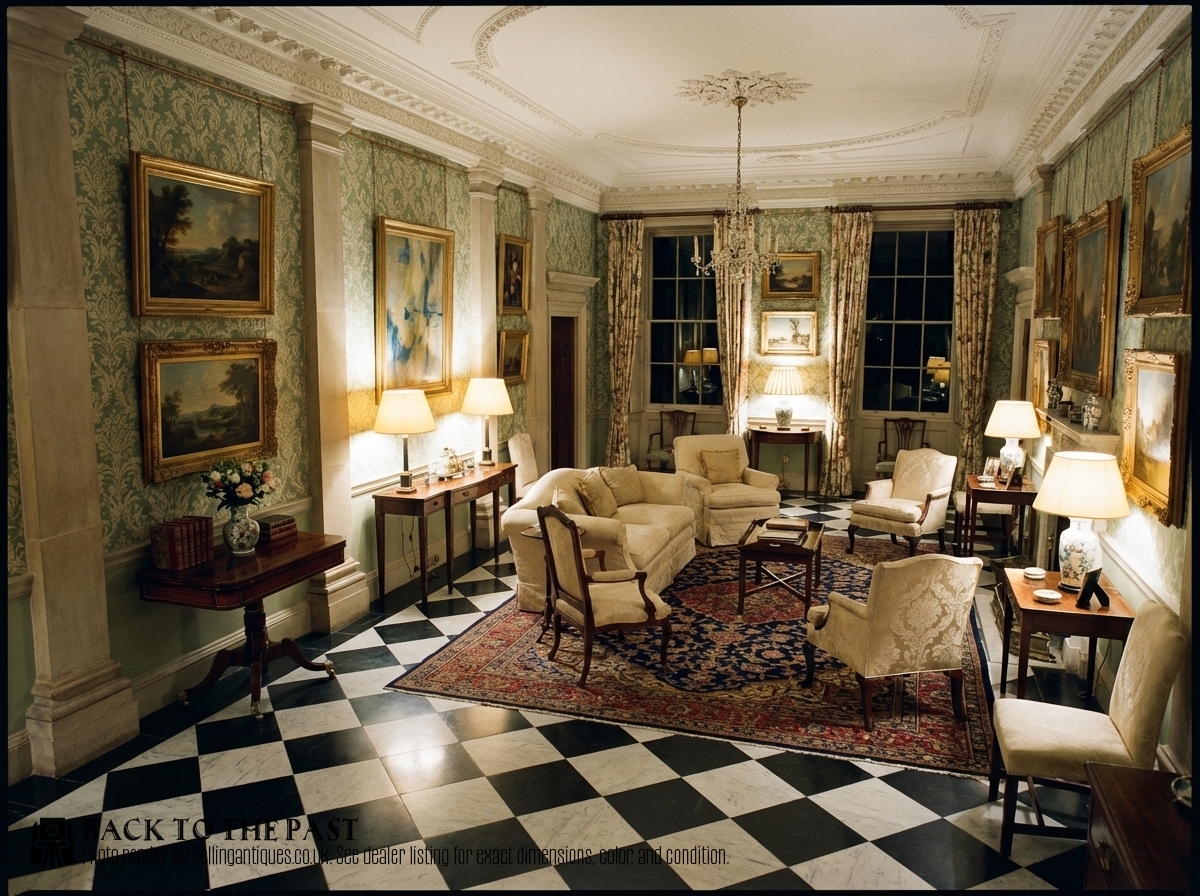
Brass Inlay Games Table
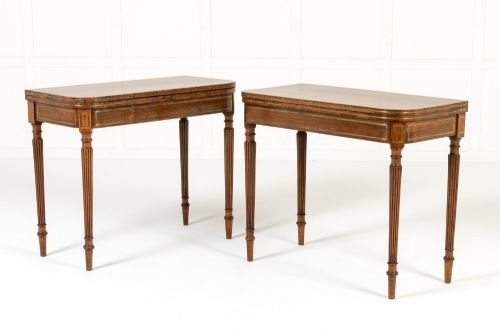
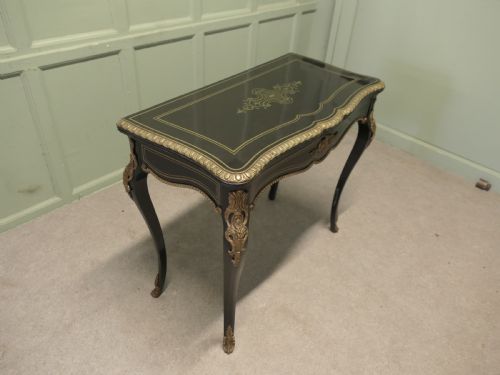
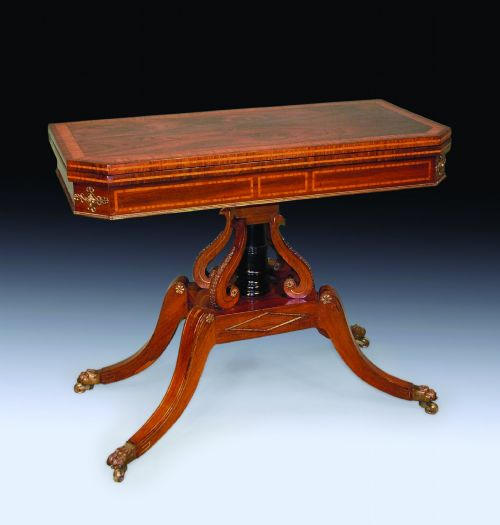
A brass inlay games table combines a fold-over or pivoting top designed for cards and board pursuits with disciplined cabinetmaking from the Georgian, Regency, and Victorian eras. You will encounter many examples in rich tropical timbers, alongside French Louis XV style and Napoleon III pieces featuring intricate marquetry.
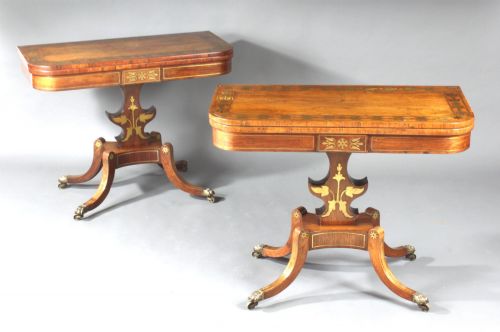
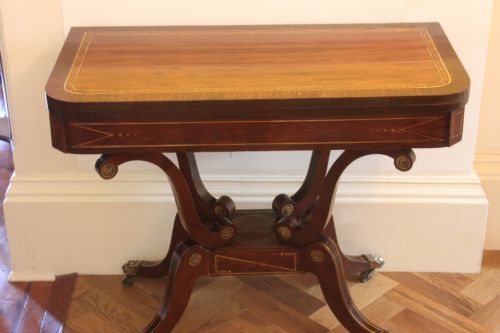
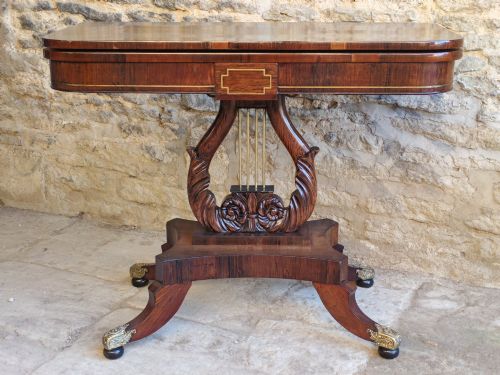
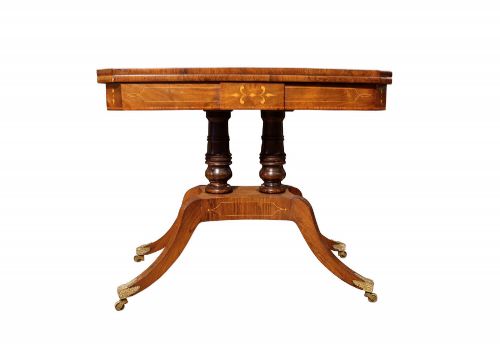
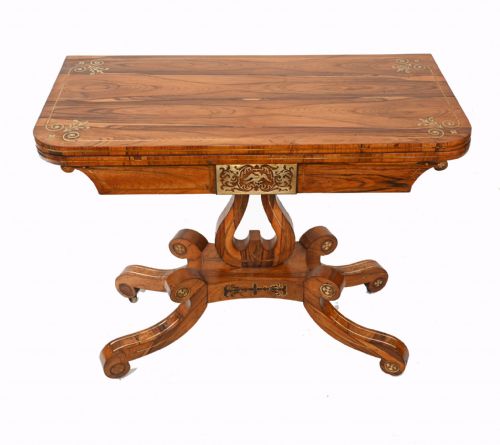
The standard format is a console or side table that transforms into a fully surfaced card table via a hinged leaf supported by a rotating or swing-action mechanism. Occasional pieces include pedestal bases with scroll supports, lyre frames, and compartments intended for sewing or writing.
Origins span English workshops of the early nineteenth century and continental ateliers producing ebonised or Ormolu-mounted designs. Makers such as George Bullock and retailers like Edwards and Roberts appear among the finer examples recorded.
Materials and technique
Cabinetmakers channelled solid timber grounds, predominantly rosewood and mahogany, and faced them with carefully selected veneers to create stable working surfaces. Boxwood, satinwood, and ebony provide contrasting border lines and geometric details.
Brass stringing and marquetry are routed directly into the timber surface and secured with animal glue, often complemented by cast brass sabots, castors, and Ormolu mounts. Fold-over tops rely on precision knuckle hinges and internal pivot actions to maintain alignment.
Brass Inlay Games Table Retail Price Guide 2026
Typical asking prices for brass inlay games table among the pieces listed under this phrase on Sellingantiques today, from the lower quarter to the upper quarter. They describe what is for sale here now, not the wider market.
Listings feature rosewood, mahogany, and satinwood applied alongside brass inlay across Regency and Victorian periods.
Design and execution
The standard of a brass inlay games table depends on the crispness of the metalwork and the depth of figure in the surrounding timber veneer. Superior pieces maintain tight joins where brass meets wood, showing minimal shrinkage or lifting along intricate curves.
Underframe construction dictates stability, particularly in pedestal and lyre forms where weight-bearing joints must withstand regular pivoting and folding. Secondary woods and interior compartments reveal whether a piece received meticulous attention during assembly.
George Bullock·Maison Millet·Edwards and Roberts·George Oakley
The Brass Inlay Games Table Glossary
- Brass stringing
- Thin strips of brass inlaid into channels cut into the timber surface to form geometric borders and lines. This technique defines the crisp linear decoration of Regency pieces.
- Fold-over top
- A hinged wooden surface that doubles in size when opened for play, resting on a swivel or swing leg mechanism. It conceals a baize-lined interior compartment.
- Ormolu
- Gilt bronze mounts cast and chased to embellish the corners, legs, and aprons of French-inspired tables. The finish provides metallic contrast against dark woods like walnut and ebonised timber.
- Sabot
- A metal sleeve fitted to the foot of a table leg to protect the timber from wear and moisture. They appear in brass or gilt finishes on pedestal and pillar bases.
- Boulle marquetry
- An elaborate technique employing cut-out brass and tortoiseshell or horn arranged in contrasting positive and negative patterns. It is characteristic of nineteenth-century French revival tables.
Brass Inlay Games Table: Frequently Asked Questions
How do I use a fold-over games table?
The top leaf swivels ninety degrees on its base and folds outward to rest upon the frame or a pull-out support arm, revealing a felt or baize playing surface.
When closed, the table functions as a slim console or side piece against a wall.
What woods were used for these tables?
Makers relied on dense hardwoods including rosewood and mahogany for the primary structure and visible veneer surfaces. Satinwood, boxwood, and ebony supplied contrasting tones for inlay work.
Ebonised wood and walnut also appear in nineteenth-century French and Victorian interpretations.
How do I date a Regency games table?
Regency pieces typically date between eighteen hundred and eighteen thirty, identifiable through architectural pedestal bases, brass stringing, and scroll supports.
Proportions remain classical, often echoing Egyptian, Greek, or Roman design motifs popular during the period.
Can I use these tables for daily dining?
These tables are designed for cards, board games, or decorative display rather than heavy family dining. The internal hinges and pivot mechanisms require careful handling when opening the leaf.
Treat the polished timber surfaces with the same care applied to any antique cabinet furniture.