




French Inlay Card Table
A french inlay card table brings the drama of the nineteenth-century salon into a modern room with its folding top and intricate marquetry.
French Inlay Card Table
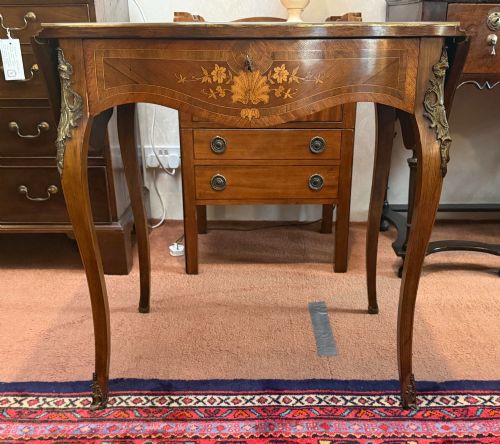
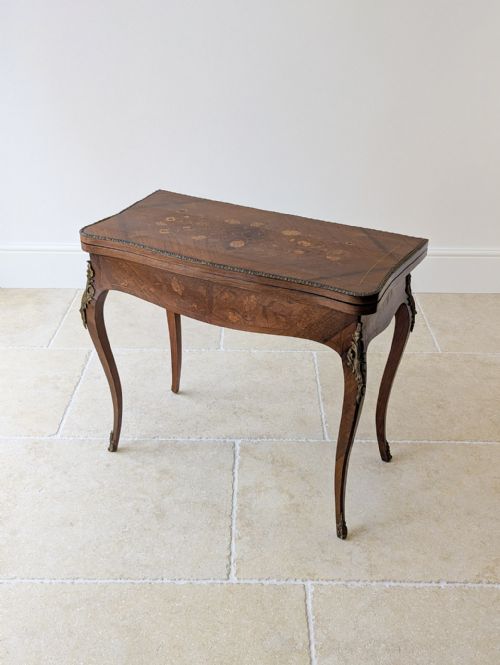
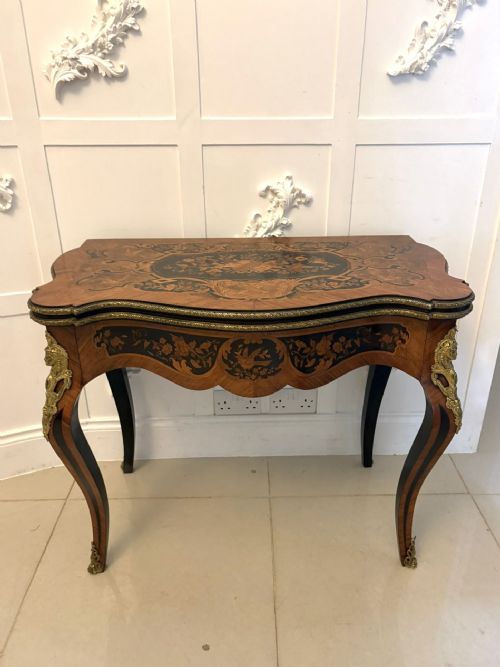
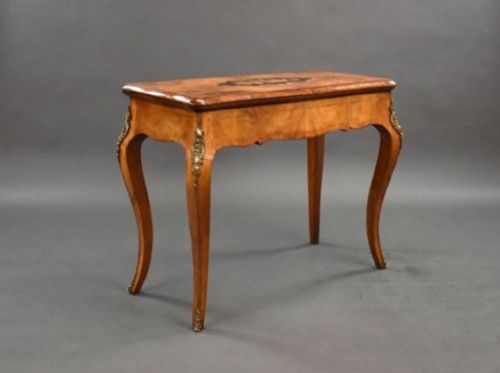
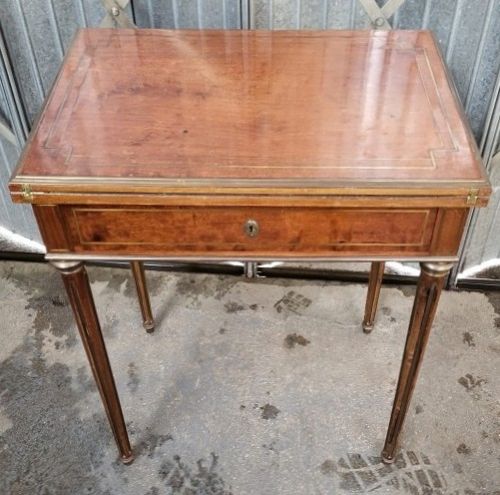
A french inlay card table functions primarily as a games table, appearing frequently across the nineteenth century in Victorian and Napoleon III iterations. These pieces often arrive in Louis XV style, Louis XVI style, or French Rococo Revival forms, shifting effortlessly from a compact console or side table to a surface ready for play.
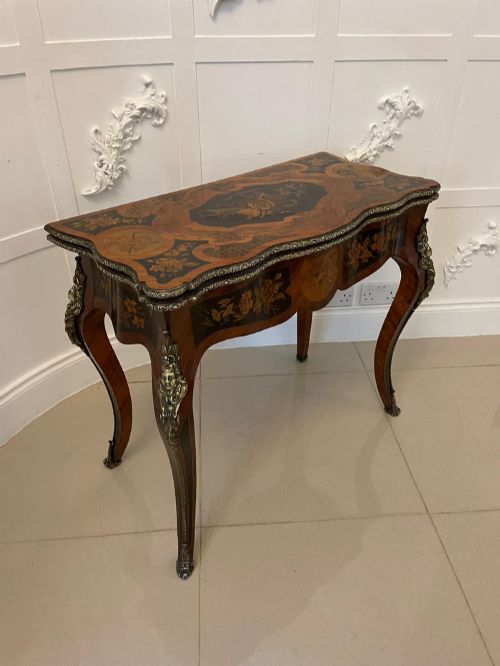
The evidence shows forms ranging from standard card tables to metamorphic side tables and centre tables. Makers often utilised walnut, burr walnut, and kingwood as foundations for elaborate wood inlay, marquetry, and parquetry.
Materials and construction
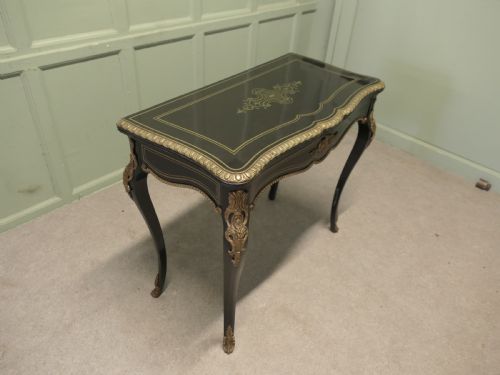
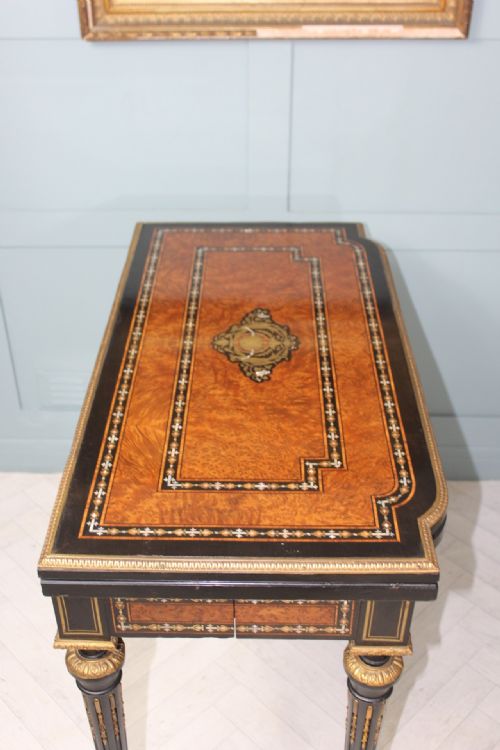
Cabinet makers constructed these pieces using dense woods such as walnut, ebonised wood, and kingwood, embellished with intricate marquetry and parquetry wood inlay. Exotic woods supplied contrasting tones for floral and geometric patterns across the fold-over tops.
Gilded bronze ormolu mounts typically frame the edges, shoulders, and legs, adding structural definition to the curving contours. Certain examples incorporate brass and mother-of-pearl detail into ebonised surfaces for heightened visual contrast.
Listings feature pieces spanning the eighteenth century through to the Victorian era, dominated by walnut, kingwood, and intricate marquetry inlay.
What separates the grades
Quality rests in the crispness of the brass ormolu mounts and the precision of the wood inlay. Superior examples display seamless joins in the marquetry where multiple exotic timbers meet without gaps.
The engineering of the fold-over mechanism also distinguishes standard production from exhibition pieces. Finer tables maintain absolute rigidity and alignment when opened, with uniform polish across both interior and exterior surfaces.
Maison Millet·Edwards and Roberts·Henry Dasson
The French Inlay Card Table Glossary
- Marquetry inlay
- Decorative patterns formed by fitting small pieces of veneer into a prepared wooden surface. This technique creates pictorial or floral designs using various coloured timbers.
- Ormolu
- Gilded bronze mounts applied to furniture edges and corners for ornamentation and protection. The technique involves treating brass or bronze with an amalgam of mercury and gold.
- Parquetry
- Geometric wood inlay arranged in repetitive patterns such as cubes or chequers. It differs from marquetry through its strict reliance on straight-lined symmetry.
- Metamorphic table
- Furniture designed to transform its shape or function through folding or sliding mechanisms. These pieces shift between console tables and full-sized gaming surfaces.
- Boulle
- A style of marquetry using tortoiseshell and brass inlaid in contrasting counterparts. This decorative method honours the French cabinet maker André-Charles Boulle.
French Inlay Card Table: Frequently Asked Questions
How do these card tables work?
The top folds or swivels open to reveal a baize-lined playing surface, often supported by a swing leg or a pivoting frieze drawer. When closed, the piece sits flush against a wall as a console or side table.
This clever dual functionality allowed nineteenth-century households to save space while maintaining formal entertaining standards in the drawing room.
Where should I place one?
These tables suit hallways, drawing rooms, or living spaces where the decorative top can be appreciated in its closed position. Placing them against a flat wall highlights the contour of the ormolu mounts and the detail of the marquetry.
Opening the top requires adequate clearance around the piece, so positioning them away from heavy foot traffic preserves both the table and its surroundings.
How do I spot a later style?
Look to the combination of woods, the execution of the brass and mother-of-pearl details, and the specific revival motifs used across the frame. Pieces associated with Napoleon III or Victorian periods often blend Louis XV curves with ebonised finishes.
Examining the underside and the mechanics of the hinges provides further clues regarding the era of manufacture and workshop practices.
What maintenance do they need?
Keep these pieces away from direct sunlight and extreme temperature fluctuations to prevent the delicate veneer and wood inlay from lifting. Gentle dusting with a dry, soft cloth maintains the polished finish without harming the timber.
Avoid liquid cleaners on the ormolu mounts or the polished wood surfaces to preserve the original patina and prevent moisture damage to the antique glue.