
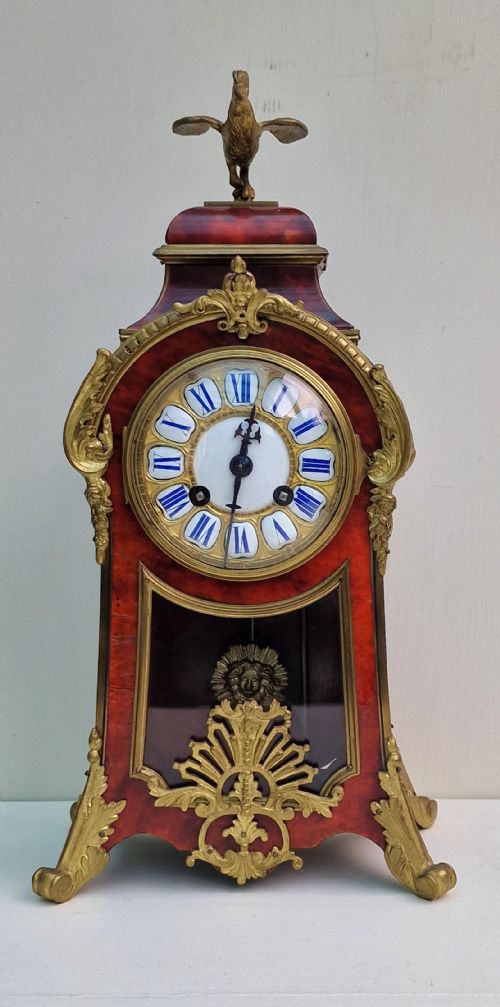


Louis XV Boulle Table
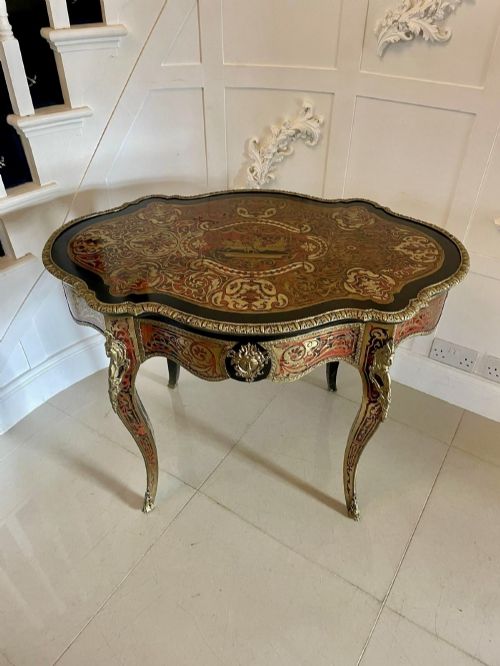
A louis xv boulle table brings nineteenth-century French splendour into a room through elaborate tortoiseshell, brass marquetry and polished ormolu mounts.
Louis XV Boulle Table
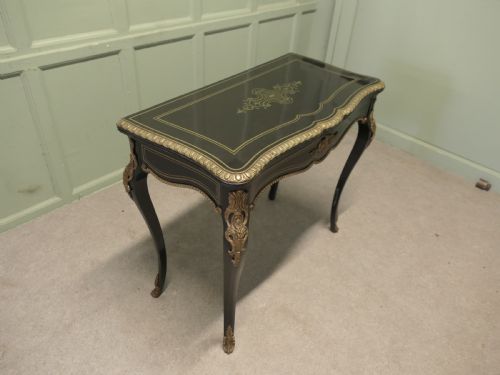
A louis xv boulle table combines serpentine forms and cabriole legs with intricate tortoiseshell and brass inlay developed during earlier French reigns but revived extensively in the nineteenth century. These pieces appear in several distinct functional forms across the selection, most notably centre tables, games tables, card tables, and writing desks.
Most examples found here date from the nineteenth century, particularly the Victorian era and the Napoleon III period, when French revival cabinet-making reached a commercial peak. Makers adopted eighteenth-century aesthetics, applying elaborate marquetry to ebonised wood surfaces supported by chased gilt-bronze or ormolu mounts.
Buyers encounter occasional variations such as green-tinted tortoiseshell veneer or faux tortoiseshell finishes alongside the traditional red and dark brown grounds. The underlying carcases range from simple side tables to complex folding card and games tables designed for nineteenth-century salons.
Materials and Construction Techniques
The characteristic surface pattern relies on brass and tortoiseshell cut together in matching positive and negative designs known as first-part and contre-partie. Craftsmen laid these delicate inlays into ebonised wood or ebony carcases, securing the thin sheets with animal glue and tiny pins.
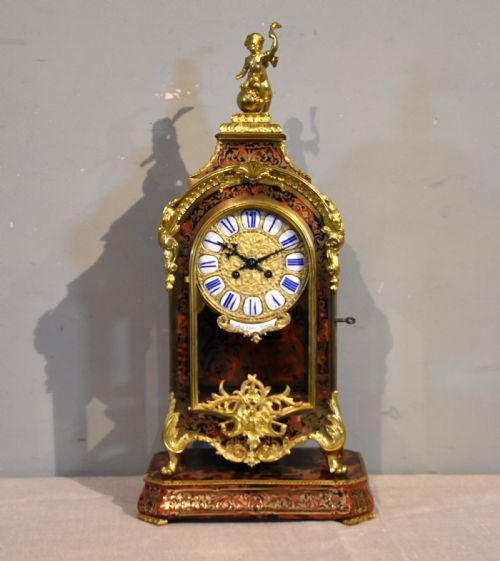
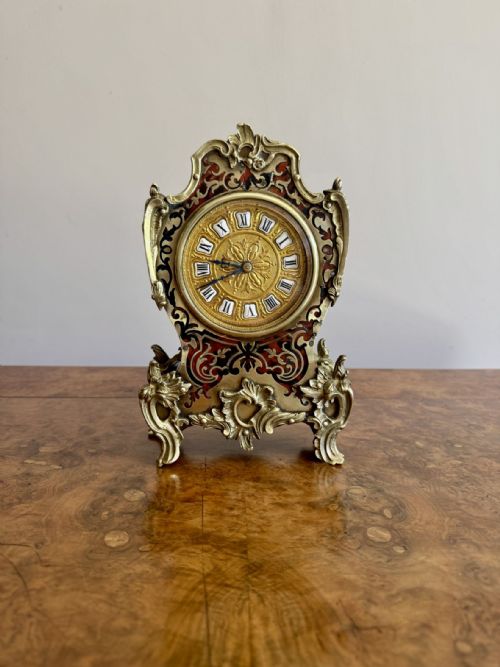
Cast ormolu and gilt-bronze mounts reinforce the vulnerable corners, edges, and legs of each louis xv boulle table, shaped in curving rococo revival motifs. Glass occasionally protects delicate dials on associated clockwork items, but the primary tables depend entirely on the contrast between polished metal, dark wood, and translucent shell.
Maison Millet and Edwards & Roberts represent the documented makers appearing among these nineteenth-century antiques.
Evaluating Quality and Craftsmanship
The finesse of the brass engraving dictates the visual sharpness of the tabletop or frieze, separating mechanical production from superior workshop output. Deeply chased ormolu mounts with crisp detailing demonstrate greater labour investment than flat, cast bronze replacements.
The alignment of the tortoiseshell veneer and the tightness of the brass joints reveal the skill of the original cabinet-maker. Superior tables maintain flush, stable surfaces where disparate materials meet, whereas lesser examples show wider gaps filled with early adhesives.
Maison Millet·Edwards & Roberts
The Louis XV Boulle Table Glossary
- Boulle
- A marquetry technique using brass and tortoiseshell inlay named after André-Charles Boulle, court cabinet-maker to Louis XIV. Nineteenth-century makers revived this method extensively for tables and clocks.
- Ormolu
- Gilded bronze mounts applied to furniture and clock cases for decorative accent. The term derives from the French for ground gold.
- Ebonised
- Wood treated to imitate ebony, commonly used as a dark background for brass and tortoiseshell inlay. It provides high visual contrast.
- Bureau Plat
- A flat-topped freestanding writing desk, frequently ornamented with gilt-bronze mounts and leather writing surfaces. These often incorporate louis xv styling.
- Marquetry
- Decorative patterns formed by inserting pieces of wood, shell, or metal into a veneered surface. Each element fits flush into the prepared carcase.
Louis XV Boulle Table: Frequently Asked Questions
What is a louis xv boulle table?
A nineteenth-century French table decorated with brass and tortoiseshell marquetry in the curving rococo style of the mid-eighteenth century.
These pieces use dark ebonised wood frames adorned with gilt-bronze mounts and cabriole legs.
How do I care for tortoiseshell?
Keep tortoiseshell surfaces away from direct sunlight and excessive heat to prevent warping or cracking of the delicate material.
Dust gently with a dry, soft cloth and avoid chemical polishes that can degrade the adhesive beneath the brass.
Are these tables original eighteenth-century pieces?
Almost all tables of this type date from the nineteenth century, specifically the Victorian and Napoleon III periods.
Craftsmen revived Louis XV designs during this era, producing high-quality interpretation pieces rather than original royal commissions.
What is the difference between games and centre tables?
Centre tables are designed to stand freely in a room as decorative display surfaces with fixed tops.
Games and card tables feature folding or rotating tops that open to reveal baize-lined playing surfaces for nineteenth-century parlour entertainment.