

Brass Games Table
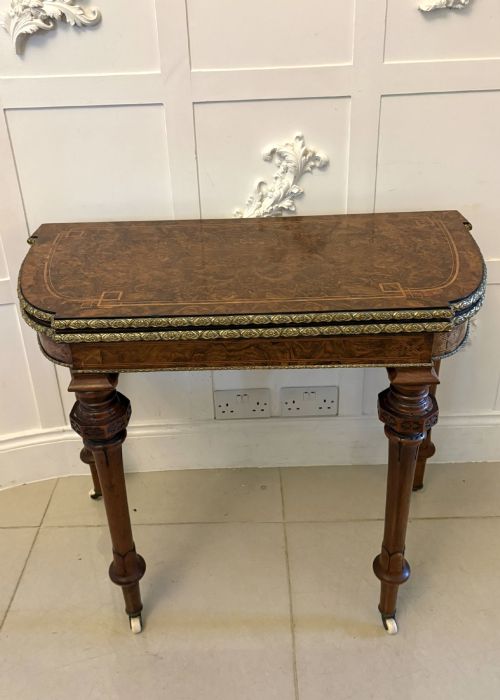
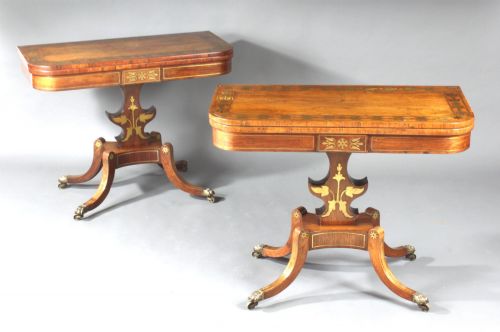
A brass games table is a fold-over card or parlour table adorned with metallic inlay, offering period elegance for modern living spaces.
Brass Games Table
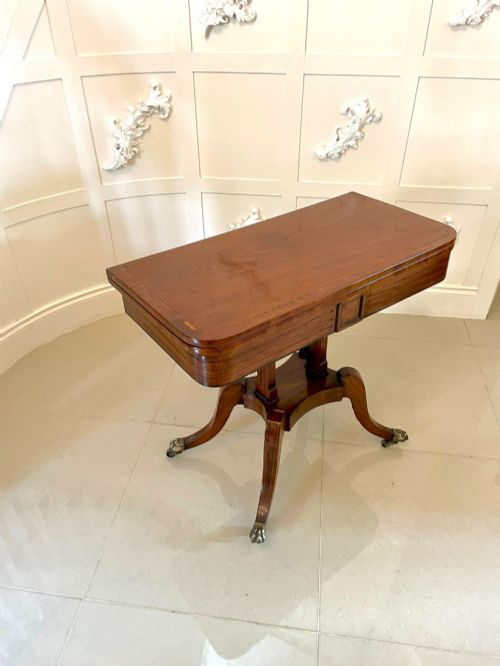
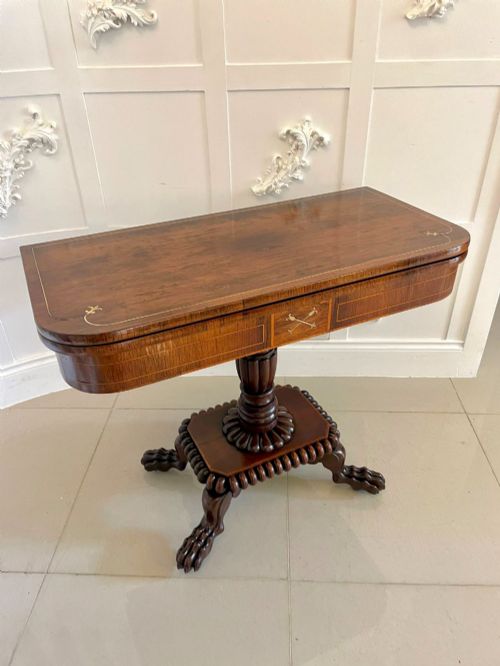
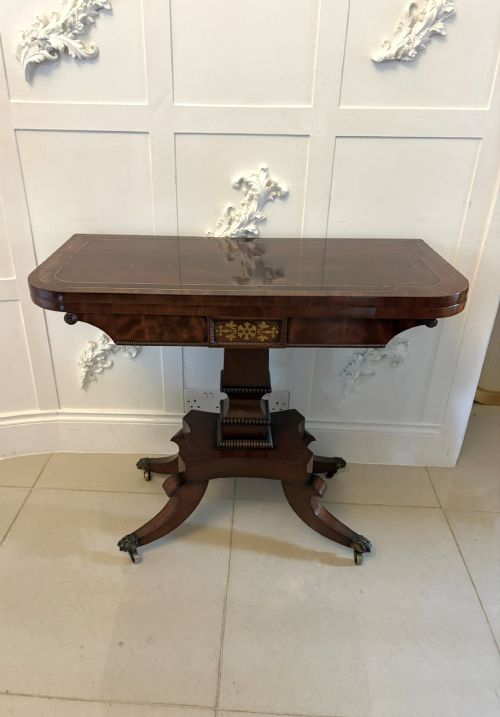
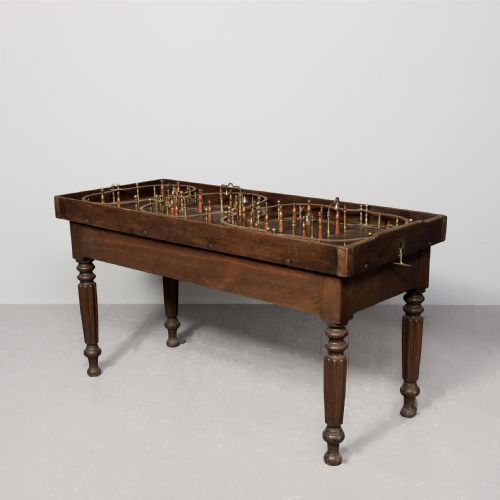
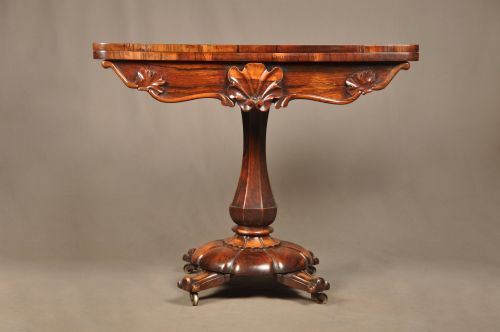
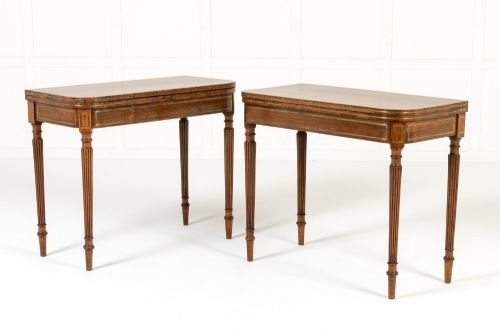
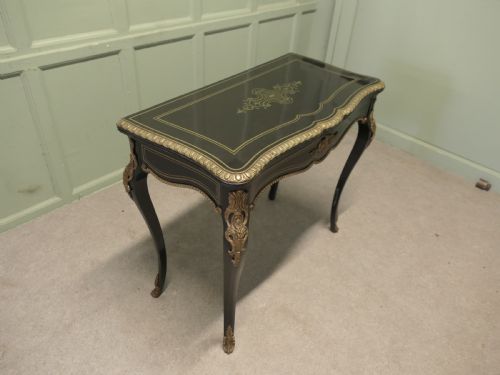
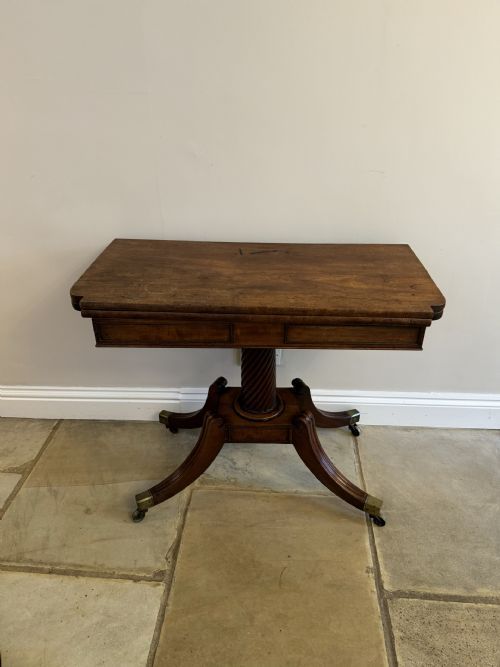
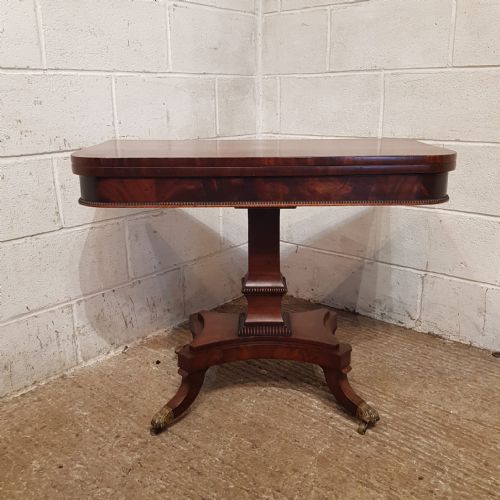
A brass games table brings together the refined forms of the Georgian, Regency, and Victorian eras, designed primarily for card playing and social gatherings. These pieces most commonly appear as fold-over card tables in mahogany or rosewood, enhanced by distinctive brass stringing and inlay across the top.
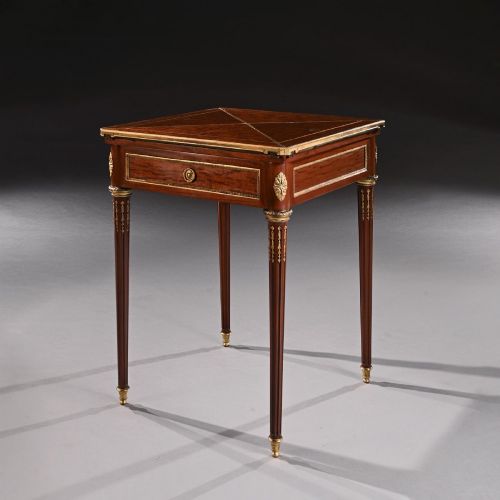
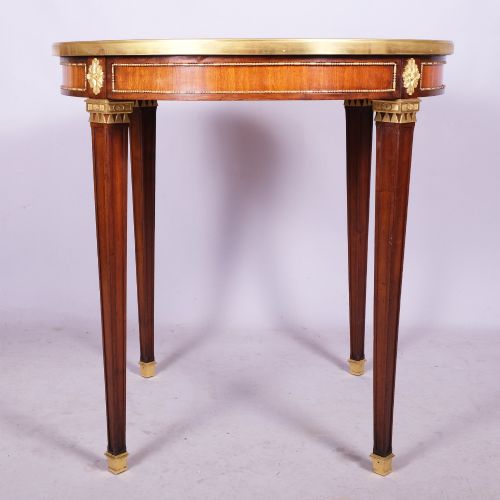
Beyond standard card tables, the selection includes envelope tables, bouillotte tables with marble tops, and specialised tables combining games surfaces with sewing drawers. English Regency and French Louis style examples dominate the offerings, spanning the late eighteenth century through to the early twentieth century.
The practical design of these tables allows them to function closed as console or side tables against a wall, opening out when required for play. Buyers encounter various timber grounds, including satinwood, burr walnut, and ebony, frequently paired with brass mounts, sabots, and castors.
How they were made
Cabinet makers utilised dense primary timbers such as mahogany and rosewood, applying contrasting veneers like satinwood, boxwood, and ebony to create striking geometric borders. The characteristic brass decoration was executed by carefully chiselling channels into the timber surface to receive precision-cut brass inlay and stringing.
Structural integrity relied on sturdy pedestal bases, scroll feet, or tapered legs, often fitted with brass castors and decorative sabots to ease movement. Fold-over mechanisms and pivoting tops required exacting carpentry to ensure the surface sat level and stable when opened for play.
Some nineteenth century tables secretly doubled as work spaces, concealing sewing compartments alongside the cards.
What varies in quality
The distinction between standard and exceptional pieces rests upon the crispness of the brass inlay and the figured grain of the underlying timber, such as highly figured rosewood or plum pudding mahogany. Finer examples display meticulous attention to detail in the Ormolu mounts, castors, and hand-carved pedestal bases.
Attribution to documented workshops, such as George Bullock or Antoine Lampre, elevates a piece through superior craftsmanship and documented provenance. The integrity of the timber movement and the precise alignment of the fold-over surfaces also separate ordinary production from master cabinet work.
George Bullock·Antoine Lampre
The Brass Games Table Glossary
- Brass inlay
- Metal strips or motifs embedded flush into timber surfaces. This decorative technique defines the visual character of Regency gaming furniture.
- Envelope table
- A square card table with a four-flap top that rotates and folds open diagonally. The flaps open like an envelope to reveal a baize-lined playing surface.
- Bouillotte table
- A small round card table featuring a raised gallery rim around the edge. These pieces frequently incorporate marble tops and candle arms for evening play.
- Sabot
- A metal fitting placed at the foot of a table leg. Brass sabots protect the timber base while adding a decorative finish.
- Fold-over top
- A hinged table top that doubles the surface area when opened. This mechanism allows a compact console table to transform into a full-sized gaming surface.
Brass Games Table: Frequently Asked Questions
What is a brass games table?
A brass games table is a folding or pivoting furniture piece designed for cards and parlour games, featuring metallic inlay across the top.
Originating mainly in the Georgian, Regency, and Victorian periods, these tables double as console or side tables when closed.
How do you open a fold-over card table?
The hinged top rotates on a pivot or swings open on a gateleg frame to reveal a polished timber or baize-lined playing surface.
Users should lift and swivel the top gently to activate the internal wooden support without straining the hinges.
Where were these tables used?
These tables sat in the principal reception rooms, drawing rooms, and parlours of period homes for evening entertainment.
They served as decorative console tables against walls during the day before being pulled out for card games in the evening.
How do you date a Regency games table?
Dating relies on identifying characteristic timber choices like rosewood, specific brass inlay patterns, and pedestal base formations from the early nineteenth century.
Comparing structural joinery and foot styles, such as brass sabots and castors, helps narrow the decade of manufacture.