

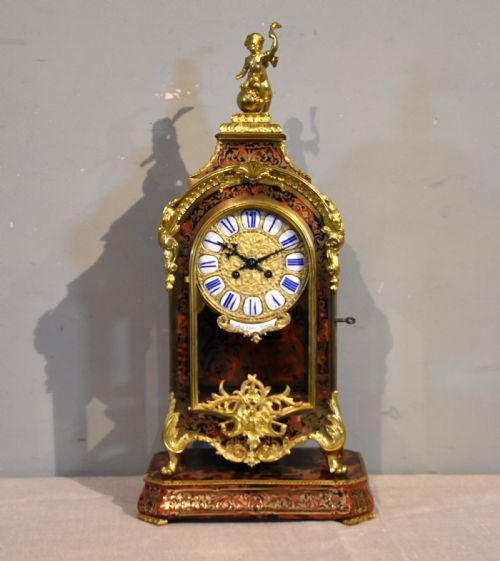


Victorian Boulle Table
A victorian boulle table brings nineteenth-century French revival splendour into a room through intricate brass and tortoiseshell marquetry.
Victorian Boulle Table
When searching for a victorian boulle table, collectors encounter nineteenth-century forms ranging from centre and card tables to nests, etageres, and coffee tables on stands. These pieces follow historical French revival styles such as Napoleon III, Louis XV, and Chinoiserie, echoing earlier court furniture through nineteenth-century British and continental workshops.
The most common formats on this page include centre tables and card tables, alongside smaller occasional pieces like nests of tables and etageres. Makers produced these surfaces using ebonised wood or papier-mâché, decorated extensively with tortoiseshell and metallic inlays.
How They Were Made
Craftsmen built these tables using ebonised or stained wood frameworks, often enriched with papier-mâché for specific surface trays. The decorative scheme relies on intricate brass marquetry and scarlet red tortoiseshell inlaid by hand into the timber substrate.
Ornate cast ormolu mounts and brass edgings punctuate the corners, aprons, and legs, protecting vulnerable edges while reinforcing the lavish French Rococo revival aesthetic.
Victorian Boulle Table Retail Price Guide 2026
Typical asking prices for victorian boulle table among the pieces listed under this phrase on Sellingantiques today, from the lower quarter to the upper quarter. They describe what is for sale here now, not the wider market.
Even a humble coffee tray could find itself elevated onto a stand, proving Victorians loved their Boulle work anywhere they could put it.
What Varies in Quality
Quality rests upon the precision of the brass and tortoiseshell cutting, where finer examples exhibit razor-sharp lines and minimal filler within the intricate scrolls. The crispness of the chased ormolu mounts and the depth of the ebonised finish further separate ordinary production from exceptional workshop output.
Structural integrity of the timber core and the retention of the original scarlet red or dark tortoiseshell panels dictate the standing of any individual piece within the market range.
Edwards & Roberts
The Victorian Boulle Table Glossary
- Boulle
- A style of marquetry utilising brass and tortoiseshell inlaid together in contrasting patterns, named after the famed cabinetmaker André-Charles Boulle. It defines the primary decorative surface seen across these nineteenth-century pieces.
- Ormolu
- Gilded bronze used for decorative mounts, feet, and edge trimmings on furniture and clocks. It provides a bright metallic contrast against dark ebonised wood and tortoiseshell.
- Ebonised Wood
- Timber treated with a dark stain or finish to imitate expensive ebony. This dark ground enhances the golden glow of inlaid brass marquetry.
- Marquetry
- The art of applying pieces of veneer to a structure to form decorative designs. In these pieces, brass and tortoiseshell form elaborate floral and scroll motifs.
- Etagere
- A set of open shelves for displaying small objects or ornaments. These tiered stands frequently feature inlaid tops and slender supports.
Victorian Boulle Table: Frequently Asked Questions
What is a boulle table?
A boulle table is a nineteenth-century piece of furniture decorated with tortoiseshell and brass marquetry. These surfaces reflect French revival designs popular during the Victorian era.
They serve primarily as centre tables, card tables, or display pieces within a drawing room or study.
How do I care for tortoiseshell?
Tortoiseshell requires gentle dusting with a soft, dry cloth and protection from direct sunlight and extreme heat. These precautions prevent the organic material from drying out or warping over time.
Keep the room at a stable humidity level to preserve both the shell and the underlying timber.
Are all boulle tables French?
While the style originates in France and many pieces were imported or made in the French taste, British cabinetmakers also produced them extensively. Makers in London workshops adopted the Napoleon III and Louis XV revival styles for local patrons.
Consequently, the pieces combine continental aesthetic origins with nineteenth-century British manufacturing traditions.
What is red boulle?
Red boulle incorporates scarlet red tortoiseshell beneath the brass inlay rather than the more common dark brown or amber shell. This vibrant backing creates a striking contrast that catches the light.
It appears on finer nineteenth-century candlesticks, clocks, and tables.