
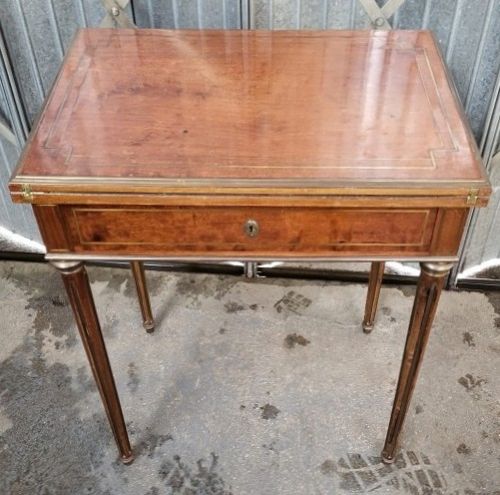


French Style Card Table
These french style card table examples combine folding surfaces with continental revival curves, offering versatile occasional furniture for modern rooms.
French Style Card Table
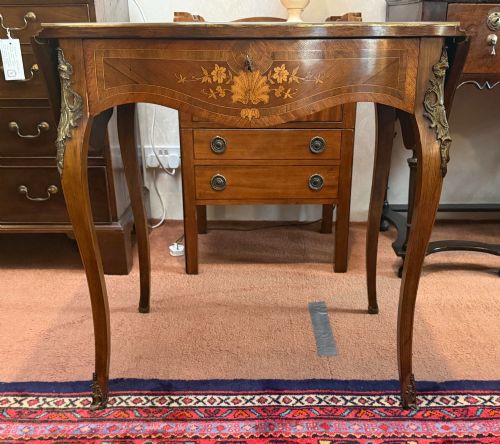
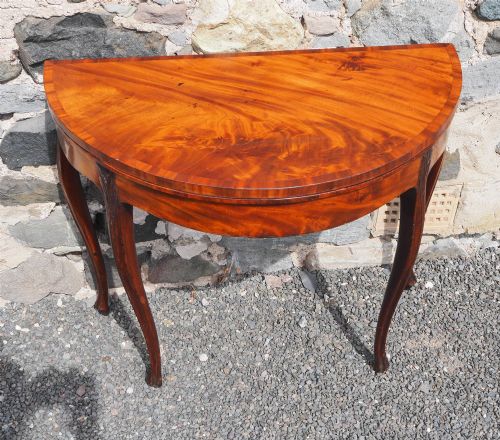
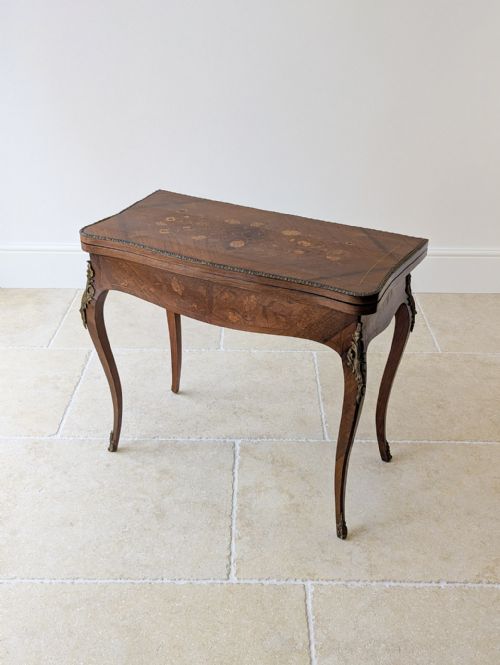
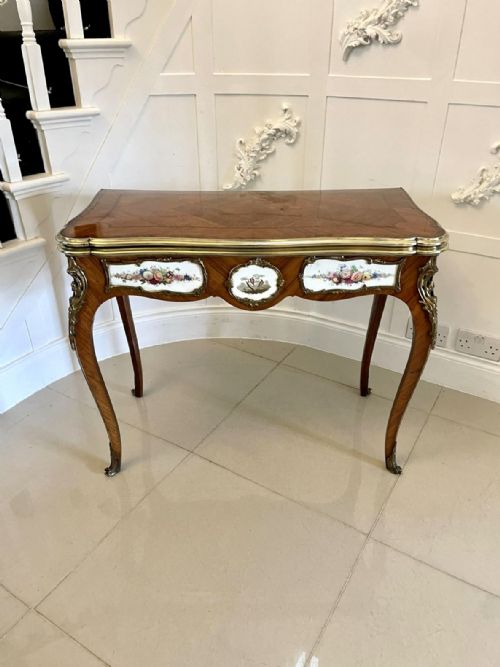
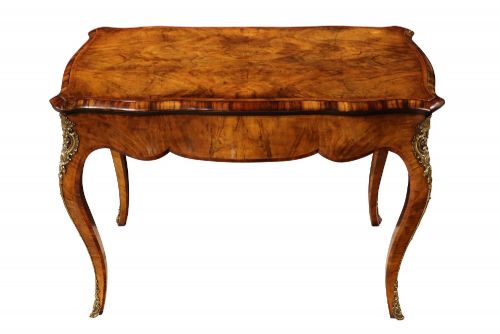
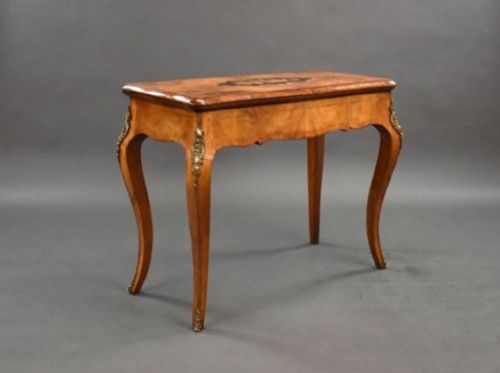
A french style card table functions as a folding games surface or console when closed, appearing frequently in nineteenth-century revivals. The form draws heavily upon earlier royal continental aesthetics, particularly the asymmetric ornamentation of the Louis XV taste and the structured geometry associated with Louis XVI. Buyers encounter pieces spanning the eighteenth century through the late Victorian era, with walnut, kingwood and mahogany serving as primary carcases.
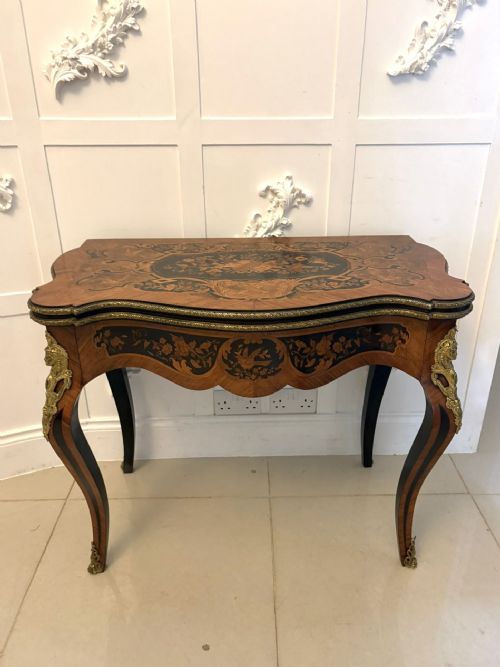
Makers working within London workshops alongside continental cabinet-makers produced these dual-purpose tables for wealthy drawing rooms. Surviving examples often bridge categories, functioning interchangeably as side tables, occasional tables and centre tables depending on whether the hinged top remains folded or opened. The evidence shows frequent use of marquetry, parquetry and brass inlay across demilune and serpentine silhouettes.
Materials and Construction Methods
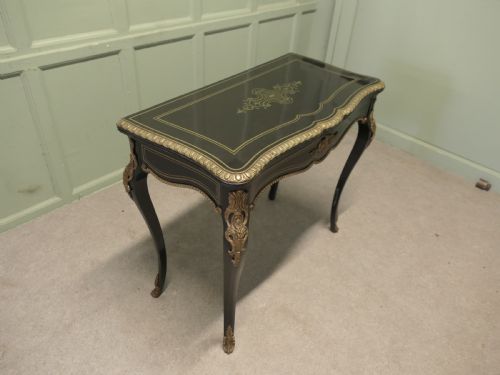
Cabinet-makers constructed these tables using solid timber carcases overlaid with decorative veneers including kingwood, walnut, rosewood, amboyna and mahogany. Exotic woods were sliced thinly to create intricate marquetry and parquetry motifs across the folding tops and friezes, often enhanced by ebonised wood details.
Mounts cast in ormolu and gilt bronze accentuate the structural corners, legs and aprons, frequently paired with brass stringing and inlay. Selected pieces incorporate ceramic porcelain plaques or mounted porcelain panels set directly into the wooden surfaces, reflecting high-status continental design influences.
The archive includes pieces attributed to prominent London and continental cabinet-makers from the Victorian era.
Distinguishing Quality in Construction and Decoration
The refinement of the cast ormolu mounts and the precision of the marquetry inlay determine the tier of execution. Finer examples display crisp chisel work on the gilt bronze components and seamless matching of exotic wood veneers across folding hinges.
Cabinet-making standards appear in the integrity of the pivoting mechanism and the weight of the timber used for the carcase. Pieces bearing recorded signatures or attributed workshop stamps demonstrate superior cabinet-work compared to anonymous commercial production.
G T Morant·Joseph-Emmanuel Zwiener·Maison Millet·Edwards & Roberts·Francoise Linke
The French Style Card Table Glossary
- Ormolu
- Gilded bronze mounts applied to furniture edges and legs. This decorative technique originated in France and defines much of the continental revival aesthetic.
- Kingwood
- A dense Brazilian timber featuring rich dark brown and violet grain patterns. Cabinet-makers used it extensively for veneering luxury nineteenth-century tables.
- Marquetry
- Pictorial veneer work assembled from various coloured woods to form floral or geometric patterns. Artisans cut these pieces meticulously by hand.
- Parquetry
- Geometric wood inlay arranged in repetitive patterns such as cubes or chequers. It differs from marquetry through its strict reliance on geometric repetition.
- Demilune
- A half-moon shape characteristic of side and card tables designed to sit flush against a wall. This profile allowed tables to occupy minimal space when folded.
French Style Card Table: Frequently Asked Questions
How do these tables open?
Most examples utilise a hinged fold-over top that doubles the surface area when unfolded for card games. A swinging rear leg or pivoting frieze drawer supports the open leaf.
Heavier console and side table formats require careful handling of the pivoting mechanism to prevent strain on the hinges and veneered surfaces.
What is the difference between Louis XV and Louis XVI styles?
Louis XV pieces feature asymmetrical curves, cabriole legs and flamboyant rococo scrollwork inspired by nature. These designs prioritise fluidity and organic movement.
Louis XVI furniture introduces straight tapering fluted legs, neoclassical symmetry and rectilinear or demilune geometry reflecting a return to classical proportions.
Where should I place a card table at home?
These pieces function effectively as console tables against a hallway or living room wall when the top is folded shut. They provide a compact surface for lamps or decorative objects.
Opening the leaf transforms the table into an occasional desk or impromptu dining surface, making them adaptable for rooms with limited space.
How do I care for antique veneer and ormolu?
Maintain polished wood surfaces using traditional beeswax applied sparingly with a soft cloth. Avoid placing these tables near direct heat sources or strong sunlight to prevent veneer splitting.
Dust ormolu mounts gently with a dry brush and avoid harsh chemical cleaners that could strip the original fire-gilt finish.