
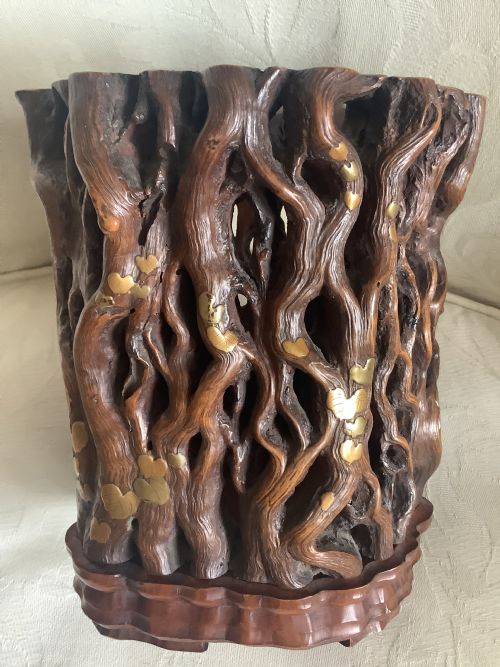
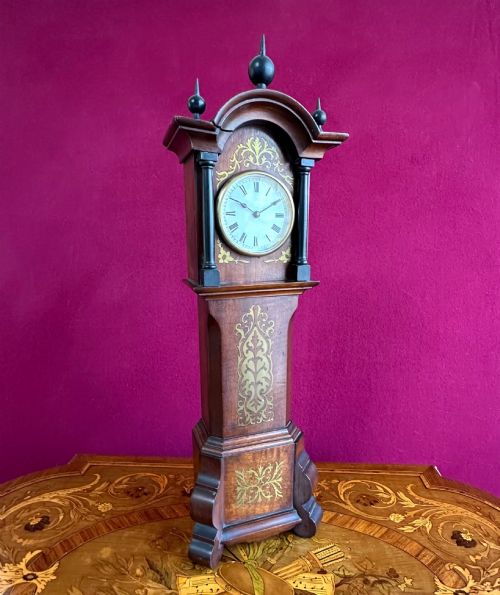
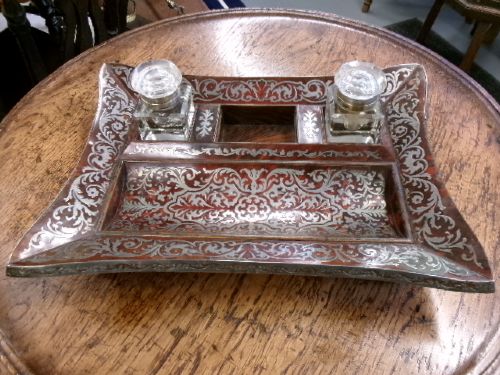


Brass Inlay Desk Stand
A brass inlay desk stand brings tactile nineteenth-century elegance to a writing surface through polished hardwoods and bright metal work.
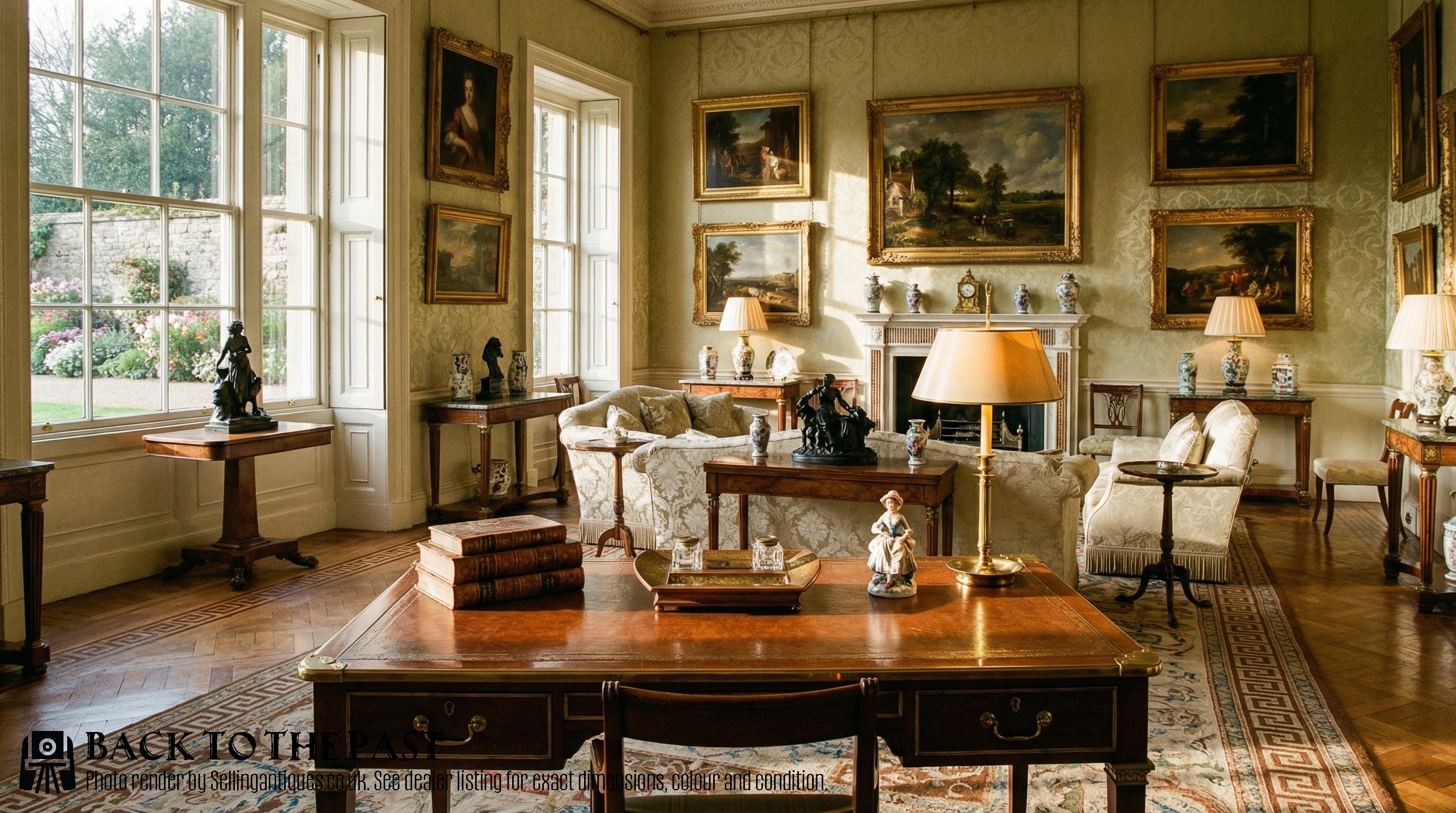
Brass Inlay Desk Stand
A brass inlay desk stand combines a sturdy wooden base with fitted compartments for writing implements and inkwells. Buyers searching for a brass inlay desk stand encounter robust examples originating primarily in the nineteenth century, including Victorian and Regency pieces.
Makers utilised contrasting materials to delineate compartments and frame the central ink glass containers. These desk accessories served as practical furnishings for writing desks in studies and libraries.
Materials and construction
Craftsmen built the foundations using dense timbers such as rosewood, walnut, and mahogany, often enhanced by decorative coromandel. Fine channels were chiselled into the wood surface to receive precisely cut brass wire and sheet metal.
Elaborate Boulle work incorporates tortoiseshell and brass assembled in intricate geometric or floral marquetry patterns. Glass inkwells with fitted brass collars sit securely within dedicated recesses on the wooden base.
Nineteenth-century writers relied on these stands to keep ink from spilling onto their expensive carpets.
Assessing craftsmanship and finish
Quality rests upon the precision of the metal fitting within the timber channels and the crispness of the engraved brass details. Superior pieces maintain tight joints between the diverse materials despite centuries of atmospheric change.
The choice of primary timber and secondary veneers distinguishes standard production from exceptional library items. Intricate tortoiseshell backing and substantial ormolu mounts elevate the visual weight of the stand.
The Brass Inlay Desk Stand Glossary
- Boulle work
- A method of marquetry using tortoiseshell and brass inlay developed in France. This technique creates a rich decorative surface of contrasting metallic sheen and dark tortoiseshell tones.
- Inkstand
- A portable tray or stand fitted to hold inkwells and sanders for handwriting. These desk accessories formed an essential component of nineteenth-century correspondence equipment.
- Ormolu
- Gilded bronze used for decorative mounts and feet on nineteenth-century furnishings. The material provides a bright metallic accent that complements inlaid brass details.
- Coromandel
- A dense, heavily grained timber imported from Asia used for luxury nineteenth-century boxes and stands. Its distinctive dark striping offers a striking contrast to bright metal inlay.
- Regency
- An English design period spanning the early nineteenth century defined by classical restraint and rich cabinet woods. Pieces from this era often feature clean geometric brass lines.
Brass Inlay Desk Stand: Frequently Asked Questions
What was a brass inlay desk stand used for?
These stands organised writing materials on nineteenth-century desks, holding inkwells, pens, and blotting paper securely in one place.
They provided a stable, portable station for daily correspondence before the invention of the fountain pen.
How do I care for wood and brass?
Maintain the timber using appropriate wax polishes while avoiding excess moisture near the metal joints.
Gentle dusting preserves the polished finish of both the wood grain and the inlaid brass wire.
How do I date a desk stand?
Examine the timber species, construction methods, and the style of the brass mounts against known period designs.
Nineteenth-century pieces frequently utilise rosewood or coromandel with hand-cut brass channel work.
Are the inkwells usually original?
Many surviving stands retain their original glass inkwells, though some pieces accommodate matched replacements.
Fitted brass collars often indicate whether the glass container corresponds to the age of the stand.