





Glass Brass Desk Set
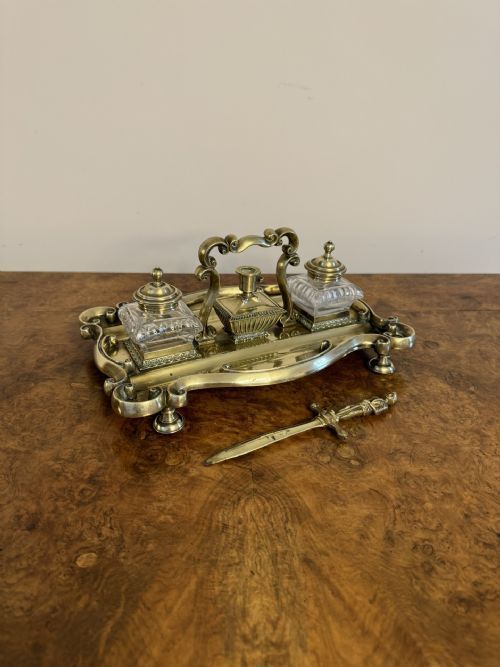
A glass brass desk set anchors the Victorian or Edwardian writing table with heavy metalwork and clear glass.
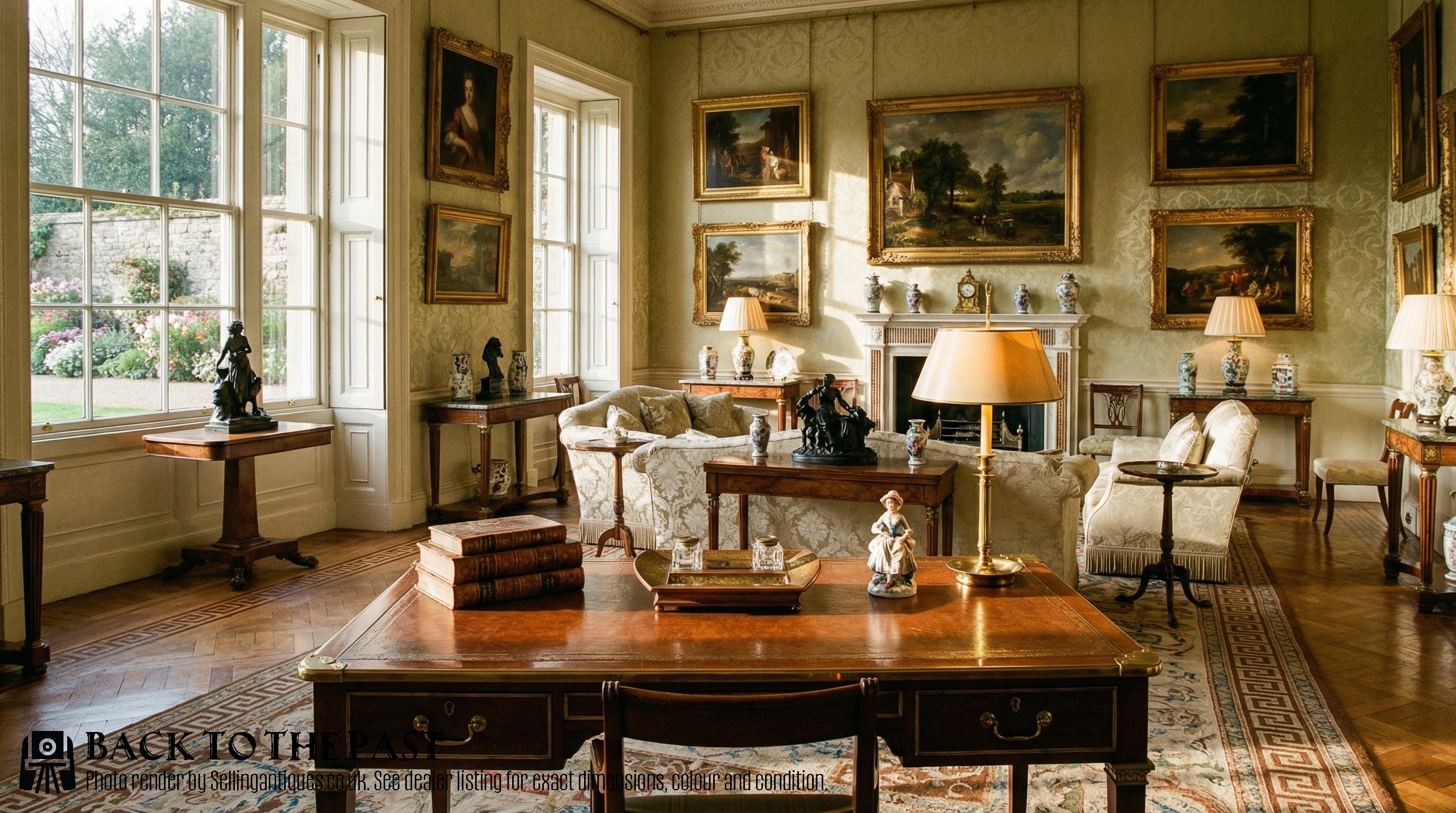
Glass Brass Desk Set
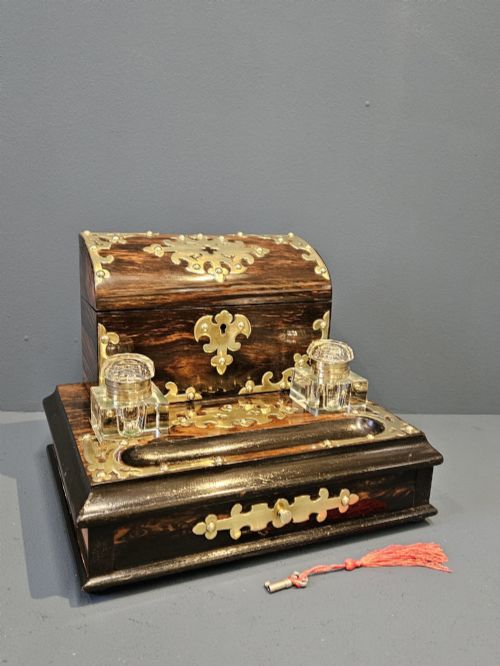
A glass brass desk set combines heavy metal mounts with glass inkwells or bottles, designed to organise writing equipment on a library table or bureau. These pieces range from simple wooden stands fitted with brass galleries to elaborate freestanding French designs housing cut glass vessels.
The most common versions on this page date from the Victorian period through to the early twentieth century, utilising robust timbers like oak, walnut, and coromandel alongside polished brass. Buyers encounter everything from double-inkstand companions featuring a central drawer to singular novelty inkwells shaped like jockey caps or bulldogs.
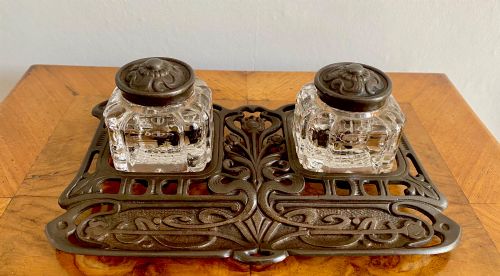
Earlier Georgian and Regency examples rely on simpler rosewood or brass frames, while later Edwardian and Art Nouveau pieces introduce flowing organic lines and original glass ink pots. Each configuration serves the practical purpose of holding ink and pens while displaying decorative metalwork.
Materials and construction methods
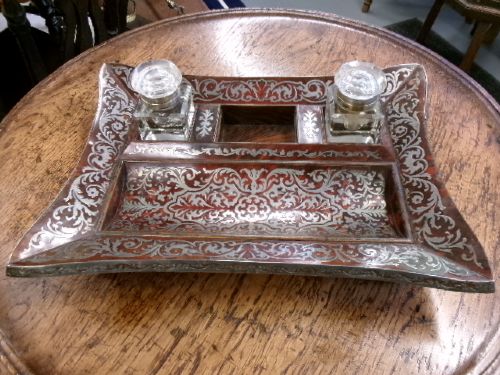
Makers constructed the primary frames of these desk sets using dense timbers such as oak, walnut, coromandel, and rosewood, frequently incorporating brass handles, hinges, and pierced galleries. Many mid-nineteenth-century items employ elaborate Boulle work, tortoiseshell inlay, or mother of pearl set flush into the wooden base.
Glass components include heavy cut glass inkwells and original glass ink pots, often fitted with hinged brass collars and lids. Certain specialist pieces feature cast ormolu mounts, antler supports, or ebonised wood to create strong visual contrasts against the polished metal and clear glass.
Listings feature brass, glass, cut glass, wood, coromandel wood, oak, tortoiseshell, and metal across Victorian, Edwardian, and Regency styles.
Distinctions in craftsmanship
Quality reveals itself in the weight and thickness of the cast brass work, the crispness of any chased or engraved decoration, and the retention of original matching glass ink inserts. Superior examples exhibit tightly fitted internal drawers, substantial timber bases without warping, and robust hinges that hold their position.
The sophistication of the secondary materials - such as genuine tortoiseshell, finely figured coromandel wood, or intricate Boulle marquetry - separates standard utility pieces from grander library furnishings. Originality of the glass ink bottles and matching brass collars remains crucial for a cohesive appearance.
James Cartland and Sons·Moser
The Glass Brass Desk Set Glossary
- Standish
- A portable tray or stand fitted with inkwells, pen holders, and sanders for a desk. This traditional term covers many of the larger inkstands seen in earlier periods.
- Boulle work
- Marquetry technique using brass and tortoiseshell inlaid into wood, popular in French-influenced nineteenth-century desk stands. The method creates a shimmering contrast of dark shell and golden metal.
- Ormolu
- Gilt bronze mounted onto decorative objects and furniture, providing a bright golden finish. It appears frequently on French Empire and Napoleon III desk pieces.
- Coromandel wood
- A dense, heavily figured timber with dark brown and black grain patterns imported from Asia. Cabinet makers utilised it for luxury nineteenth-century stationery boxes and inkstands.
- Escapement
- The mechanism within a desk clock that regulates movement, sometimes found combined with inkwells in specialised Victorian pieces.
Glass Brass Desk Set: Frequently Asked Questions
How do I date a desk stand?
Dating relies on identifying the prevailing style, timber, and manufacturing techniques used in the piece. Victorian examples often use coromandel or walnut with heavy brass mounts, while Edwardian pieces lean towards lighter woods or flowing Art Nouveau metalwork.
Checking for original glass inserts and construction methods underneath the base also helps narrow down the decade of manufacture.
Were these sets used for writing letters?
Yes, they were essential items for any household or office before the widespread use of fountain pens. Users dipped steel or quill pens into the glass inkwells housed within the brass framework.
Many stands also included small compartments or drawers for blotting paper, stamps, and nibs.
How should I care for brass and glass?
Maintain brass components by dusting regularly and avoiding harsh chemical polishes that strip aged patination. Glass inkwells lift out easily for gentle washing in warm soapy water.
Keep wooden bases away from direct heat sources to prevent the timber from splitting or warping.