

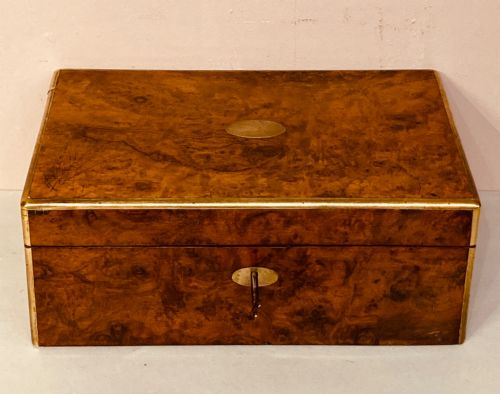
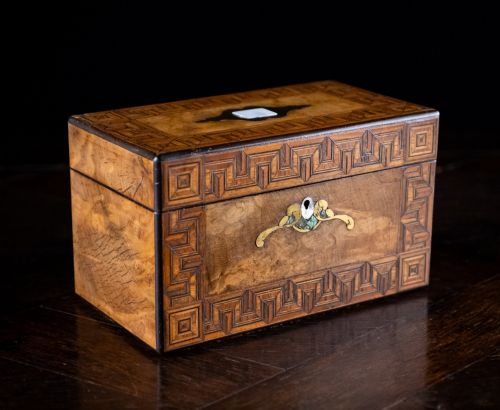
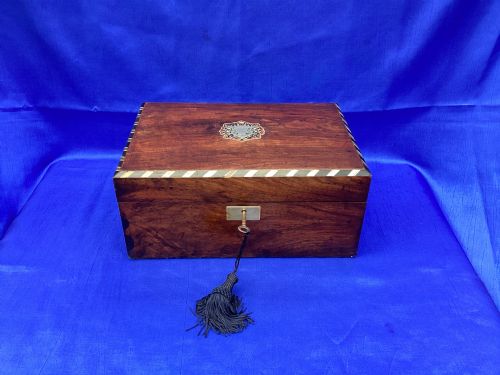
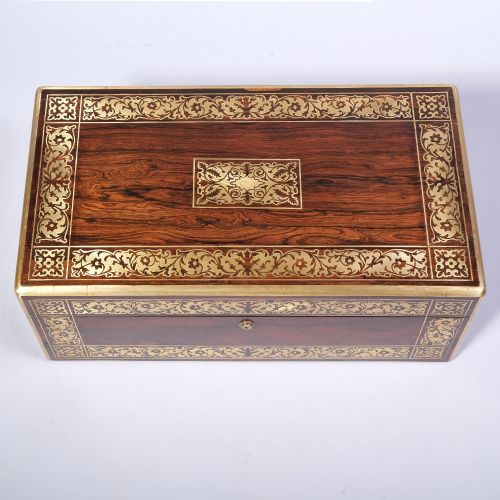
Brass Inlaid Wooden Box
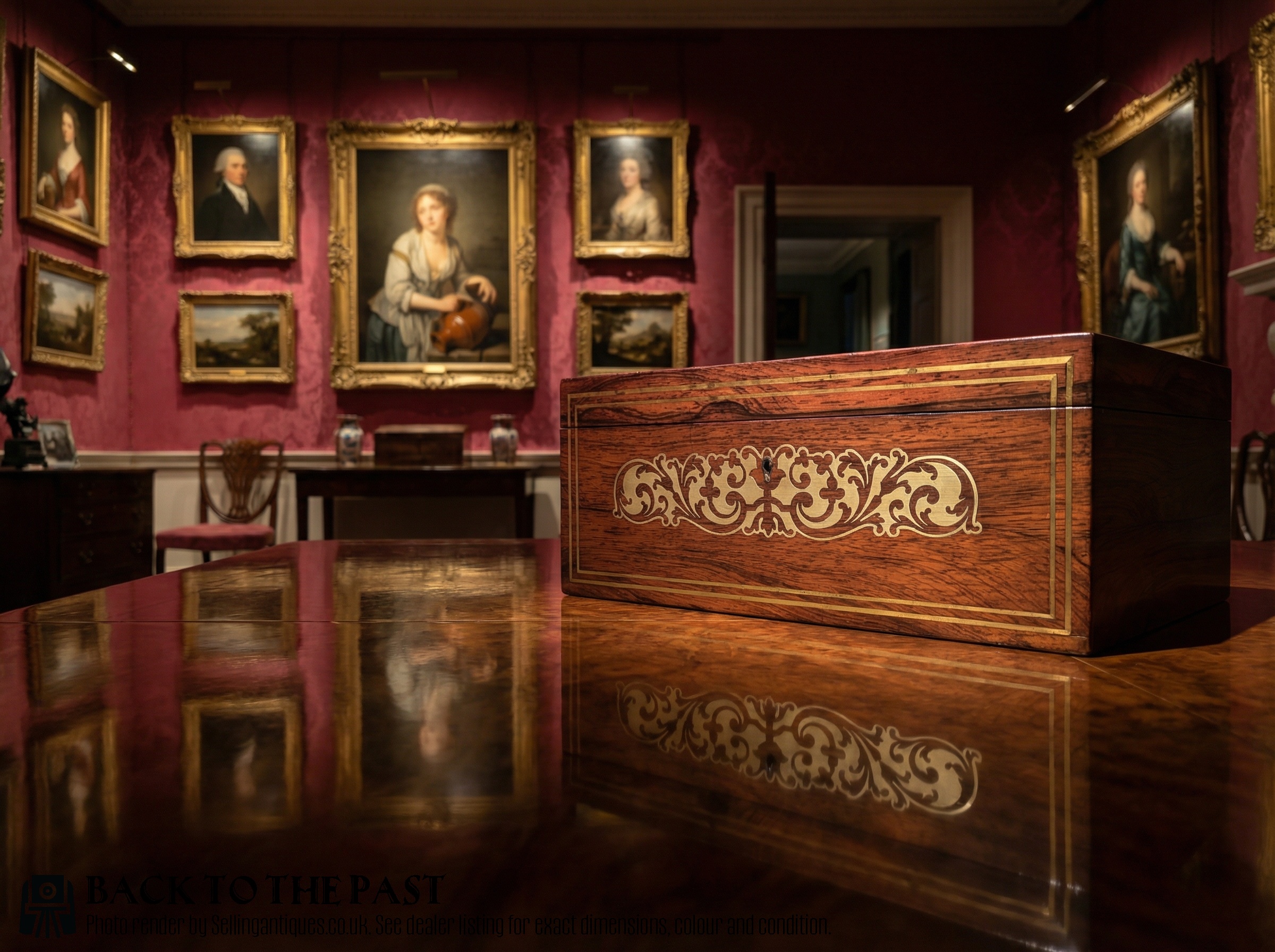
A brass inlaid wooden box combines fine cabinetry with decorative metalwork, offering a practical repository for documents, tea, or jewellery.
Brass Inlaid Wooden Box
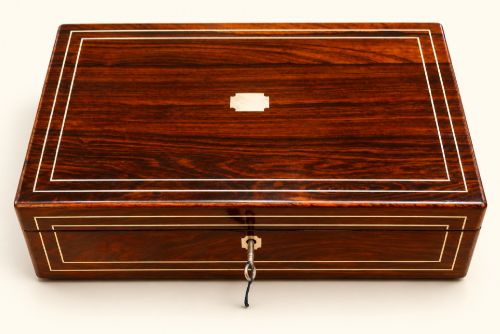
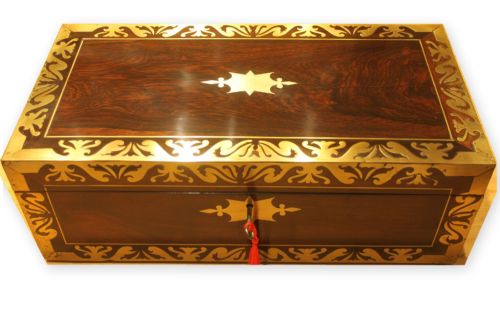
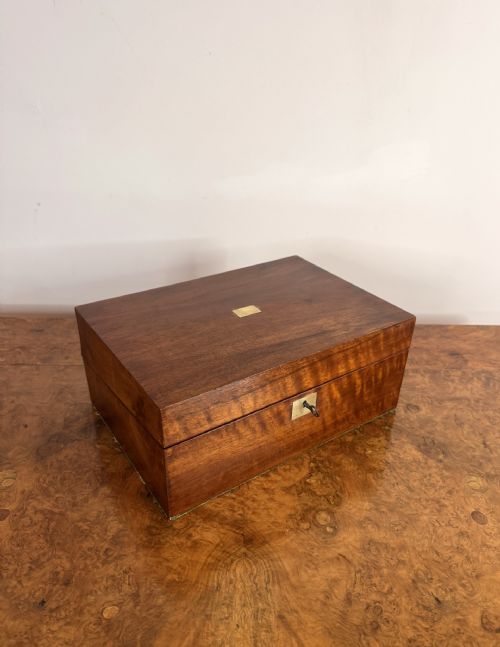
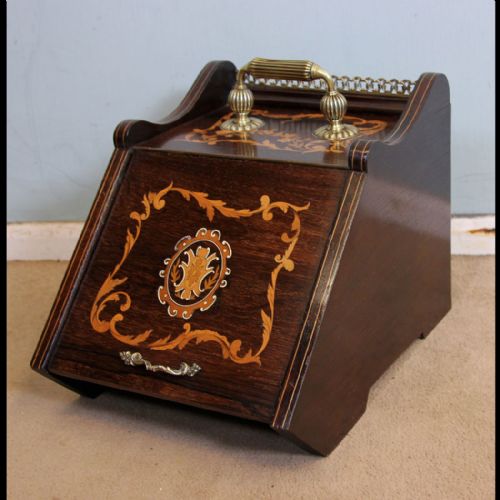
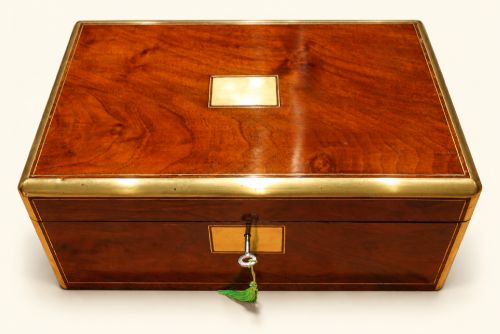
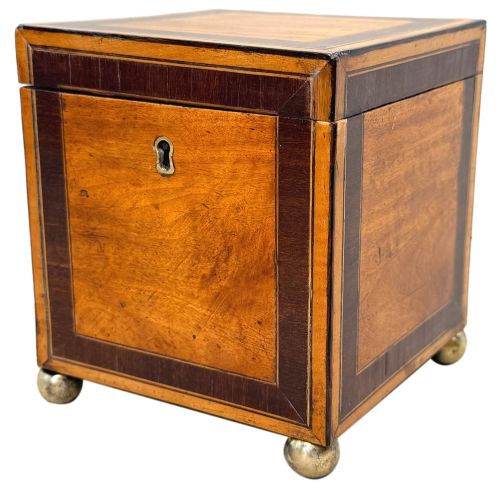
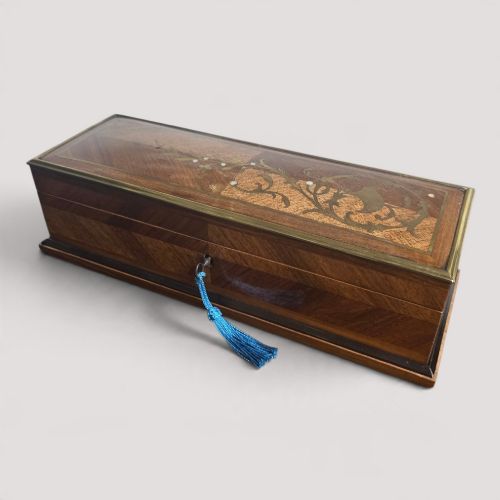
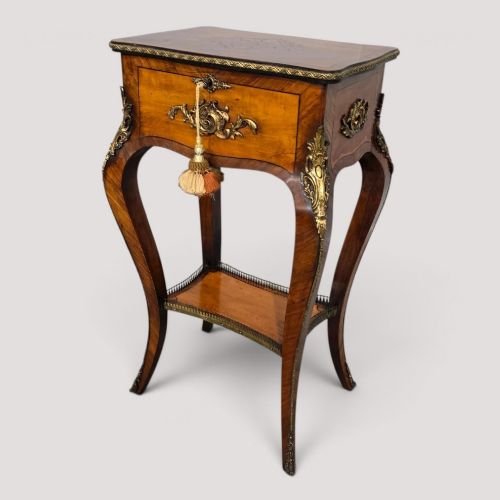
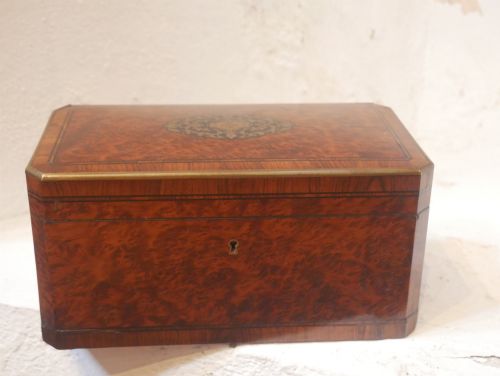
A brass inlaid wooden box appears in forms such as writing slopes, tea caddies, jewellery boxes, and document caskets spanning the Georgian, Regency, and Victorian eras. These pieces range from domestic writing boxes in mahogany and rosewood to elaborate Napoleon III liquor cases and parquetry caddies.
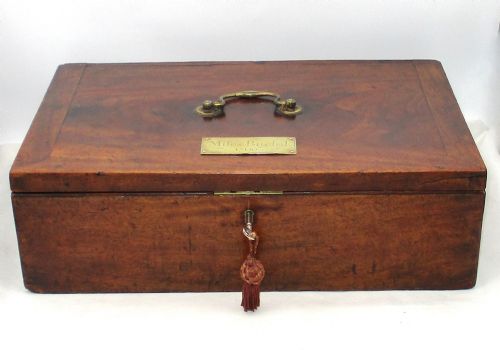
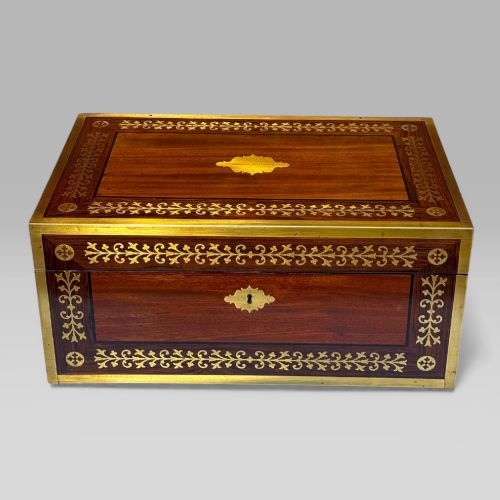
The most common examples on this page are rosewood and mahogany writing slopes and tea caddies from the nineteenth century, featuring flush brass stringing or intricate scrollwork. Collectors also encounter utilitarian document boxes from the eighteenth century alongside later walnut and coromandel compartments.
Makers utilised dense timbers to withstand the meticulous process of channel-cutting and metal insertion, ensuring the structural integrity of each casket over generations. The intersection of functional interior fittings and external brass ornamentation defines the enduring appeal of these items.
Materials and Technique
Cabinetmakers constructed these boxes using hardwoods such as mahogany, rosewood, walnut, and burr walnut, frequently applying boxwood stringing or mother of pearl alongside brass elements. Artisans channelled the timber surface by hand to embed thin sheets of brass precisely flush with the wood grain.
The integration of brass inlay required steady precision to follow the contours of sarcophagus, rectangular, or domed silhouettes without splitting the underlying timber. Interiors frequently featured fitted compartments, velvet or leather writing surfaces, and glass inkwells framed by secondary woods.
Brass Inlaid Wooden Box Retail Price Guide 2026
Typical asking prices for brass inlaid wooden box among the pieces listed under this phrase on Sellingantiques today, from the lower quarter to the upper quarter. They describe what is for sale here now, not the wider market.
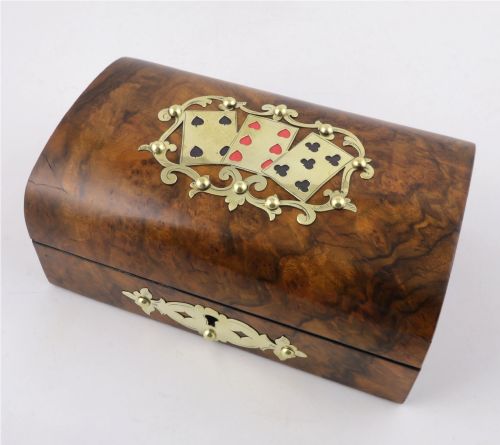
Several Victorian boxes double as secret game caskets, hiding poker dice and playing cards behind their polished brass-inlaid facades.
Craftsmanship and Execution
Quality rests in the precision of the brass inlay relative to the timber, where tighter mitres and minimal gaps between metal and wood signal superior workshop standards. The complexity of the engraved scrollwork and the choice of highly figured veneers, such as burr walnut or coromandel, distinguish finer examples from standard production pieces.
Internal complexity also dictates standing, with fully fitted writing slopes and multi-compartment tea caddies demonstrating higher levels of internal joinery. Original hardware, functional locks, and well-preserved secondary woods elevate the standard of a piece above altered or heavily restored equivalents.
Tahan Paris·Holtzapffel and Co·H Mitchell·Erhard and Sohne
The Brass Inlaid Wooden Box Glossary
- Writing slope
- A portable desk featuring a hinged, sloping lid that opens to reveal a velvet or leather-lined writing surface and compartments for ink and pens.
- Tea caddy
- A box designed for storing dry tea leaves, often fitted with internal lidded canisters and a central glass mixing bowl.
- Campaign box
- A sturdy portable chest or writing box built for travel, typically fitted with flush brass carrying handles and reinforced corners.
- Stringing
- A narrow strip of contrasting timber or metal inlaid flush into the surface of a box to create decorative borders and geometric outlines.
- Tantalus
- A locking wooden stand that secures decanters in place with a metal bar, displaying the bottles while preventing unauthorised access to the contents.
Brass Inlaid Wooden Box: Frequently Asked Questions
What were brass inlaid wooden boxes used for?
These boxes served specialised domestic functions, from storing valuable loose tea and personal correspondence to housing jewellery, writing instruments, and gaming pieces.
Interior layouts typically matched the intended purpose, containing velvet channels for pens, lidded canisters for tea leaves, or velvet trays for rings and brooches.
How do I date a brass inlaid wooden box?
Dating relies on assessing the timber species, carcass construction methods, and the style of the brass ornamentation.
Georgian and Regency pieces often favour mahogany and rosewood with restrained geometric stringing, whereas mid to late Victorian boxes frequently incorporate burr walnut, coromandel, and more exuberant floral brass motifs.
Are writing slopes and tea caddies difficult to maintain?
Maintenance requires stable environmental conditions to prevent the dense hardwoods and delicate brass inlays from expanding or contracting at different rates.
Applying occasional appropriate wax preserves the polished finish of timbers like rosewood and mahogany without harming the embedded metalwork.
How can I tell the difference between Regency and Victorian styles?
Regency boxes typically display architectural restraint, clean lines, and precise brass stringing set against dark mahogany or rosewood surfaces.
Victorian examples often embrace bolder proportions, rich burr walnut or coromandel veneers, and more complex combinations of brass, mother of pearl, and parquetry.