



Brass Inlaid Trinket Box
A brass inlaid trinket box offers a neat harbour for small valuables, bringing tactile warmth and period detail to a dressing table or desk.
Brass Inlaid Trinket Box
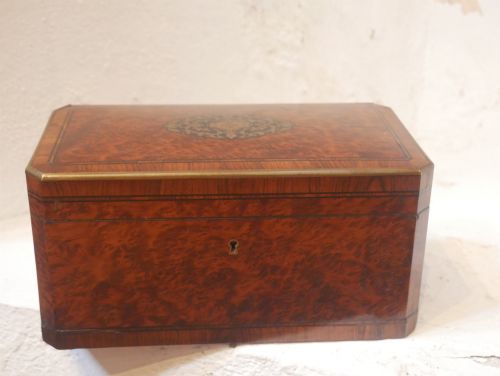
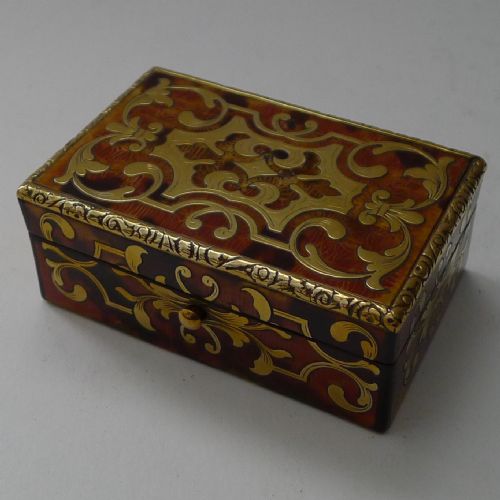
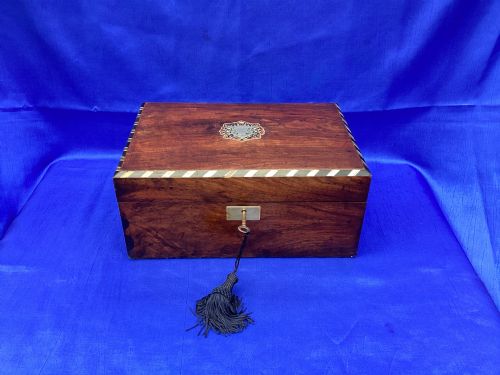
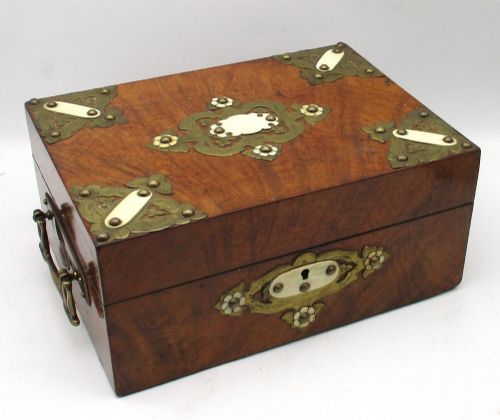
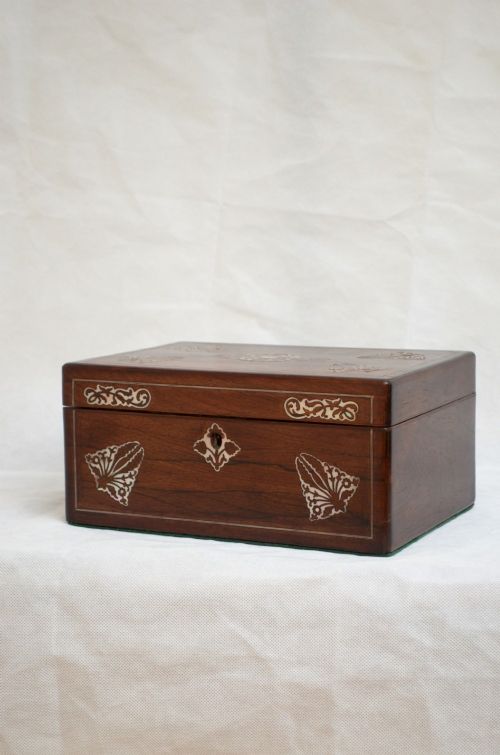
A brass inlaid trinket box brings together small lidded containers designed to hold jewellery, keepsakes, and desk accessories, appearing across this page most frequently in Victorian and Regency iterations. These pieces emerge from the nineteenth century in timber carcasses such as rosewood, mahogany, and coromandel, carrying precision metalwork across their lids and slopes.
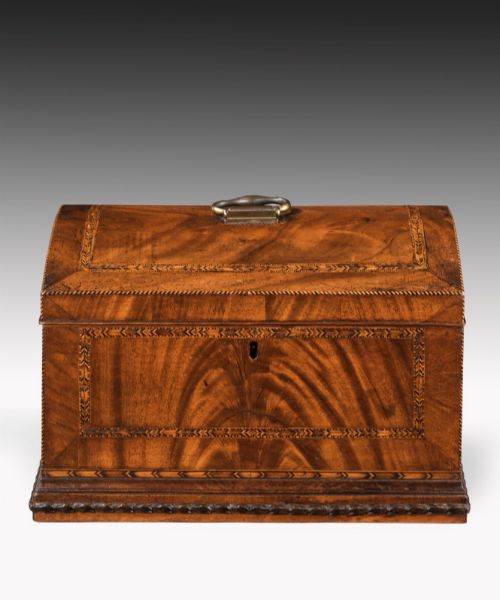
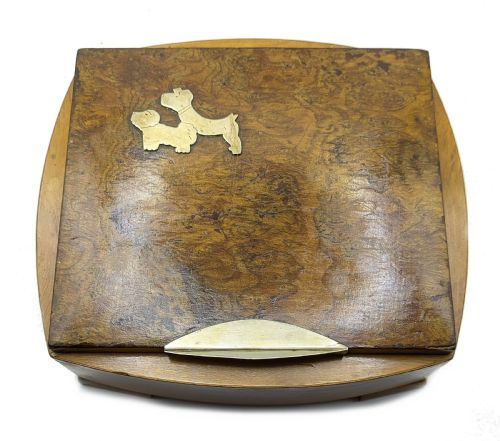
Makers shaped these utilitarian objects for dressing tables, writing desks, and drawing rooms, ranging from tea caddies adapted for other uses to fully fitted vanity boxes with trays and compartments. The forms vary from rectangular table chests and domed caddies to specialised presentation boxes and novelty cigarette holders.
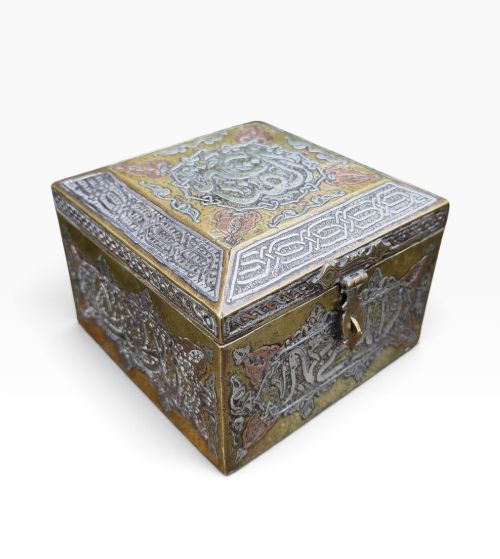
Originating in English workshops alongside French and Middle Eastern production centres, these containers reflect distinct regional tastes through their metal enrichment. The selection on this page captures both domestic domestic craftsmanship and imported specimens utilising specialised timber veneers and localized inlay motifs.
How they were made
Craftsmen built these carcasses from dense hardwoods including rosewood, mahogany, and coromandel, often applying exotic veneers like satinwood, amboyna, or tortoiseshell over a stable secondary timber base. They channelled the wood surfaces by hand to recess delicate sheets of yellow brass, silver, or mother-of-pearl, securing the metal inlay flush with the polished grain.
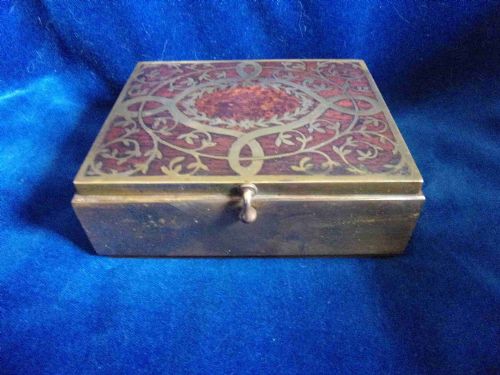
Surface ornamentation relied on precise cutting techniques, utilising contrasting materials like bone veneers, boullework brass, and engraved pewter lines to form geometric borders, foliate scrolls, and pictorial scenes. Many interior compartments required miniature locking mechanisms, secret drawers, and fitted velvet or silk linings tailored to hold jewellery and documents securely.
Listings feature brass inlaid trinket boxes utilising exotic woods like rosewood, coromandel, and mahogany alongside bone and mother-of-pearl accents.
What varies in quality
The standard of a brass inlaid trinket box rests on the precision of the metalwork within the timber grain, where tight joints and minimal filler around the brass channels distinguish superior workshop output. Sharply engraved details on the metal plates and well-executed marquetry borders show the hand of a skilled artisan rather than hasty production.
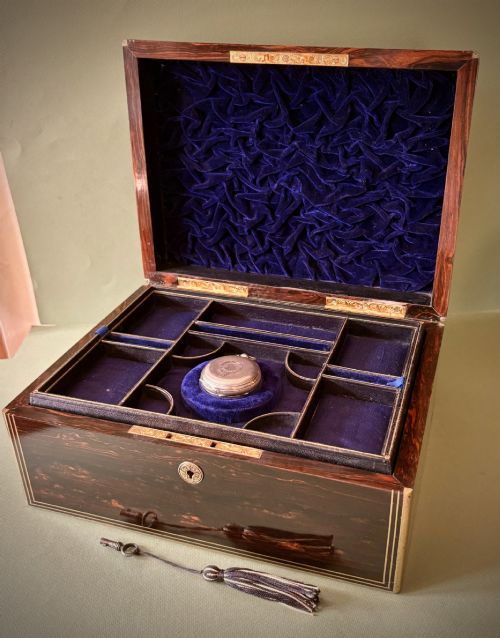
Interior execution elevates the piece, seen in complete fitted trays, intact secret compartments, and heavy brass or steel hardware that operates smoothly with its original working lock and key. The choice of primary timber foundation, such as figured rosewood or rich coromandel with deep natural chatoyancy, sets the finest examples apart from plainer utility boxes.
Tahan Paris·Erhard and Sohne·Lund Of Cornhill
The Brass Inlaid Trinket Box Glossary
- Boullework
- An elaboration of marquetry utilising brass and tortoiseshell inlaid in intricate scroll patterns. This technique originates from French cabinet making traditions associated with André-Charles Boulle.
- Tea caddy
- A lidded container originally built to store dry tea leaves inside locked compartments. Many surviving examples later transitioned into general jewellery and trinket storage boxes.
- Coromandel
- A dense, heavily figured Southeast Asian hardwood showing dark brown and black grain patterns. Cabinet makers prized this durable timber for high-end nineteenth-century presentation and vanity boxes.
- Mamluk Revival
- A nineteenth-century decorative style drawing on medieval Islamic metalwork motifs from Egypt and Syria. Pieces in this manner typically feature dense geometric brass and silver inlays on bronze or dark timber bases.
- Marquetry
- The art of applying small pieces of veneer to a structure to form decorative patterns and pictures. Craftsmen cut contrasting woods, bone, and mother-of-pearl to fit precisely into prepared recesses.
Brass Inlaid Trinket Box: Frequently Asked Questions
What were brass inlaid trinket boxes used for originally?
These lidded containers served multiple domestic purposes across the nineteenth century, holding personal jewellery, sewing implements, calling cards, and writing accessories on parlour tables and bedroom dressers. Wealthier households utilised specialised variants like tea caddies and locked document chests to protect valuable commodities and private papers.
Over time, many of these boxes changed functions as domestic habits evolved, leading owners to repurpose tea caddies and presentation chests into general trinket storage. Their sturdy timber construction and compartmentalized interiors made them versatile receptacles for small personal effects across generations.
How can I tell a Regency box from a Victorian one?
Regency boxes typically display clean classical proportions, often featuring bold cut-brass inlay layouts, sarcophagus shapes, and satinwood or rosewood surfaces inspired by classical antiquity. Their metalwork tends to be geometric and architectural, reflecting the aesthetic preferences of the early nineteenth century.
Victorian boxes generally introduce more eclectic styles, incorporating heavy brass banding, mother-of-pearl cartouches, elaborate marquetry, and fitted tiered interiors with velvet trays. As the century progressed, production incorporated regional revival styles and mass-market finishing techniques alongside traditional hand craftsmanship.
Are keys usually included with these antique boxes?
Original working keys are uncommon because centuries of household moves frequently separated small keys from their locks. Many surviving boxes retain their original escutcheons and lock mechanisms even if the key itself has long since vanished.
Specialist locksmiths can sometimes fit a replacement key to functional nineteenth-century locks if access to the interior compartment is required. For most collectors, an open or locked status does not diminish the decorative merit of the exterior brasswork and timber grain.