


Brass Handle Lowboy Table
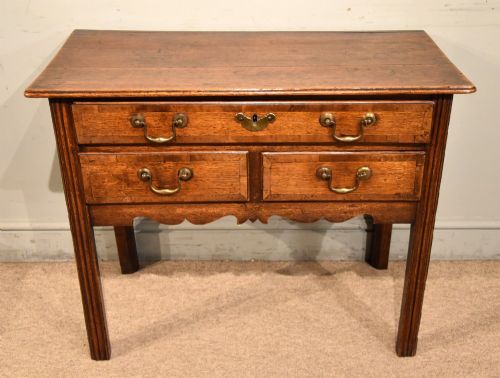
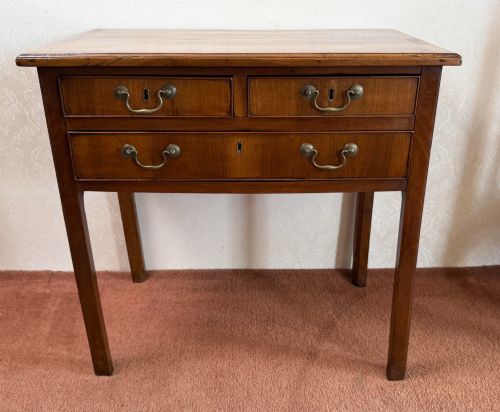
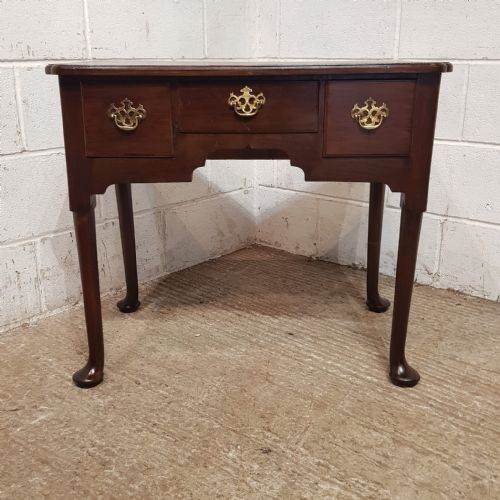
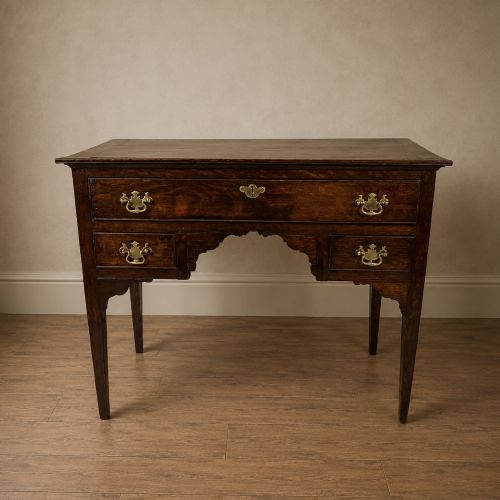
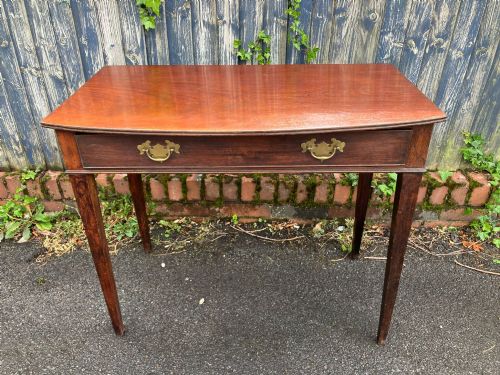
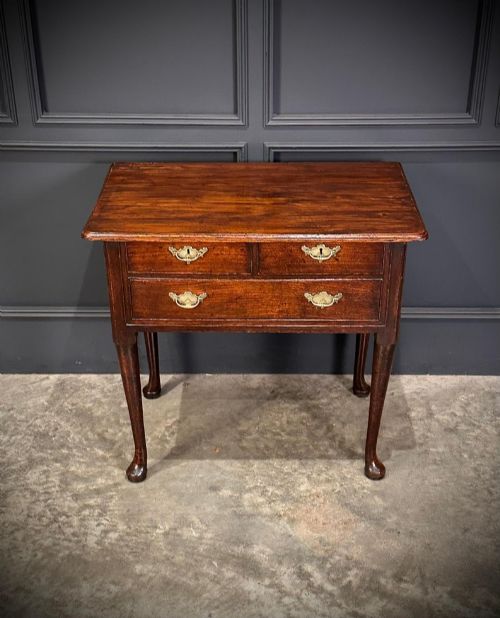
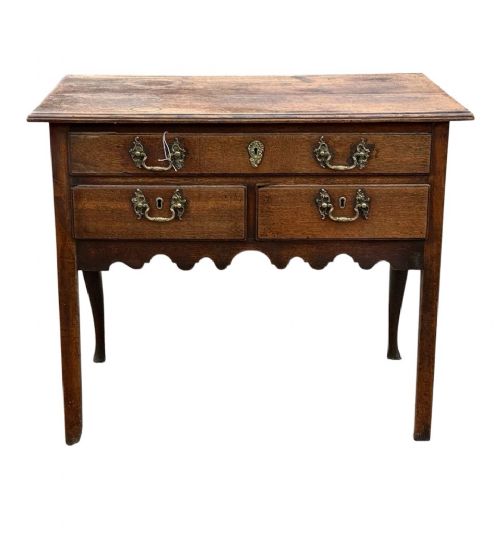
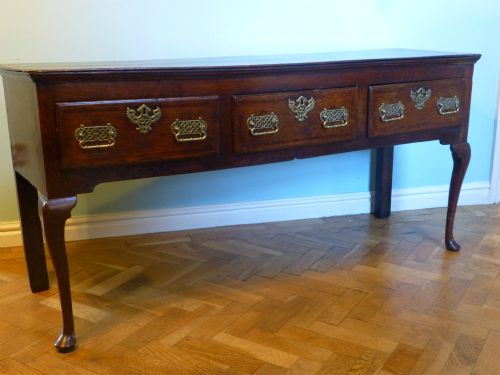
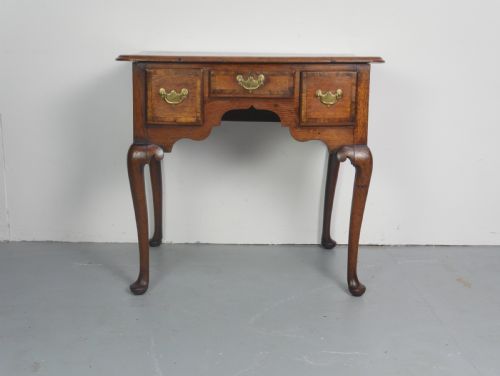
A brass handle lowboy table offers a compact surface with deep drawers, shaped apron and cabriole legs suited for hallways or living spaces.
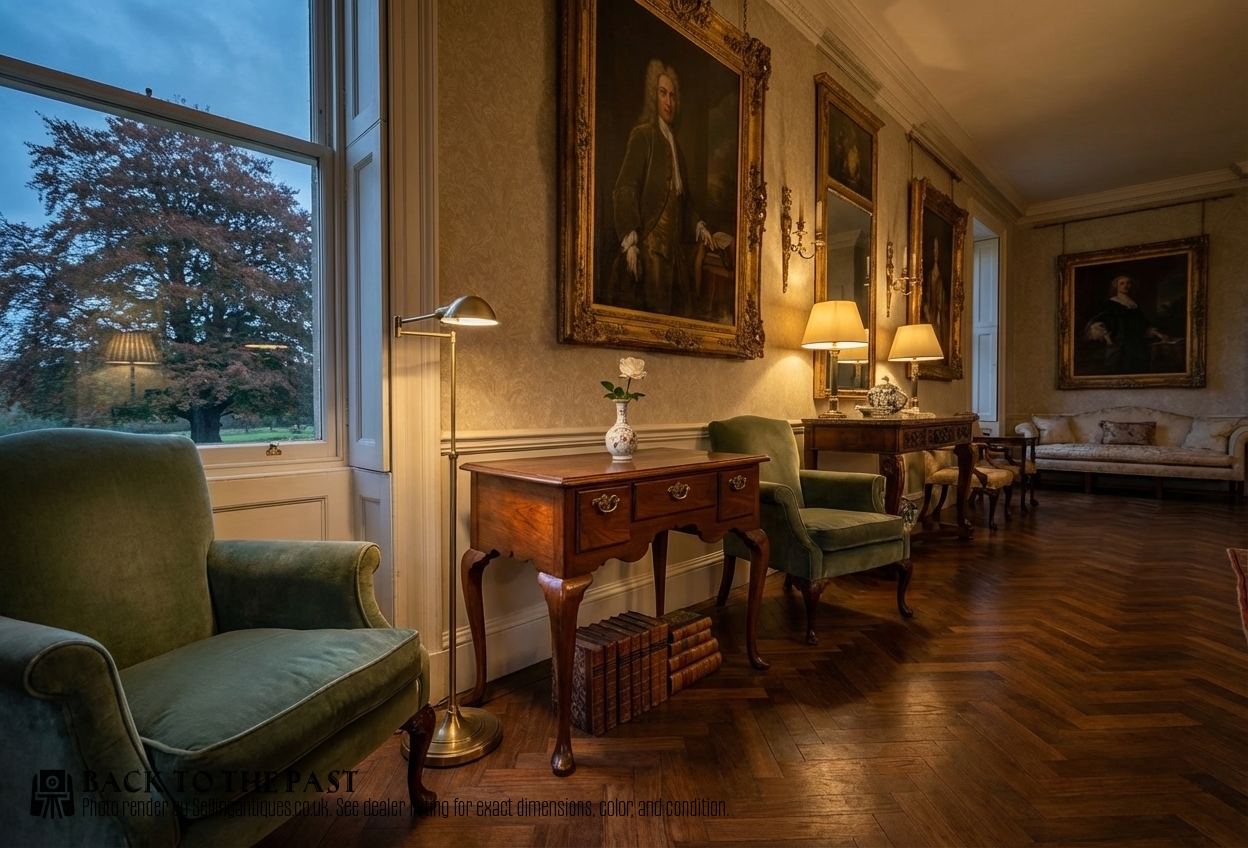
Brass Handle Lowboy Table
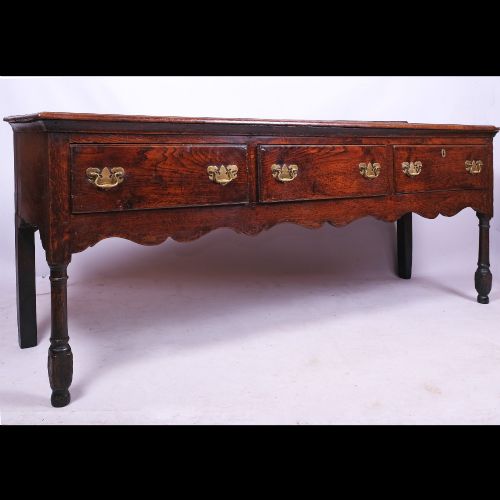
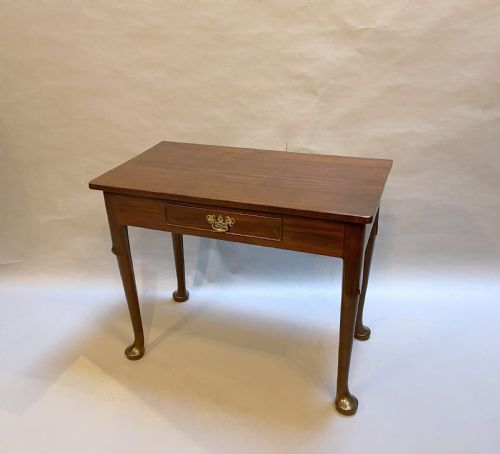
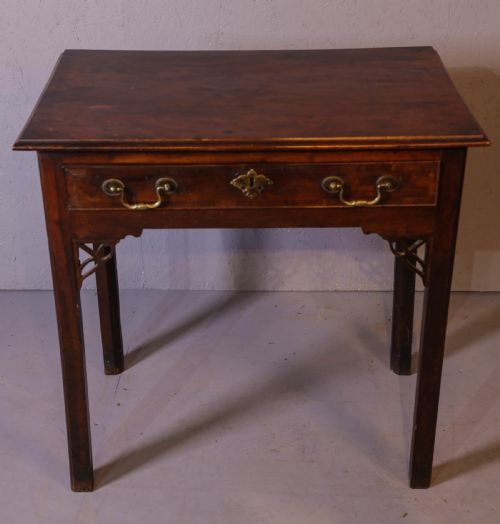
A brass handle lowboy table combines a low-slung table frame with multiple drawers, frequently styled as a side table or dressing surface. These pieces range from compact single-drawer examples to larger multi-drawer dresser bases.
The version most commonly met on this page is the Georgian lowboy, dated across the eighteenth century and into the nineteenth century. These forms appear primarily in oak, mahogany, and walnut.
Makers constructed these low tables to serve multiple domestic functions, including writing desks, hall tables, and dressing tables. Their low profile and generous drawer configuration distinguish them from standard side tables.
How they were made
Cabinetmakers constructed these tables using solid timber frames for oak, mahogany, walnut, burr walnut, cherrywood, and yew wood variants. Timber selection dictated both the grain pattern and the structural heft of the frame.
Brass hardware, including swing handles and backplates, was fitted to the drawer faces to secure the pull mechanism. Joinery methods relied on traditional techniques to house drawers and support cabriole legs.
Materials documented across the collection include yew wood, cherrywood, burr walnut, painted wood, and brass.
What varies in quality
The refinement of timber grain and timber selection separates standard utilitarian pieces from exceptional examples. Figured veneers such as burr walnut or high-grade mahogany alter the visual presence of the surface.
The execution of cabriole legs and the shaping of the underlying aprons determine the aesthetic standing of the table. Crisp carving and well-proportioned drawer configurations reflect higher standards of period craftsmanship.
Muirhead Moffat & Co
The Brass Handle Lowboy Table Glossary
- Lowboy
- A small occasional table with drawers, typically standing on four legs at a height suitable for writing or dressing. They date predominantly to the eighteenth century.
- Cabriole leg
- A curved leg featuring an outward sweep at the knee and an inward sweep at the ankle, ending in a pad or foot. This form derives from classical furniture design.
- Dresser base
- A low cabinet structure featuring rows of drawers, sharing similarities in form and function with traditional lowboys. These units offer expanded storage capacity.
- Bow front
- A convex curved front facade applied to chest of drawers and side tables. This profile softens the linear geometry of the furniture piece.
- Burr walnut
- Timber harvested from walnut tree growths that produce complex, swirling grain patterns. Cabinetmakers utilised this material for decorative veneering.
Brass Handle Lowboy Table: Frequently Asked Questions
What is a lowboy table used for?
These low tables functioned historically as dressing tables, writing desks, and general hall storage.
Their compact proportions allowed them to sit flush against walls without obstructing residential walkways.
How do I identify a Georgian lowboy?
Look for period timber construction in oak, mahogany, or walnut paired with cabriole legs and fitted drawer arrangements.
Most examples exhibit eighteenth-century joinery characteristics and traditional brass hardware configurations.
Are these tables made of solid wood?
The listings feature solid timbers such as oak, mahogany, cherrywood, yew, and walnut.
Selected decorative versions incorporate burr walnut veneers over secondary woods for visual effect.
Where should I place a lowboy in my home?
Their shallow depth makes them suitable for narrow hallways, entryways, and living room perimeters.
The surface accommodates lamps or decorative objects while the drawers provide concealed storage.
What is the difference between a side table and a lowboy?
A lowboy specifically incorporates one to three drawers beneath the surface within a low frame.
Standard side tables may lack drawers entirely or feature different structural proportions.