

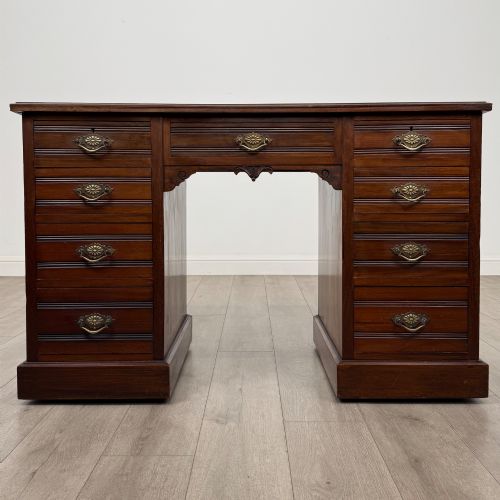

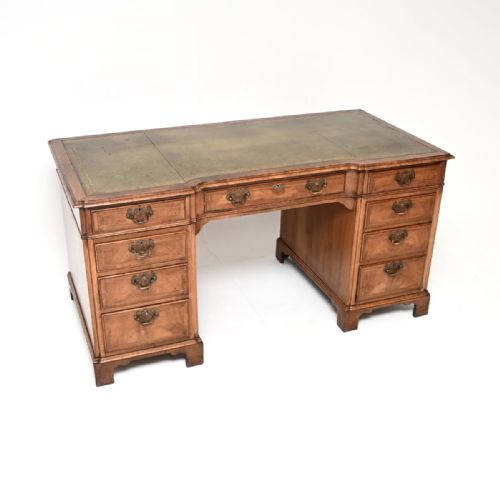
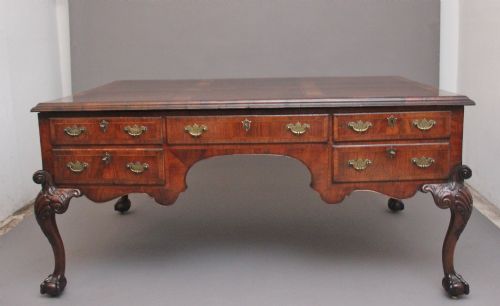
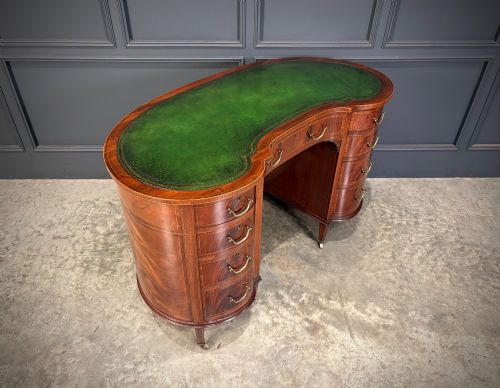
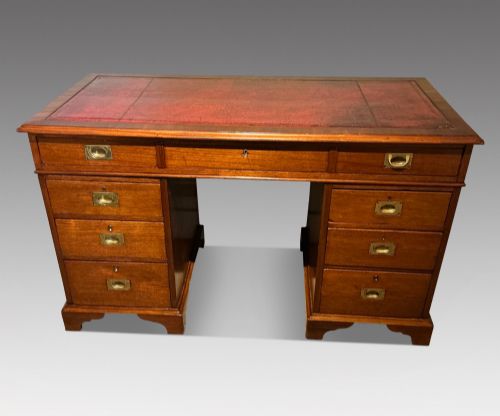
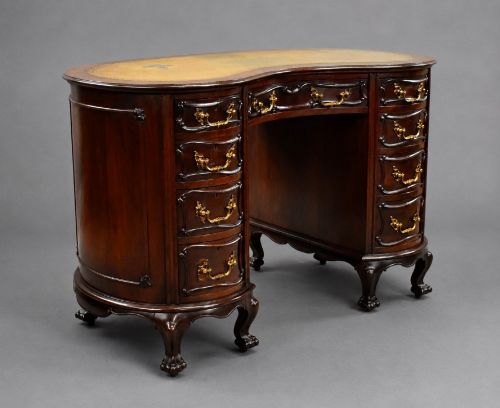
Brass Handle Executive Desk
A brass handle executive desk brings enduring presence and practical surface space to a room, offering robust construction paired with period character.
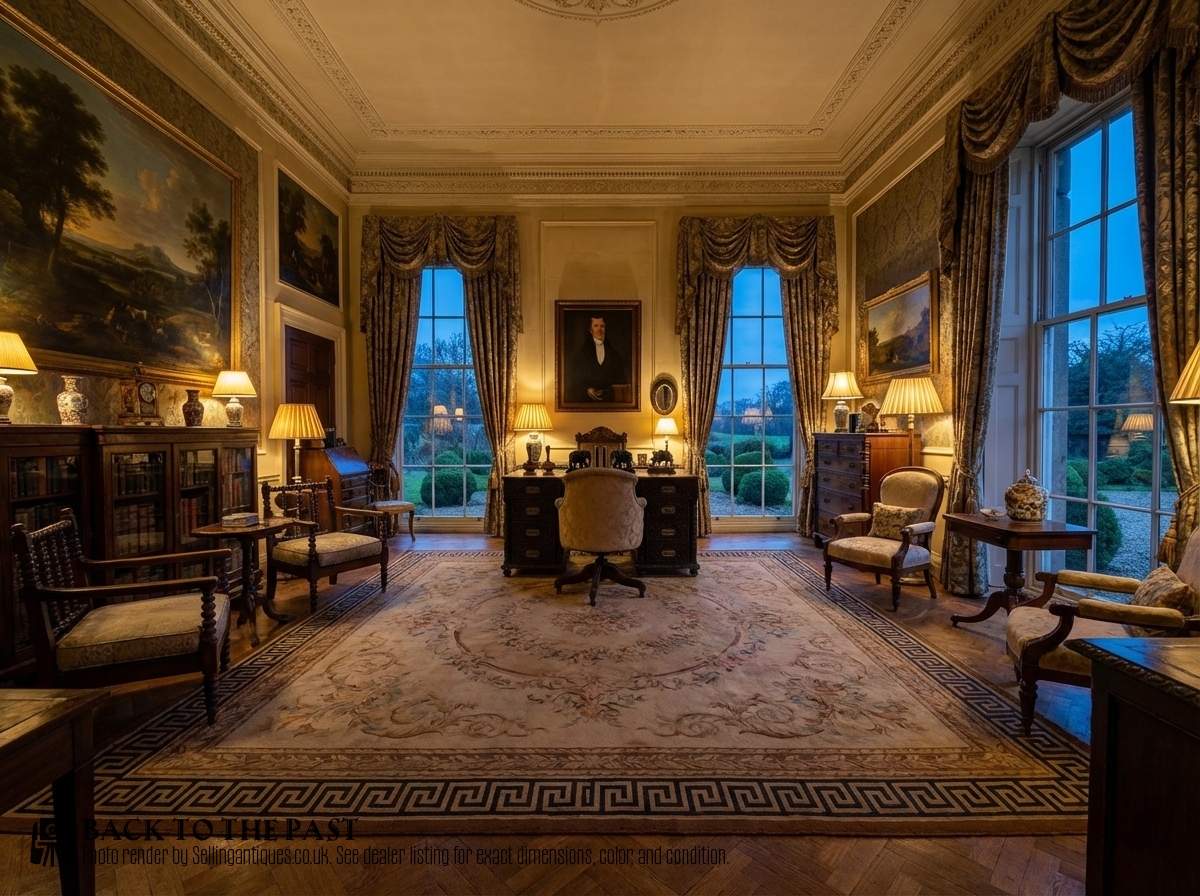
Brass Handle Executive Desk
When searching for a brass handle executive desk, buyers encounter substantial writing furniture designed for primary workspace use. These pieces typically manifest as pedestal desks, partners desks, or writing tables spanning the Georgian, Victorian, and Edwardian eras.
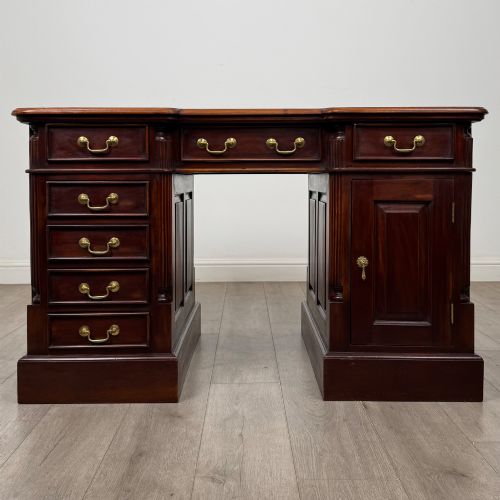
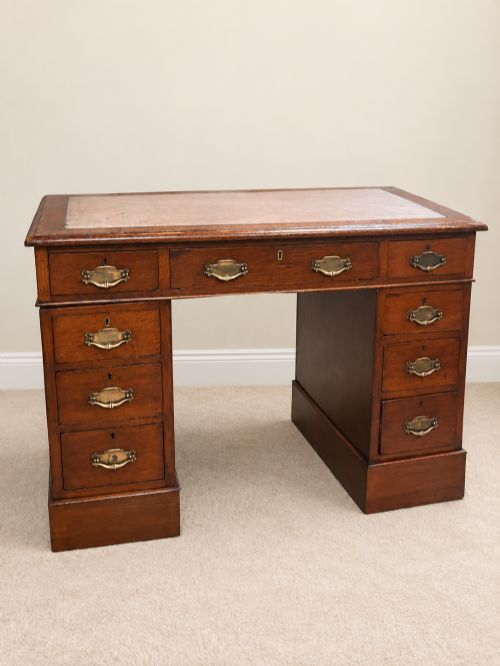
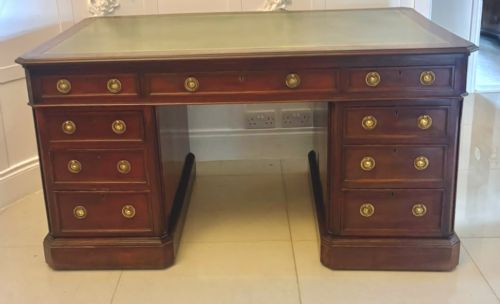
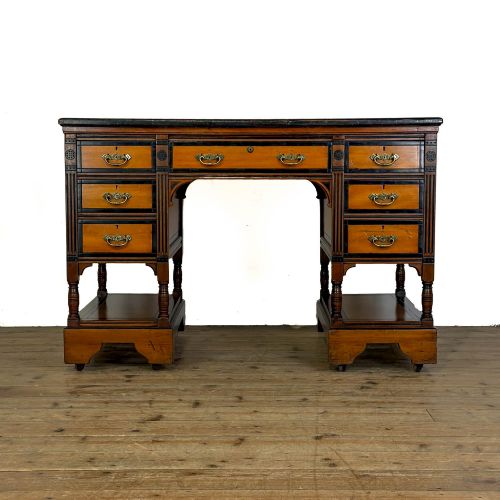
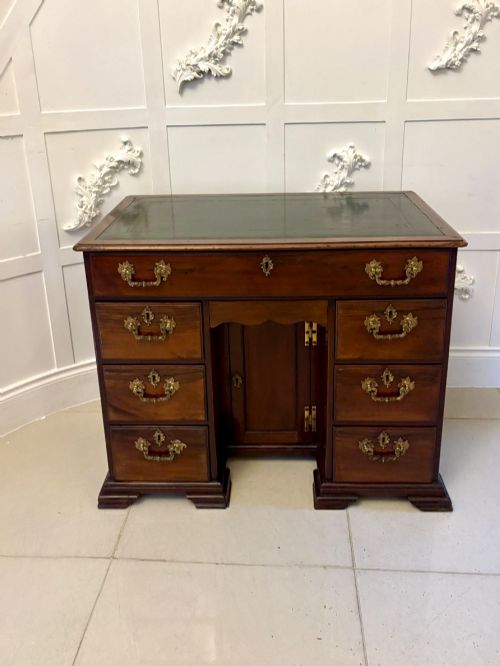
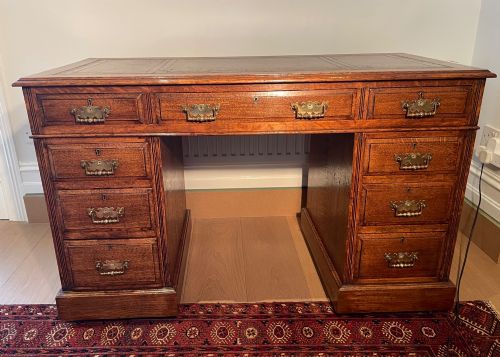
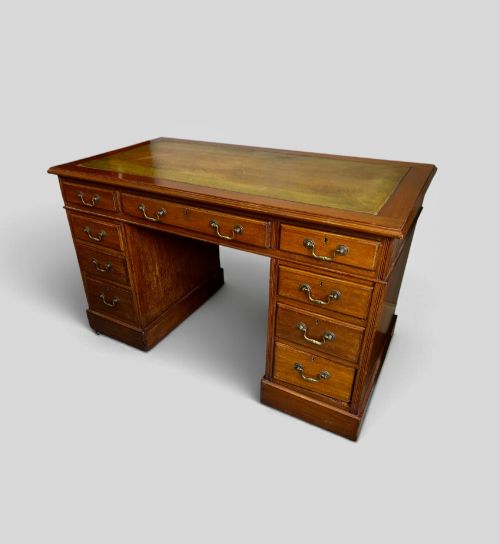
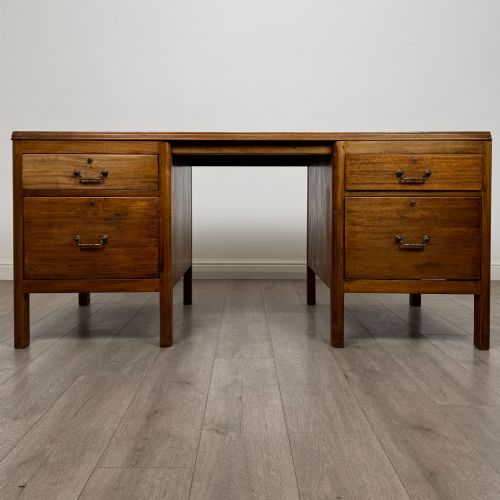
The version most commonly met on this page is the pedestal desk in mahogany or oak, featuring banks of drawers alongside brass hardware. Pieces range from compact kneehole formats to large double-sided partners desks suited for central room placement.
How they were made
Cabinetmakers utilised dense timbers including mahogany, walnut, and oak, frequently incorporating leather inset tops and brass handles. Construction methods focused on durability, employing solid drawer linings and framed pedestals.
Surface finish depended on timber selection, ranging from plain polished oak to flame mahogany with crossbanding and inlay. Brass handles and pulls were cast or stamped and secured firmly to drawer fronts to withstand daily use.
Listings feature pedestal desks, partners desks, and writing tables built from mahogany, walnut, oak, and teak across Georgian, Victorian, and Edwardian periods.
What varies in quality
The standard of timber selection heavily influences the hierarchy of these desks, distinguishing plain boards from figured mahogany, burr walnut, or curl mahogany. Cabinetmaking intricacy, such as crossbanding, fine inlay, and coordinated grain matching across multiple drawers, marks out the superior examples.
Proportion and free-standing capability also separate everyday utilitarian items from more ambitious commissions. Desks finished on all sides for central placement require identical attention to detail across the reverse as seen on the primary facade.
Trollope & Sons·P H Vogel & Co
The Brass Handle Executive Desk Glossary
- Pedestal desk
- A heavy writing table comprising two separate pedestals of drawers supporting a single top. This form provides substantial storage capacity while maintaining a formal kneehole space.
- Partners desk
- A large double-sided pedestal desk designed for two people to work opposite one another. These pieces feature drawers and cupboards on both front and reverse elevations.
- Kneehole desk
- A compact writing desk featuring a central recess for the legs, flanked by single or double banks of drawers. They often date from the Georgian period.
- Crossbanding
- A decorative border applied to furniture surfaces where the grain runs perpendicular to the main panel. This technique frames the primary timber veneer.
- Leather inset
- A writing surface panel traditionally made from dyed leather tooled with gold leaf decoration. It provides a durable and smooth writing texture.
Brass Handle Executive Desk: Frequently Asked Questions
What is a partners desk?
A partners desk is a large double-sided writing table designed for two individuals to use simultaneously. These pieces contain drawers and cupboards accessible from both the front and the reverse.
Such desks stand freely in the middle of a room rather than against a wall. They represent some of the most substantial examples found within these periods.
How do I identify a pedestal desk?
A pedestal desk consists of two independent stacks of drawers that support a wide top surface. The user sits in the central kneehole space between the two pedestals.
They appear frequently in mahogany, walnut, and oak across Victorian and Edwardian listings. The format prioritises storage alongside a generous writing area.
What timber was used most?
Mahogany served as the primary timber for formal executive desks throughout the Georgian and Victorian eras. Oak and walnut also appeared regularly, particularly in Edwardian workshops and campaign pieces.
Cabinetmakers often selected figured variations like burr walnut or curl mahogany for more ambitious commissions. Secondary timbers like pine frequently lined the internal drawer structures.
Where should I place a partners desk?
Partners desks are finished on all sides specifically to stand in the centre of a room. Placing them away from walls displays the matching drawers or cupboards positioned on the reverse.
Their substantial proportions require adequate floor space to allow access to the pedestals from multiple angles.
How do I spot a Georgian desk?
Georgian desks typically exhibit restrained classical proportions, often taking the kneehole form in solid mahogany. They frequently date from the eighteenth century and display simpler, elegant lines.
Later pieces influenced by this era are usually catalogued as Georgian Revival. Original pieces rely on period construction methods and timber ageing for attribution.