
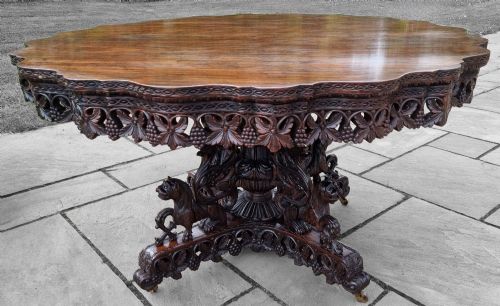
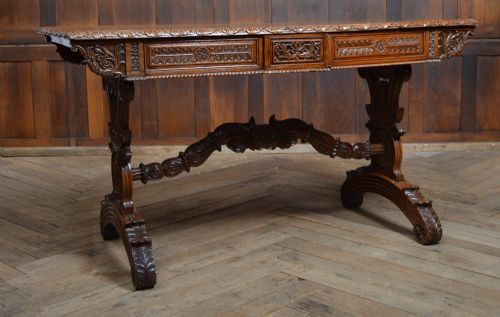


Indian Carved Hardwood Desk
These indian carved hardwood desk pieces are dense with foliage and turn-of-the-century craftsmanship, offering heavy timber forms that anchor a study.
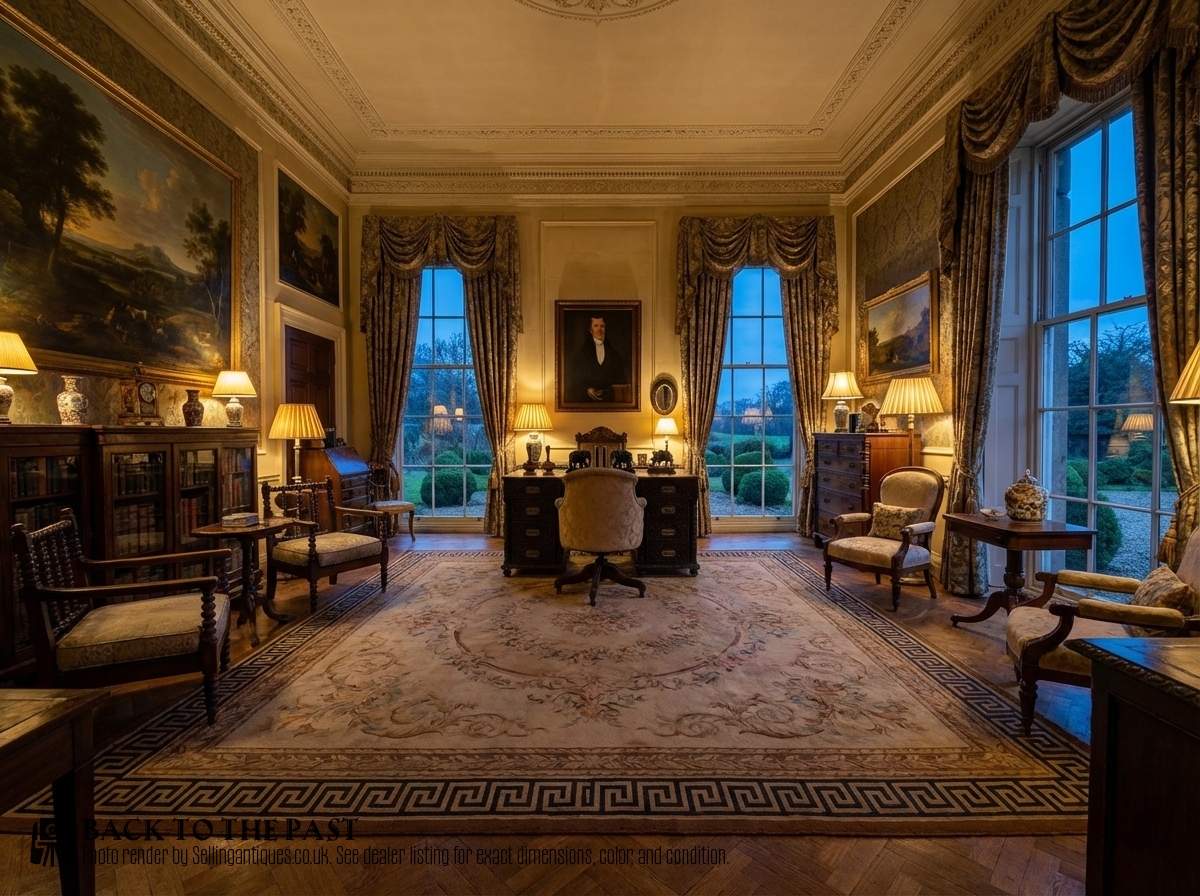
Indian Carved Hardwood Desk
An indian carved hardwood desk brings heavy timber work and deep relief carving into a study, drawing on Victorian and Raj period aesthetics. Buyers searching for an indian carved hardwood desk typically encounter forms spanning partner desks, bureau desks, and pedestal variations alongside related library tables.
The material vocabulary of an indian carved hardwood desk centres on dense timbers like padauk, teak, rosewood, and ebony. Many examples emerge from the nineteenth century, reflecting Anglo-Indian colonial production intended for British homes and administrative use.
Materials and construction
Construction relies on heavy tropical hardwoods such as padauk, teak, and ebony, selected for their stability and capacity to hold intricate chisel work. Workshops utilised dense timber grains to achieve deep relief foliage and figural motifs across structural panels.
Assembly often incorporated brass hardware for campaign portability or structural reinforcement, while secondary elements such as needlepoint upholstery appear on associated seating. The joinery supports substantial writing surfaces and pedestal compartments carved directly from the solid medium.
Elephants stand ready in ebony alongside the desks, watching over the study with stoic colonial charm.
Judging quality in carved furniture
Quality rests upon the crispness and depth of the carved foliage across the hardwood surfaces. Weaker examples show shallow, mechanical chisel work, whereas superior pieces display confident, three-dimensional relief with undercut details.
The choice of timber heavily influences the standard of the piece, with richly figured padauk, rosewood, and dense ebony commanding greater presence than standard utility hardwoods. Structural integrity in the pedestals and drawers also separates workshop tiers.
The Indian Carved Hardwood Desk Glossary
- Padauk
- A dense, heavy tropical timber displaying a rich reddish-brown colour that darkens with age. It serves as the primary medium for many nineteenth-century carved tables and desks.
- Anglo-Indian
- A stylistic classification describing furniture made in India during the British colonial period for export or domestic European use. These items combine traditional Indian carving techniques with British furniture forms.
- Partners Desk
- A large double-sided desk designed for two people to work opposite one another, featuring drawers and cupboards on both faces. They represent some of the most substantial forms found in period studies.
- Campaign Table
- Folding or modular furniture designed for military officers on the move, constructed from durable hardwoods with brass fittings. They prioritize portability without sacrificing utility or decorative carving.
Indian Carved Hardwood Desk: Frequently Asked Questions
How do I clean carved hardwood?
Dust intricate carvings regularly using a soft-bristled brush to prevent particulate accumulation in the recesses. Apply a traditional beeswax sparingly to nourish the timber without dulling the grain.
Avoid liquid polishes containing silicones, which can build up within the deep relief work over time. Maintain a stable room humidity to protect dense tropical timbers from seasonal splitting.
Where were these desks made?
These pieces originated in workshops across the Indian subcontinent during the nineteenth-century colonial era. Local artisans executed British furniture forms using native timbers for colonial officials and export markets.
Production often centred in major manufacturing regions before shipping to British homes. The resulting objects bridge South Asian carving traditions with Victorian domestic requirements.
Can I use daily as a desk?
These pieces function well for daily writing tasks provided the writing surface is protected with a suitable pad or blotter. The solid hardwood construction offers ample durability for contemporary study use.
Ensure that kneeholes and drawer clearances match modern seating requirements before daily implementation. The heavy timber frames easily accommodate modern study demands.
What periods do these pieces span?
The available evidence spans the nineteenth century, including Victorian interpretations and specific dates around eighteen-eighty and eighteen-ninety. Padauk and teak examples frequently align with the Raj period and nineteenth-century colonial expansion.
Earlier nineteenth-century iterations often feature partner configurations, while later Victorian items include smaller bureau and pedestal formats. Dating relies upon timber selection, brass hardware style, and carving depth.