




Brass Handle Cellarette
A brass handle cellarette is a dedicated timber drinking vessel container, built to hold wine bottles securely near the dining table.
Brass Handle Cellarette
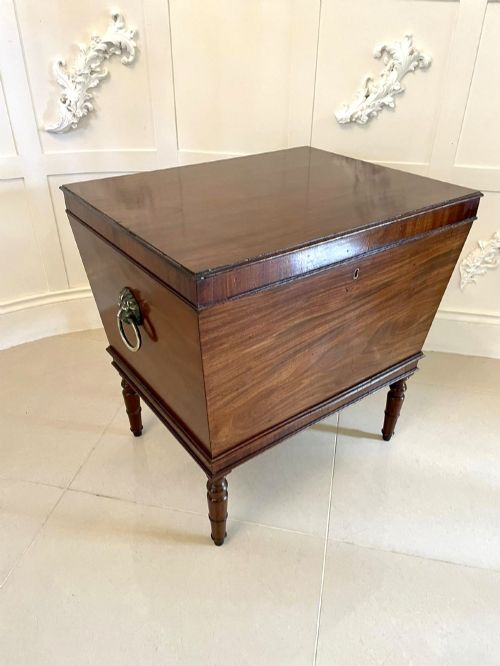
When you search for a brass handle cellarette, you encounter sturdy timber boxes designed for holding wine bottles during formal meals. The examples appearing here span periods from the eighteenth century through to the early twentieth century, including Georgian and Regency pieces.
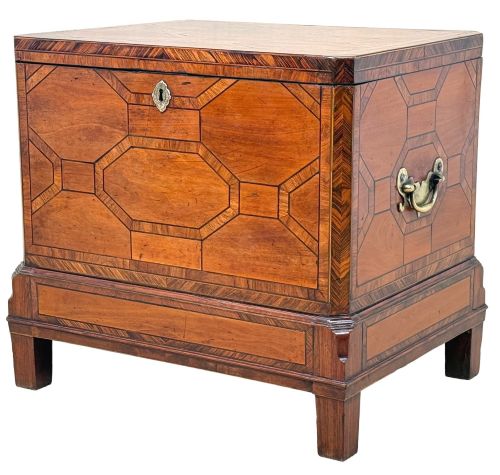
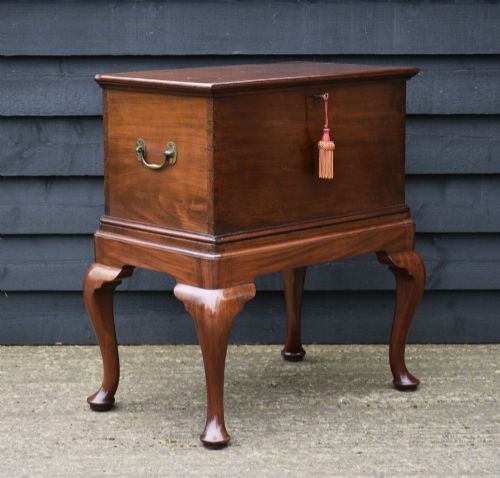
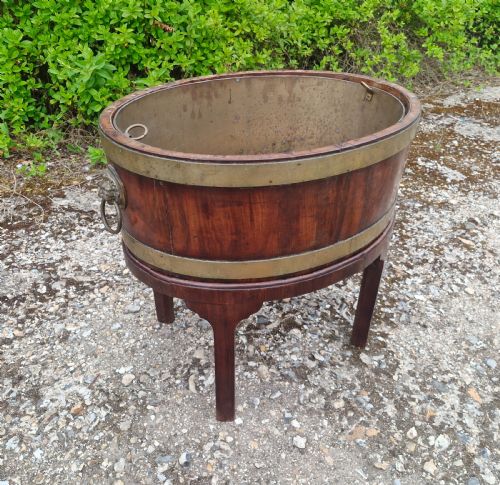
Most items on this page take the form of lidded mahogany boxes, occasionally featuring boxwood stringing, satinwood, or rosewood marquetry. Some pieces stand independently upon dedicated legs with brass castors, while others function as side table vessels or large planters.
How they were made
Cabinet makers constructed these vessels using dense hardwoods like mahogany, frequently enhancing the exterior with contrasting boxwood stringing or exotic veneers. Metal components such as carrying handles, corner brackets, and claw castors required robust brass smithing.
Internal spaces often incorporated metal liners or compartmentalised divisions to separate individual bottles safely. Exterior surfaces received careful polishing to highlight the natural grain of the timber.
Several robust specimens happily moonlight as indoor planters when the wine supply runs dry.
What varies in quality
The standard of a cellarette rests upon the selection of timber figures and the precision of the cabinet work. Superior items display meticulous marquetry, fine dovetail joints, and substantial original brass hardware rather than later replacements.
Proportion and structural integrity distinguish finer examples from simpler utility pieces. Well-balanced forms with intact internal dividers and original stands command greater appreciation among collectors.
Whytock and Reid
The Brass Handle Cellarette Glossary
- Cellarette
- A lockable container used for storing wine bottles near the dining table. They frequently feature internal metal liners to hold melting ice.
- Wine cooler
- A large vessel designed to chill bottles prior to serving. Many share identical forms with cellarettes in eighteenth and nineteenth-century dining rooms.
- Marquetry
- Decorative veneer work created by fitting small pieces of different coloured woods into a design. Artisans utilised satinwood and rosewood for this intricate patterning.
- Stringing
- A thin strip of contrasting wood inlaid into the surface of furniture to create a border. Boxwood is commonly employed for this linear detail.
- Sarcophagus
- A monumental tomb-like shape with a steep lid, adopted by cabinet makers during the Regency period for large wine coolers.
Brass Handle Cellarette: Frequently Asked Questions
What is a brass handle cellarette used for?
These boxes served as secure storage for wine bottles in the dining room, keeping beverages close at hand during long meals. Interiors often contained metal liners designed to hold ice for cooling.
Today, collectors repurpose them as side tables or plant stands while retaining their original aesthetic appeal.
How do I date a cellarette?
Dating relies on observing timber choices, construction techniques, and stylistic shifts across periods. Georgian examples often feature straightforward mahogany forms, whereas Regency pieces introduce sarcophagus shapes and bolder brass mounts.
Examine the internal construction and handle fixings for clues regarding the period of manufacture.
Are cellarettes and wine coolers the same thing?
The terms frequently overlap in historical descriptions and modern listings. Both categories encompass lidded timber vessels built for dining room beverage service.
Cellarettes traditionally emphasise secure storage with locks, whilst wine coolers focus on chilling functions using metal linings.
Where should I place a cellarette at home?
A cellarette suits placement in a dining room, living area, or hallway as a statement storage piece. Stand-alone versions on legs occupy floor space, whilst box variants sit comfortably upon sideboards.
Ensure the timber remains away from direct heat sources to protect the polish and prevent wood splitting.