
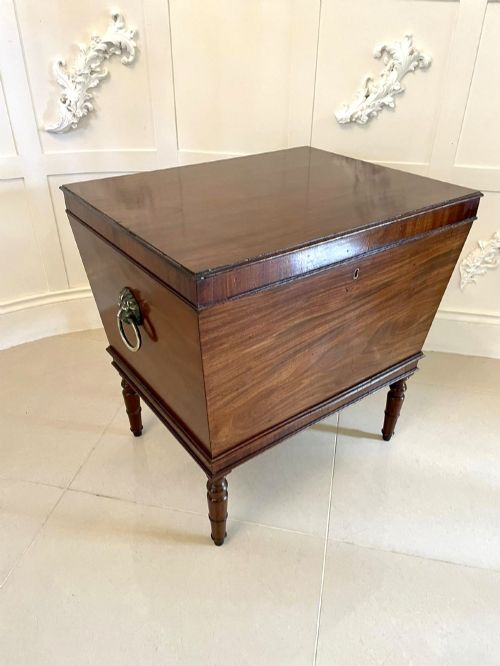
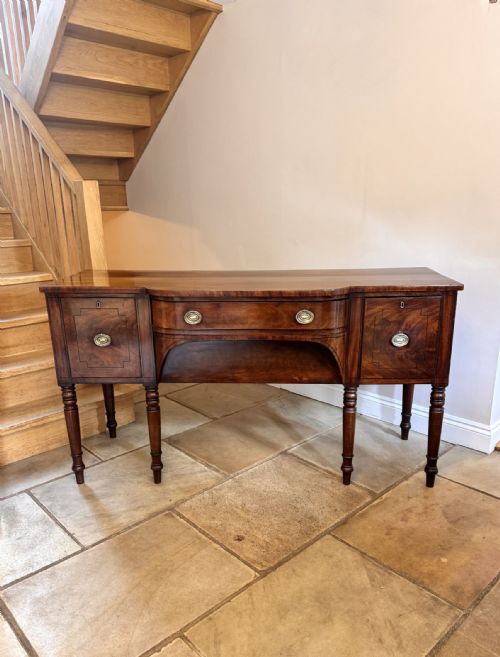
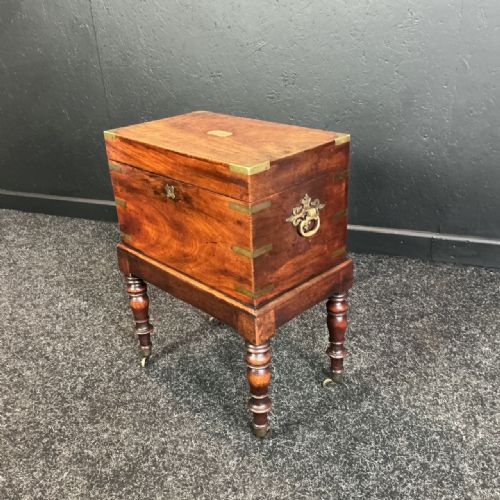


Turned Leg Cellarette
These turned leg cellarette pieces are solid timber wine stores built to keep bottles cool and secure during grand dining.
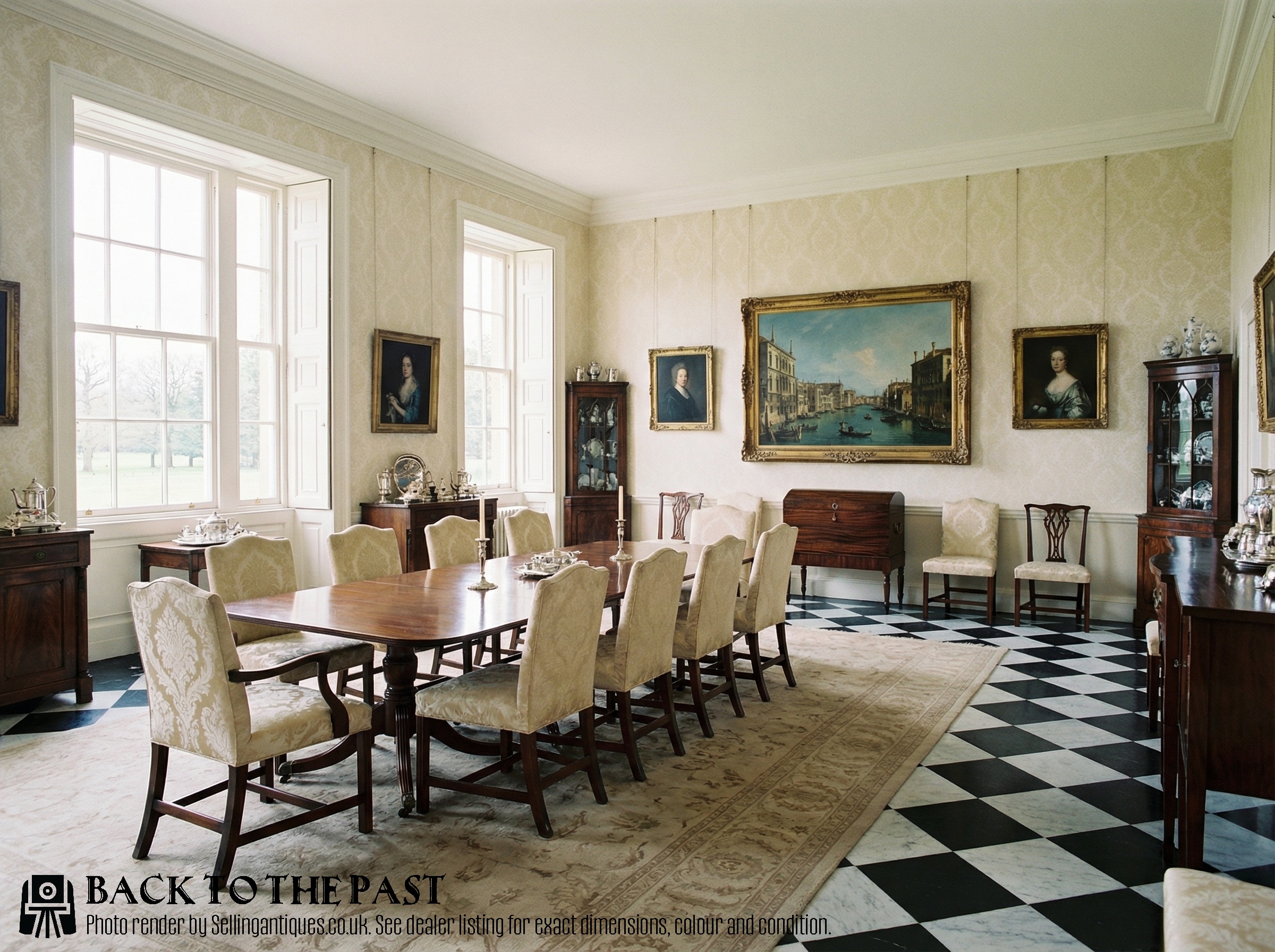
Turned Leg Cellarette
A turned leg cellarette serves as a specialised storage chest for wine bottles, appearing mostly across Georgian, Regency, and early nineteenth-century periods. These forms range from freestanding box cellarettes to larger sideboard combinations designed for formal dining rooms.
The pieces on this page span the eighteenth and nineteenth centuries, utilising classic timber builds like mahogany and flame mahogany. Buyers encounter both compact box formats and substantial sideboards equipped with bottle compartments.
How they were made
Cabinet makers utilised dense timber stocks like mahogany and flame mahogany to construct these heavy storage vessels. Boxwood inlay frequently provides fine linear detail across the exterior panels.
Internal arrangements often incorporate brass fittings and glass elements to hold bottles securely in place. Structural support relies on sturdy turned timber legs characteristic of the Georgian and Regency eras.
Turned Leg Cellarette Retail Price Guide 2026
Typical asking prices for turned leg cellarette among the pieces listed under this phrase on Sellingantiques today, from the lower quarter to the upper quarter. They describe what is for sale here now, not the wider market.
Cabinet makers built these sturdy timber boxes deep enough to keep your modern dinner party vintage cool without a plug.
What varies in quality
The choice of timber grain defines the visual grade of the piece, with richly figured flame mahogany sitting at the upper end of the scale. Subtle decorative additions like precise boxwood inlay distinguish finer examples from plain utilitarian boxes.
Original hardware, including brass mounts and internal fittings, elevates the integrity of a piece. The crispness of the turned leg supports also marks the distinction between standard workshop production and superior cabinet work.
The Turned Leg Cellarette Glossary
- Cellarette
- A lockable container designed to hold wine bottles near the dining table. They typically sat on the floor or beneath a sideboard.
- Flame mahogany
- A highly figured timber veneer prized for its mottled, flame-like grain pattern. Cabinet makers applied it to prominent exterior surfaces.
- Boxwood inlay
- Narrow strips of pale boxwood set flush into darker timber surfaces to create contrasting geometric borders. This technique highlights panel edges.
- Regency
- A British design period spanning the early nineteenth century defined by classical restraint and refined proportions. Furniture from this era often incorporates bold timber grains.
Turned Leg Cellarette: Frequently Asked Questions
What is a turned leg cellarette used for?
These containers held wine bottles securely inside dining rooms before refrigeration became common. They kept beverages close to the table during lengthy meals.
Interior compartments kept glass bottles separated to prevent breakage during transport or storage. Wealthy households relied on them to safeguard fine vintages.
How do I identify a Georgian cellarette?
Georgian pieces display formal proportions, rich mahogany timber, and traditional joinery methods. Many feature boxwood inlay or brass accents.
Legs on these examples are frequently turned from solid timber stocks. The overall build reflects the classical design priorities of the eighteenth and early nineteenth centuries.
Where did these pieces sit in a room?
They stood directly on the floor, often positioned beneath a sideboard or in the corner of a dining room. Their sturdy turned legs provided stable elevation.
Some larger formats integrated the cellarette directly into a sideboard frame. This kept the wine storage unified with the main serving furniture.
What materials are typical for these items?
Mahogany and flame mahogany dominate the external construction of these pieces. Boxwood inlay provides decorative contrast on the panel surfaces.
Internal fittings frequently include brass hardware and glass components. These materials ensured durability and secure bottle management.