
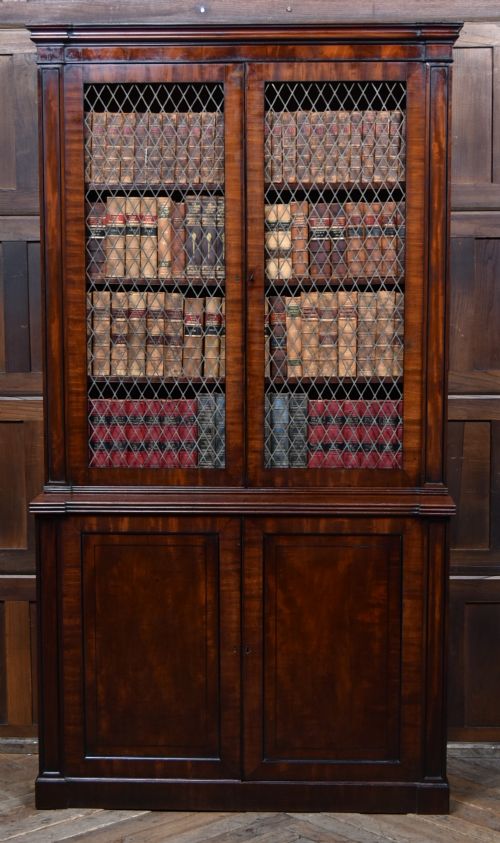
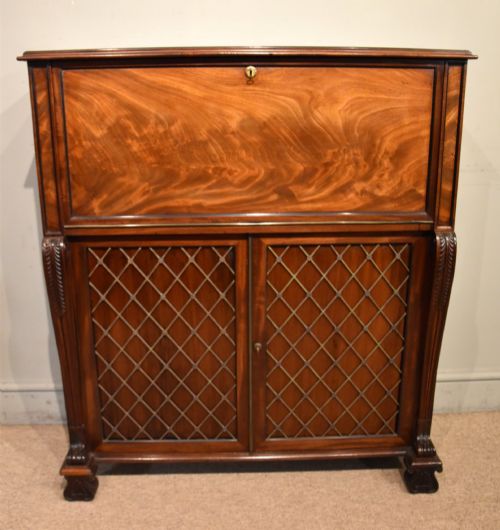
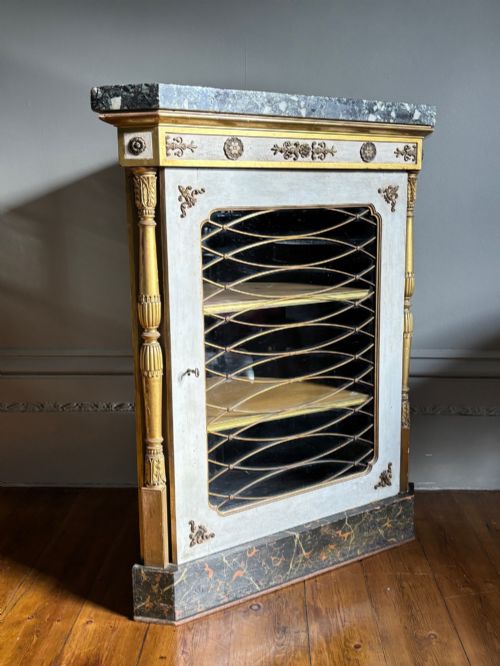


Brass Grille Cupboard
A brass grille cupboard brings architectural warmth to a room, offering functional storage behind woven wire panels.
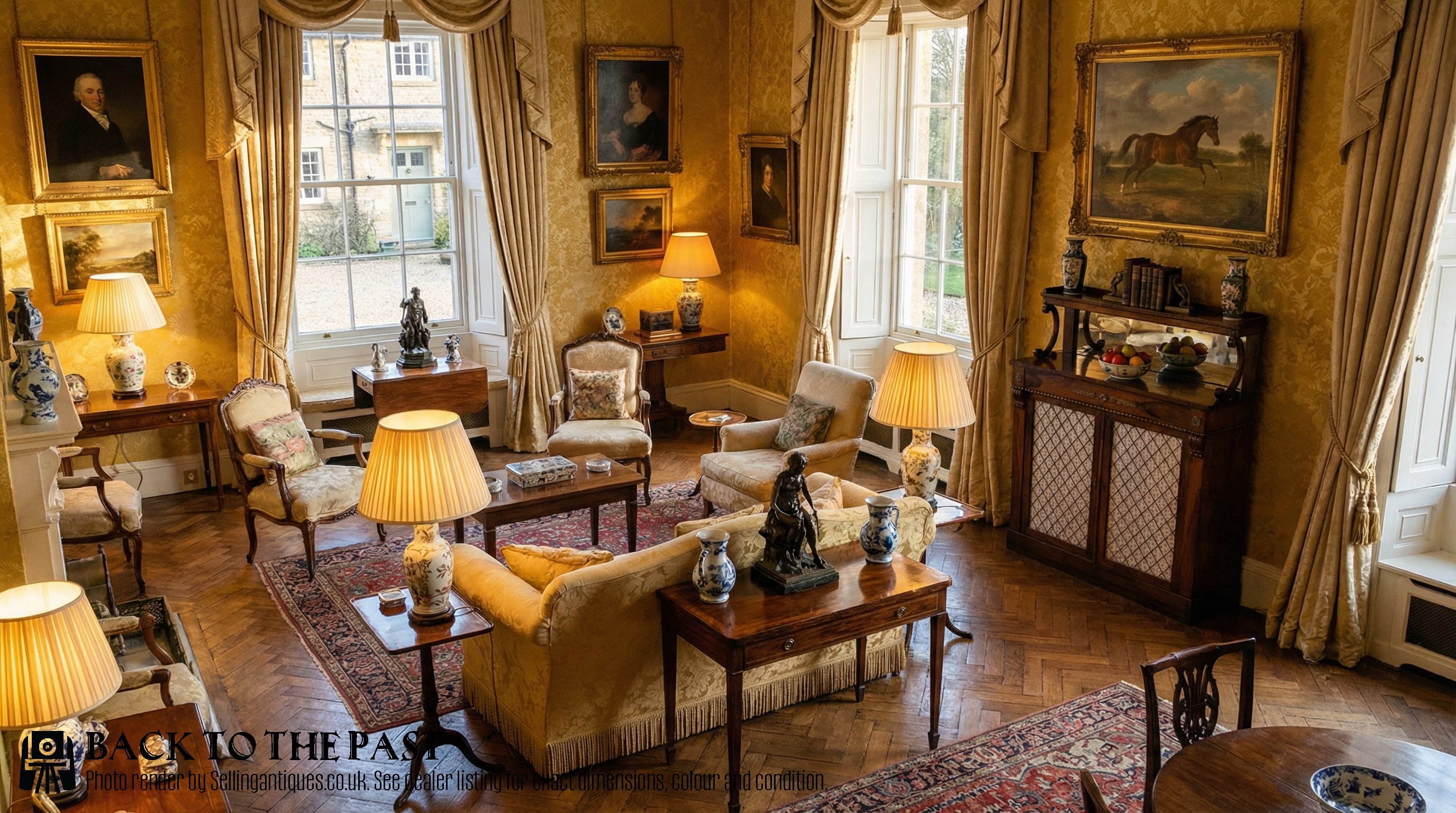
Brass Grille Cupboard
When searching for a brass grille cupboard, buyers encounter a diverse selection of side cabinets, chiffoniers, and bookcases spanning the Georgian, Regency, and Victorian periods. These pieces frequently manifest in rich timbers such as mahogany and rosewood, reflecting the cabinet-making standards of the nineteenth century and earlier eras.
The most common iterations on this page are Regency and William IV rosewood chiffoniers and side cabinets, alongside mahogany bookcases and corner cupboards. These forms combine enclosed wooden cabinetry with woven brass wire panels that allow ventilation while softening the visual weight of the timber doors.
Originating primarily from English workshops, these items served varied domestic purposes from libraries to drawing rooms, functioning as display spaces or secure storage. Their enduring appeal lies in the textural contrast between dark hardwood and polished metalwork.
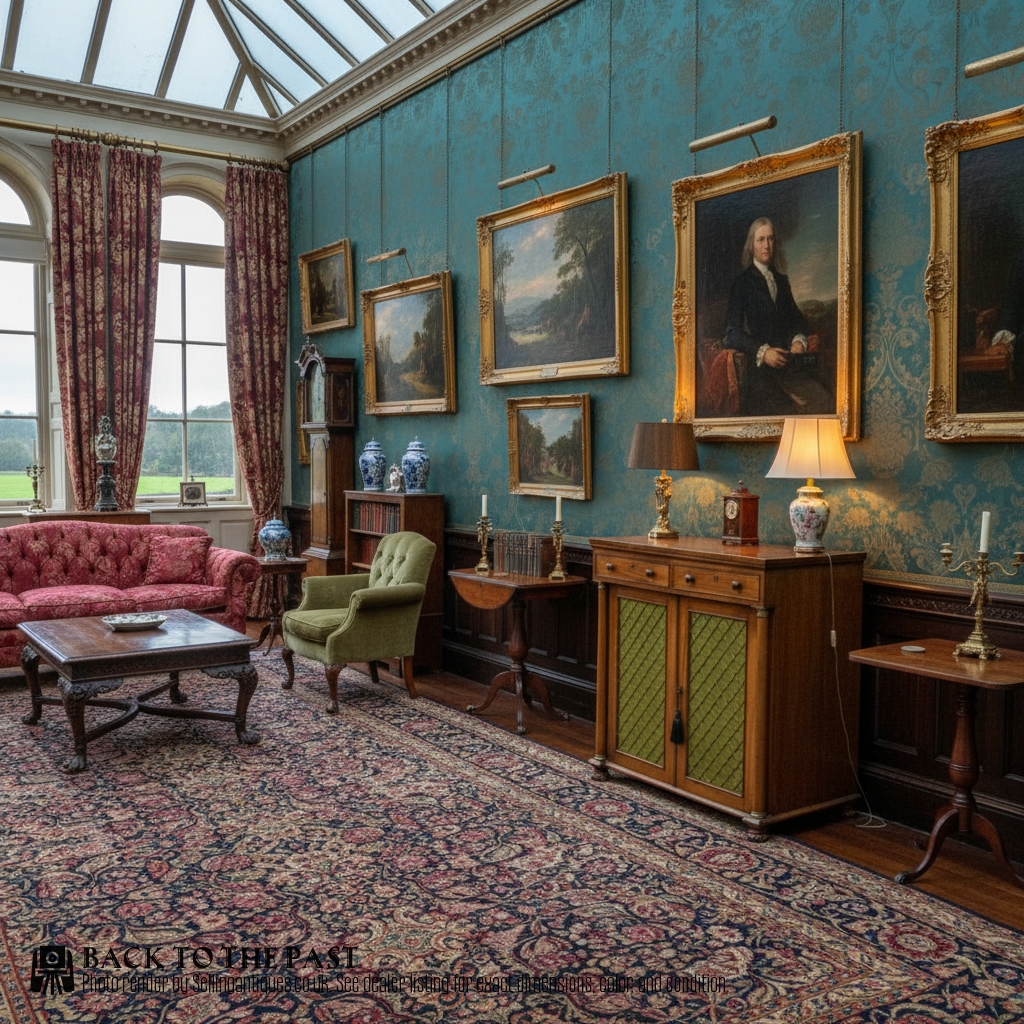
Materials and Construction
Cabinet makers utilised dense hardwoods like mahogany, rosewood, and walnut for the primary structure, often selecting flame veneers to create figured grain patterns across the doors and drawer fronts. These timbers provided a stable, durable carcass capable of supporting heavy internal shelving and marble tops.
The defining feature, the brass grille, consists of fine wire woven or soldered into geometric and diagonal patterns, secured behind wooden frame doors. Backing fabric was frequently placed behind these grilles to protect contents from dust while maintaining a veiled transparency.
Brass Grille Cupboard Retail Price Guide 2026
Typical asking prices for brass grille cupboard among the pieces listed under this phrase on Sellingantiques today, from the lower quarter to the upper quarter. They describe what is for sale here now, not the wider market.
Listings feature rosewood, mahogany, and walnut woods across Regency, Victorian, and Georgian periods.
Assessing Quality and Execution
Quality in these pieces is dictated by the selection of timber veneers and the precision of the brass work. Finer examples display symmetrical grain matching, robust carcase construction, and delicately woven grilles that remain taut within their frames without loose wires.
Proportion and restrained ornamentation also separate standard utility items from high-status commissions. Superior pieces exhibit refined architectural mouldings, well-integrated brass inlay, and original internal fittings such as adjustable shelving or secretaire drawers.
Gillows·Holland & Sons
The Brass Grille Cupboard Glossary
- Chiffonier
- A low sideboard or cabinet featuring enclosed shelving below, developed during the Regency period for the drawing room or dining room. It often includes a raised superstructure or mirrored back in later Victorian iterations.
- Secretaire
- A cabinet or chest incorporating a pull-down writing drawer fitted with small interior pigeonholes and compartments. This multifunctional element allowed owners to manage correspondence within a domestic living space.
- Flame Mahogany
- A veneer cut from the fork of the mahogany tree where the branch meets the trunk, producing a distinctive, fiery wave pattern. Cabinet makers reserved this highly decorative wood for prominent exterior surfaces.
- Breakfront
- A cabinet design where the central section projects forward from the flanking wings. This configuration creates visual depth and breaks up the linear monotony of large bookcases and sideboards.
- Neoclassical
- A style spanning the late eighteenth and early nineteenth centuries that drew inspiration from classical Greek and Roman architecture. It prioritised symmetry, straight lines, and understated decorative brass mounts.
Brass Grille Cupboard: Frequently Asked Questions
What is a brass grille cupboard?
A brass grille cupboard is a piece of case furniture, such as a chiffonier, bookcase, or side cabinet, featuring doors fitted with woven wire mesh instead of solid wood or plain glass. These cabinets date predominantly from the Georgian, Regency, and Victorian eras.
The metal mesh provided secure ventilation for stored items while introducing a subtle metallic texture that contrasted with dark woods like rosewood and mahogany.
How were these cabinets used originally?
These cabinets served multiple domestic functions in drawing rooms, dining rooms, and libraries across grand English homes. They housed valuable books, tableware, or linens while keeping contents partially concealed behind fabric-backed wire grilles.
Some iterations incorporated secretaire drawers, allowing the furniture to double as writing desks for managing household correspondence in polite company.
How do I distinguish Regency from Victorian pieces?
Regency pieces, dating from the early nineteenth century, typically exhibit clean classical proportions, rosewood veneers, and restrained brass inlay or grilles. They lean toward architectural symmetry and lighter visual weight.
Victorian pieces often display heavier timber construction, bolder carving, and darker walnut or mahogany finishes. The proportions became more robust as domestic interiors shifted toward heavier upholstery and dense decoration.
Are the fabric linings behind the grilles original?
The fabric backing behind brass grilles rarely survives from the nineteenth century in pristine condition due to fading and wear. Most pieces have been re-lined during conservation to protect the interior from dust.
Choosing a neutral silk or damask matching the era allows the intricate brass wirework to remain the visual focal point of the cabinet doors.