




Brass Girandole Sconces
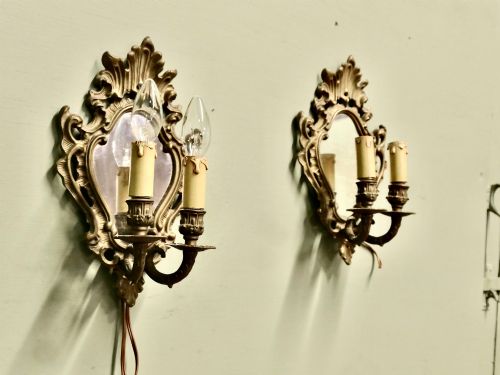
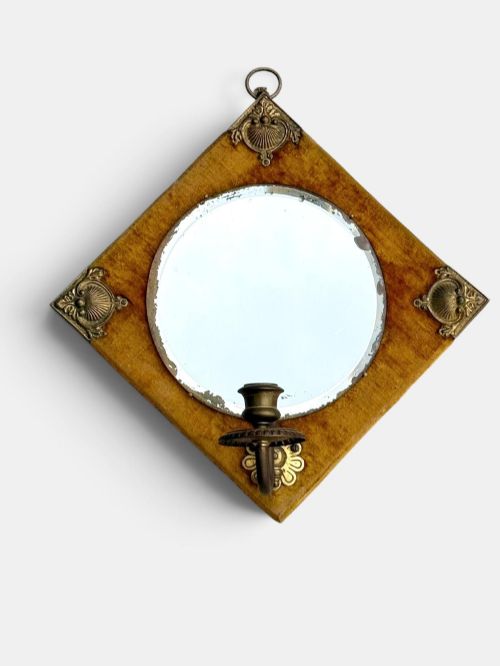
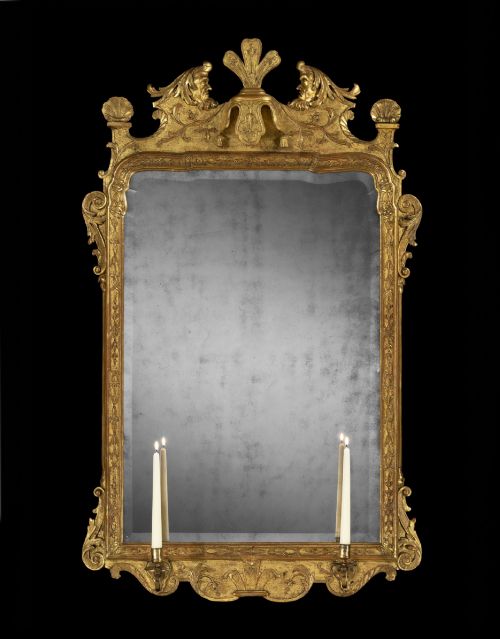
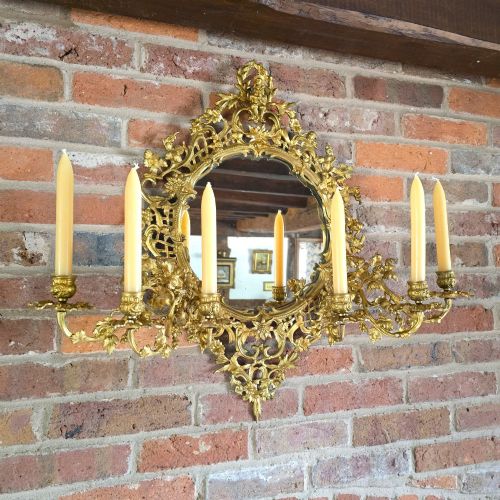
Brass girandole sconces are candle-lit wall mirrors that catch and multiply candlelight through polished glass and metal.
Brass Girandole Sconces
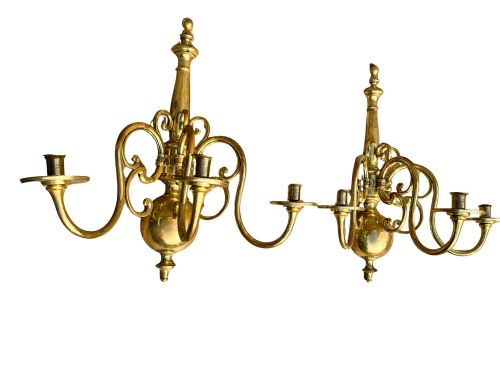
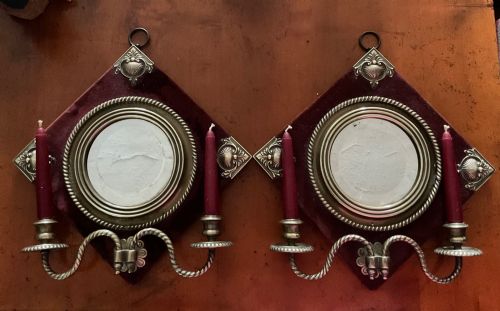
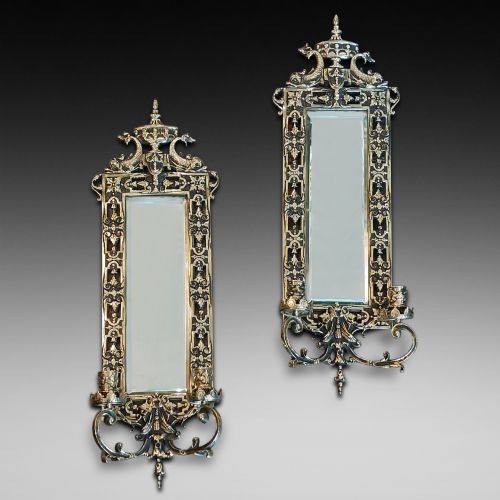
Brass girandole sconces combine reflective mirror glass with protruding candle branches designed to hang directly upon a wall. You will encounter pairs frequently on this page, often built from brass, gilt bronze, or ormolu alongside paired or multi-branched candelabra.
The selections span distinct historical periods from the eighteenth century through the Victorian and Edwardian eras into the early twentieth century. Styles range from French Rococo Revival and Dutch Baroque to Arts and Crafts and Chinoiserie interpretations.
Common forms include dedicated wall mirrors fitted with candle arms, alongside more specialised girandole mirror designs and twin-arm wall lights. These fixtures served both practical illumination and decorative room enhancement in domestic interiors.
What varies in quality
Quality rests upon the crispness of the metal casting and the depth of the hand-chasing across the brass or ormolu mounts. Finer examples display intricate Rococo scrolls or Chinoiserie detailing with sharply defined ornamentation rather than soft, blurred casting lines.
The integration between the mirror glass and the candle arms reveals the maker's intent, where superior pieces balance weight securely and maintain original mercury or silvered mirror plates rather than modern replacements.
Brass Girandole Sconces Retail Price Guide 2026
Typical asking prices for brass girandole sconces among the pieces listed under this phrase on Sellingantiques today, from the lower quarter to the upper quarter. They describe what is for sale here now, not the wider market.
Materials documented across the inventory include brass, gilt bronze, ormolu, mirror glass, crystal, velvet, and carved giltwood.
The Brass Girandole Sconces Glossary
- Ormolu
- Finely chopped high-karat gold applied to a bronze base using a mercury amalgamation technique. This historic process yields a durable, rich golden surface finish seen on French luxury items.
- Rococo Revival
- A nineteenth-century design movement inspired by the asymmetrical curves, C-scrolls, and naturalistic shell motifs of the eighteenth century. This style dominates many ornate mirror and sconce frames.
- Gesso
- A traditional paint mixture consisting of a binder mixed with chalk, gypsum, or pigment, applied to wood surfaces. It provides a smooth base for subsequent gilding on historical mirror frames.
Brass Girandole Sconces: Frequently Asked Questions
How do I clean brass girandole sconces?
Dust the brass frames and glass gently using a soft, dry cloth to prevent accumulation of grime. Avoid harsh chemical polishes that can strip historical gilding or damage vulnerable velvet and mirrored surfaces.
Take care around crystal drops and candle nozzles, supporting any branching arms firmly during maintenance. Professional cleaning is recommended for antique gilt bronze finishes to preserve their original patination.
Were these sconces electrified originally?
Historical brass girandole sconces were manufactured exclusively for candles before modern domestic electricity existed. Many surviving examples retain their original candle sockets and drip pans.
Some pieces have been adapted for electric lighting over time to suit contemporary homes. Check individual piece descriptions to determine whether wiring has been added or if they remain configured for candles.
How do I hang a heavy wall mirror safely?
Heavy brass and bronze girandole sconces require secure wall fixings distributed across sturdy structural supports. Assess the weight of the mirror plate and metal arms before selecting appropriate wall anchors.
Consult a professional installer if you are mounting pieces onto plasterboard or lath and plaster walls. Ensuring the hanging brackets match the structural weight prevents accidental detachment.
What is the difference between a sconce and a girandole?
A standard wall sconce is primarily a bracket fixture designed to hold candles or electric bulbs upon a wall. A girandole specifically incorporates a mirror plate into the design to multiply the emitted light.
Both forms share similar branching arm structures, but the central reflective glass defines the girandole category. This distinction influenced how interior spaces were illuminated before widespread gas and electric lighting.