


Brass Four Glass Clock
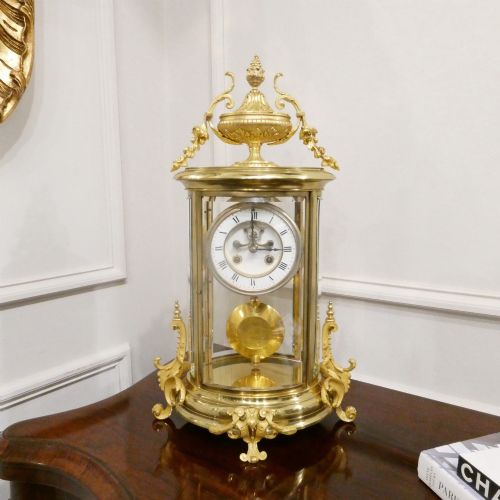
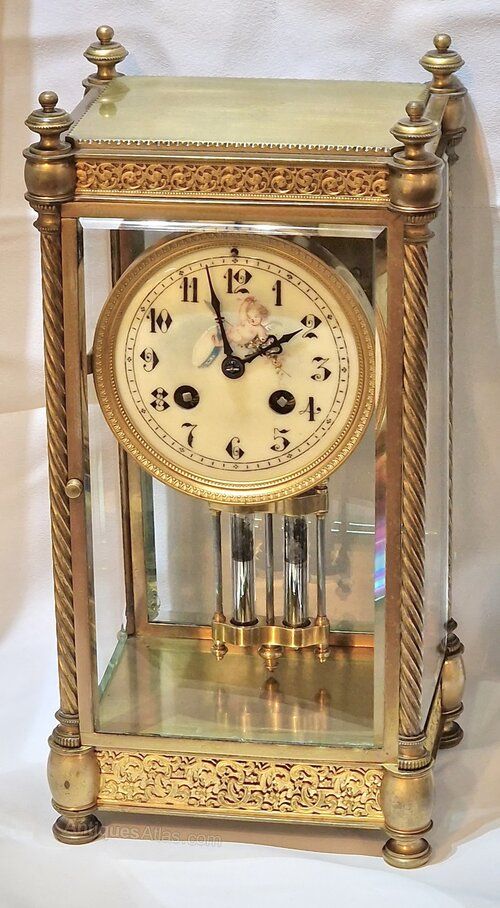
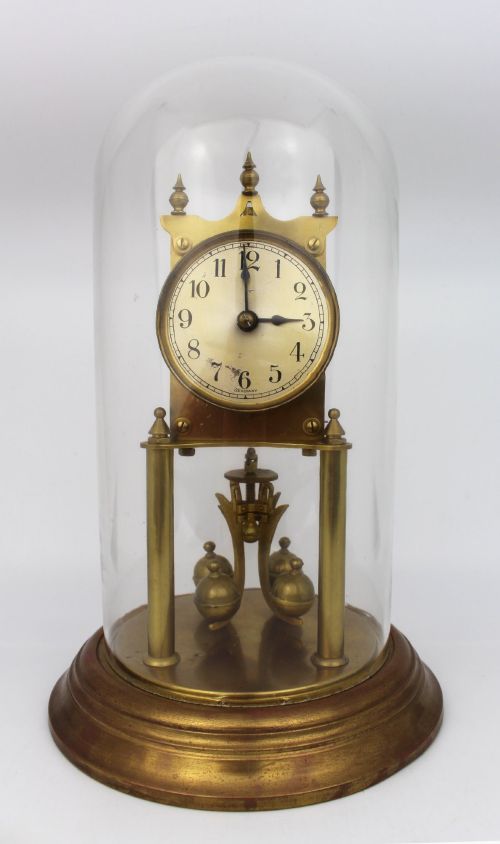
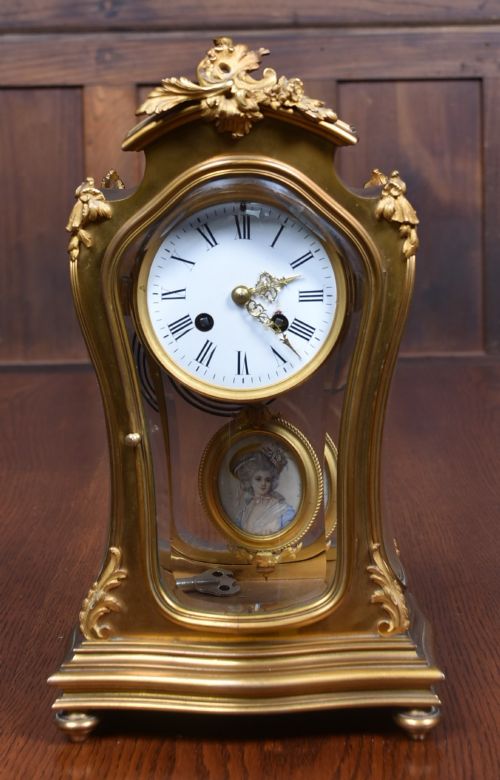
A brass four glass clock brings together heavy bevelled panels and precise mechanical movement to showcase the ticking brass work inside.
Brass Four Glass Clock
A brass four glass clock is a tall, slender mantel timepiece designed to display its internal pendulum and escapement through transparent panels on all four sides. The pieces found here span the late nineteenth century and the Victorian era, heavily representing French workshops alongside occasional English library and German examples.
Most entries follow a classic rectangular or oval gorge case format, though variations include bow-fronted glass, ships wheel pendulums, and moon-phase dials. They sit comfortably on a mantelpiece or bracket shelf where light can pass directly through the glass enclosure to illuminate the dial and mercury or mercurial-style pendulums.
How They Were Made
These clocks rely on heavy cast brass frames, often gilded or finished as ormolu and gilt bronze, housing thick, bevelled glass panes that fit precisely into rebated channels. The movements are driven by brass wheel trains, frequently featuring spring barrels or single fusee setups.
Brass Four Glass Clock Retail Price Guide 2026
Typical asking prices for brass four glass clock among the pieces listed under this phrase on Sellingantiques today, from the lower quarter to the upper quarter. They describe what is for sale here now, not the wider market.
Listings feature brass four glass clocks predominantly from the Victorian period and the late nineteenth century, driven by French manufacturing hubs.
What Varies in Quality
Quality reveals itself in the weight and crispness of the cast brass framing and the clarity of the thick bevelled glass panes. Finer examples display signed movements by recognised makers, intricate dial ornamentation, and supplementary complications such as mercury pendulums or moon-phase indicators.
The precision of the mechanical assembly and the depth of the gilding separate standard production pieces from exceptional exhibition items. The inclusion of matching garnitures or delicate champleve enamel work further elevates a piece within the range.
Samuel Marti·AD Mougin·L Epee·Japy Freres·Vincenti·John Massey
The Brass Four Glass Clock Glossary
- Gorge case
- A stepped, architectural brass case style with flat top plates commonly used on carriage and four glass clocks.
- Bevelled glass
- Heavy glass panes with angled, polished edges designed to fit snugly into the rebated brass corners of the clock frame.
- Champleve
- An enamelling technique where troughs are dug into the brass surface and filled with coloured vitreous paste before firing.
- Fusee
- A conical pulley connected to the mainspring by a chain, designed to equalise the torque as the spring unwinds.
- Garniture
- A set consisting of a central clock flanked by matching decorative objects such as urns or candelabra for mantel display.
Brass Four Glass Clock: Frequently Asked Questions
How do I wind a four glass clock?
Use the matching winding key on the small arbours located on the enamel dial face. Turn gently until resistance is felt, avoiding over-winding to protect the mainspring.
Ensure you do not touch the delicate pendulum or interior movement train while handling the key.
Why does the pendulum have a column of liquid?
Many fine pieces utilise a compensated mercury pendulum to counteract temperature changes in the room. The columns expand or contract to keep the clock ticking accurately across the seasons.
In later or replacement pendulums, this effect is sometimes simulated for visual symmetry.
Where should I place a brass four glass clock?
Position the piece on a sturdy, level surface away from direct sunlight and dampness. Mantelpieces and dedicated clock brackets are ideal because they prevent vibrations that interfere with the escapement.
Because the sides are entirely glass, placing it where natural light can pass through enhances the visibility of the internal mechanism.
How do I tell a French clock from an English one?
French examples from the Victorian period frequently feature stamped maker medallions on the movement backplate and mercury-filled pendulums. They often employ platform escapements or delicate silk suspensions.
English library clocks in this style tend to use heavy fusee movements and simpler, robust brass framing without porcelain panels.