
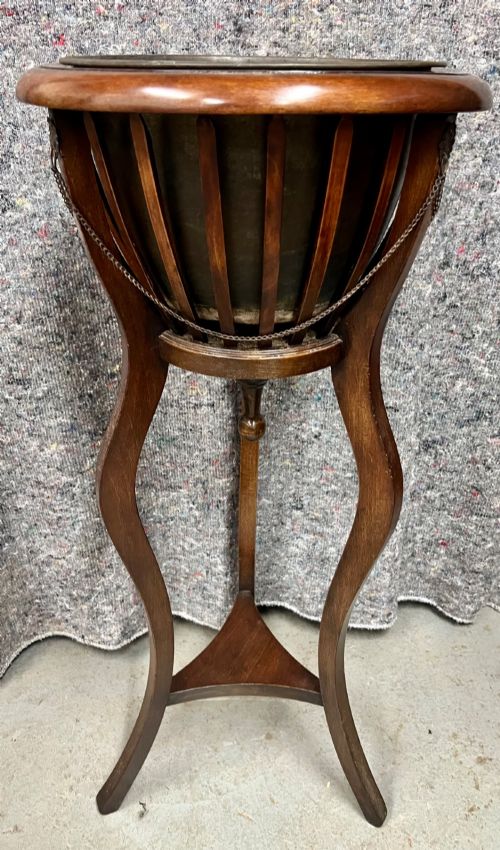
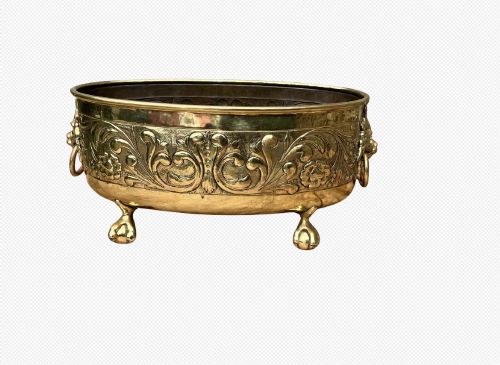


Brass Floral Planter
These brass floral planter vessels bring polished metal and botanical display together in domestic rooms, offering the exact decorative accent a collector seeks.
Brass Floral Planter
When you search for a brass floral planter, you encounter a distinct group of vessels designed to hold plants and flowers within domestic interiors. The examples met on this page span several periods, including the Victorian and Edwardian eras, alongside Georgian and nineteenth-century pieces.
The forms extend beyond standard pots to include jardinieres, plant stands, occasional tables, wine coolers, and decorative bowls. Many examples arrive from specific traditions, such as Chinese bronze bowls and Japanese style pieces, alongside domestic British and European metalwork.
How they were made
The construction relies heavily upon metals such as brass, bronze, and copper, frequently shaped through embossing and casting techniques. Makers also utilised secondary materials including mahogany, walnut, kingwood, ormolu, and enamel to build complex stands and decorative surfaces.
Surface ornamentation ranges from detailed repoussé floral embossing to intricate cloisonné enamel work. Metal mounts, marquetry inlay, and timber frames are combined skillfully to support the heavy metal vessels.
Listings incorporate brass, bronze, copper, and enamel materials across Victorian, Edwardian, Georgian, and nineteenth-century periods.
What varies in quality
The standard of a brass floral planter rests upon the crispness of the metal embossing and the weight of the material used. Heavier bronze bowls and deeply chased brass surfaces demonstrate a superior level of artisan execution compared to lighter, plain pressings.
Material combination also defines the upper tier of pieces, where solid hardwoods like kingwood and mahogany integrate seamlessly with gilt metal mounts and cloisonne sections. The harmony between the vessel and its supporting stand or table dictates the overall distinction of the object.
The Brass Floral Planter Glossary
- Jardiniere
- An ornamental pot or stand for holding plants or flowers. These vessels often sit upon tables or directly on the floor depending on their scale.
- Cloisonne
- An ancient technique for decorating metalwork objects with coloured material held in place by thin metal strips. This method appears on several nineteenth-century Chinese bowls.
- Ormolu
- Gilded bronze applied to furniture mounts and decorative items. It provides a bright golden contrast against darker timbers and patinated brass.
- Repoussé
- Metalworking technique in which a malleable metal is ornamented or shaped by hammering from the reverse side. This creates the raised floral patterns seen on Victorian planters.
Brass Floral Planter: Frequently Asked Questions
Where were these planters placed?
These vessels stood in reception rooms, parlours, and hallways to display indoor plants and floral arrangements safely. Their waterproof metal linings protected fine wooden furniture from moisture.
Larger versions often rested on dedicated plant stands or occasional tables, while smaller bowls functioned as desk pots or decorative vessels.
How do I date a brass planter?
Dating relies upon stylistic clues, construction methods, and the specific materials integrated into the piece. Victorian and Edwardian examples often feature machine-assisted embossing alongside traditional hand-finishing.
Earlier Georgian or nineteenth-century pieces display heavier cast bronze construction and distinct patination that develops over extended periods.
What is Dinanderie?
Dinanderie refers to European brass or copper-ware, named after the town of Dinant in Belgium which specialised in brass casting. This term describes embossed and beaten metal vessels.
Pieces carrying this description showcase historical metalworking traditions passed down through generations of artisans.
Can I use them for plants?
These vessels were originally manufactured to house live plants and floral displays within domestic interiors. Many retain interior liners or solid metal construction suited for holding pots.
Care should be taken to protect antique metal surfaces from prolonged exposure to standing water and acidic soil.