

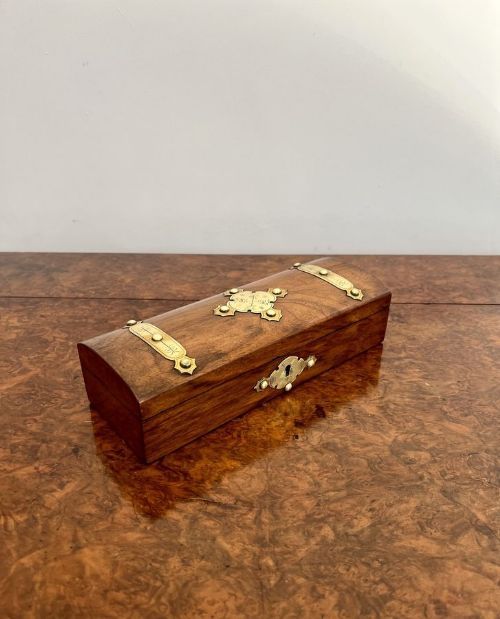


Brass Fitted Casket
These brass fitted casket examples are robust timber containers designed to secure precious items, prized for their handsome metal mounts and fitted compartments.
Brass Fitted Casket
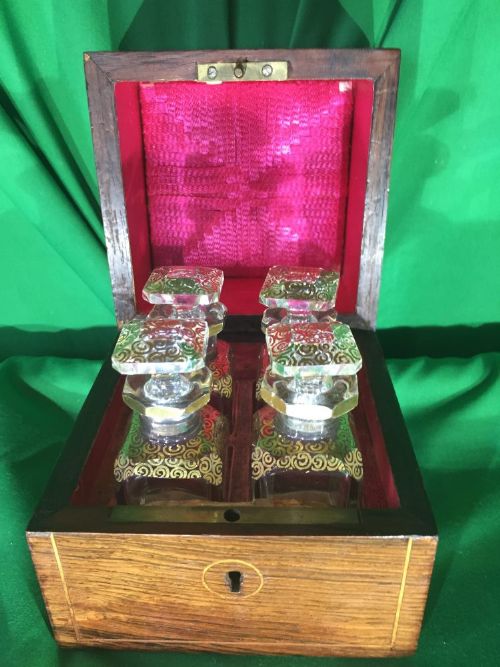
A brass fitted casket serves to hold personal valuables, writing materials, or glassware, taking forms such as jewellery boxes, vanity cases, and decanter boxes. These containers appear most often from the Victorian era and the nineteenth century, constructed with substantial timber frames.
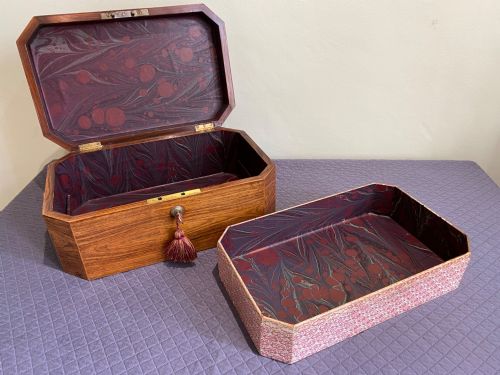
Buyers encounter variations ranging from simple rosewood jewellery boxes to elaborate decanter boxes housing scent bottles and games equipment. The designs encompass Georgian, Victorian, Edwardian, and nineteenth-century Scandinavian styles, reflecting diverse domestic and travel needs.
How they were made
Craftsmen built the primary carcase using dense hardwoods such as rosewood, burr walnut, oak, and coromandel, often applying decorative veneers to the exterior surfaces. These timbers provide the structural strength necessary for frequent handling and transport.
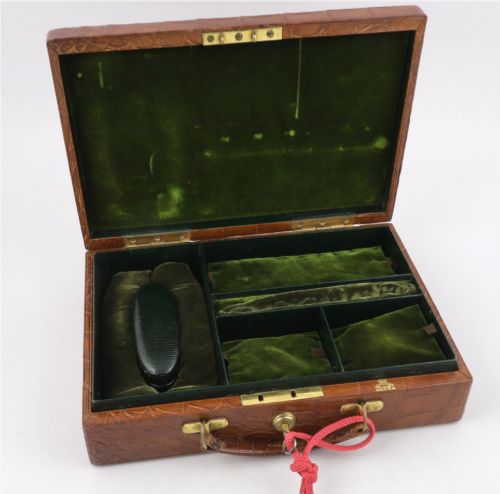
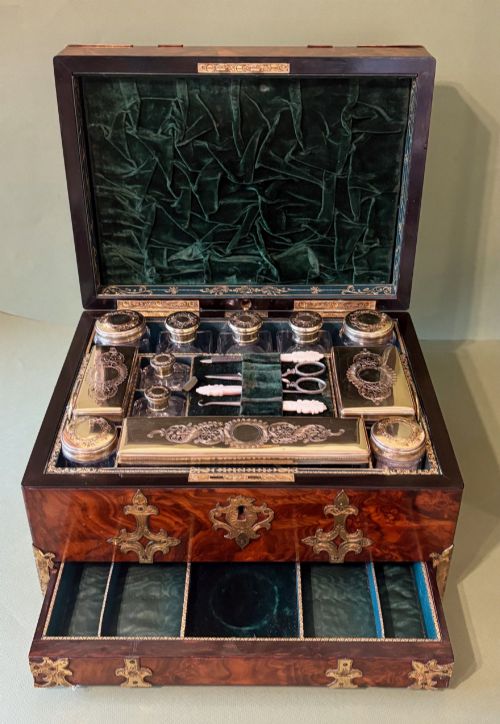
Metalworkers integrated brass mounts, bindings, and ormolu framing to reinforce corners and secure lids, while interior spaces received linings of velvet, silk, and glass fittings. Crocodile leather also appears on specific travel-focused pieces.
Brass Fitted Casket Retail Price Guide 2026
Typical asking prices for brass fitted casket among the pieces listed under this phrase on Sellingantiques today, from the lower quarter to the upper quarter. They describe what is for sale here now, not the wider market.
The documented pieces span Georgian, Victorian, and Edwardian periods, including specialised apothecary boxes and Scandinavian table boxes.
What varies in quality
The choice of primary wood and the complexity of the internal fittings establish the baseline grade of a piece, with figured burr walnut and coromandel sitting above standard domestic timbers. Comprehensive internal arrangements involving multiple compartments and intact glass bottles distinguish the finer examples.
The precision of the brass work and the integration of internal mechanisms, such as locking systems and folding trays, separate standard utility boxes from superior domestic containers. The survival of original silk and velvet linings further elevates the standing of an item.
J C Vickery
The Brass Fitted Casket Glossary
- Ormolu
- A gilded brass ornament applied to the exterior of furniture and boxes. It provides a bright decorative contrast against dark timbers like walnut.
- Apothecary box
- A specialised compartmentalised container designed to hold medical phials and ingredients. These items date back to the eighteenth century.
- Burr walnut
- Timber taken from a tree growth that produces intricate, swirling grain patterns. Cabinet makers prized this wood for luxury veneering.
Brass Fitted Casket: Frequently Asked Questions
What were brass fitted caskets used for?
These containers served multiple domestic and travel purposes, holding items such as jewellery, writing implements, sewing tools, and personal documents.
Larger versions accommodated glass decanters, scent bottles, and games equipment for use during journeys or formal entertaining.
How do I identify a Victorian box?
Victorian examples frequently utilise dense hardwoods like rosewood or walnut, combined with substantial brass mounts, escutcheons, and corner brackets.
They often feature internal trays lined with silk or velvet designed specifically for jewellery, stationery, or sewing equipment.
How should I care for timber caskets?
Keep wooden boxes away from direct sunlight and steady heat sources to prevent the timber veneers and internal velvet linings from drying out.
Apply a dry cloth for routine dusting and avoid using liquid polishes that might seep into the brass fittings or damage the aged wood surface.
What is the difference between a box and a casket?
In historical terms, a box generally refers to a utilitarian lidded container, whereas a casket often implies a more decorative or secure repository for valuables.
In practice, makers and dealers used both terms interchangeably for nineteenth-century fitted timber cases.