
Brass Fireplace Hearth Curb
A brass fireplace hearth curb protects the room from stray embers while anchoring the hearth with solid metalwork.
Brass Fireplace Hearth Curb
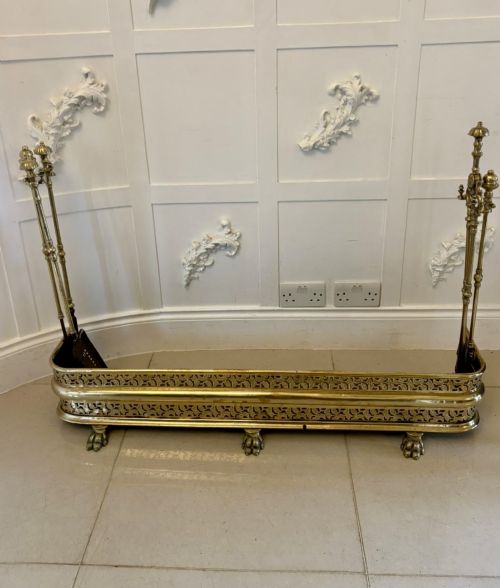
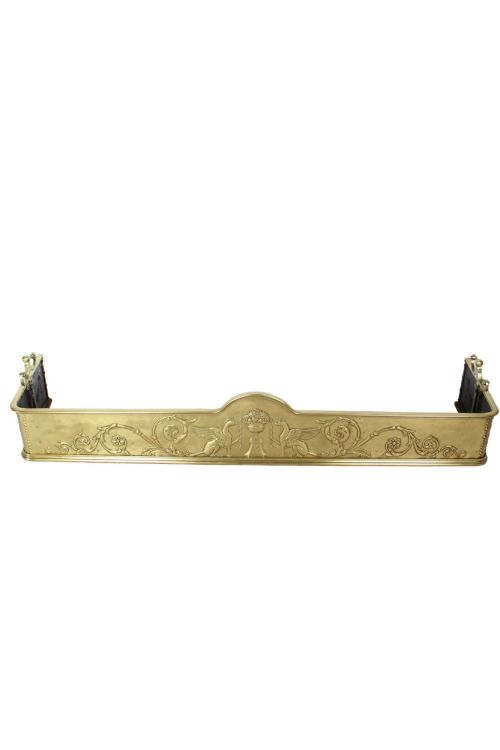
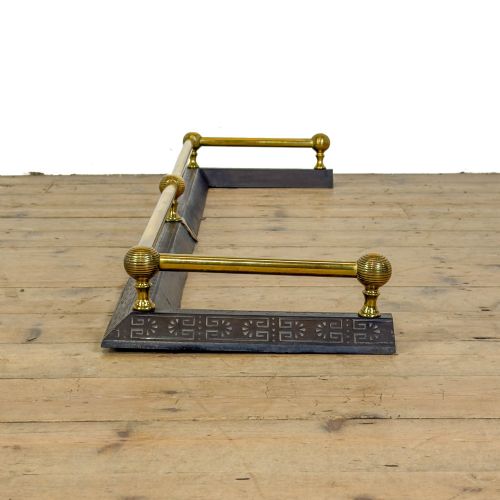
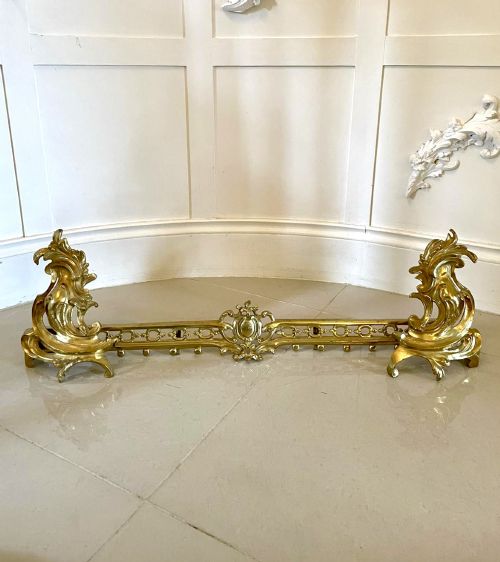
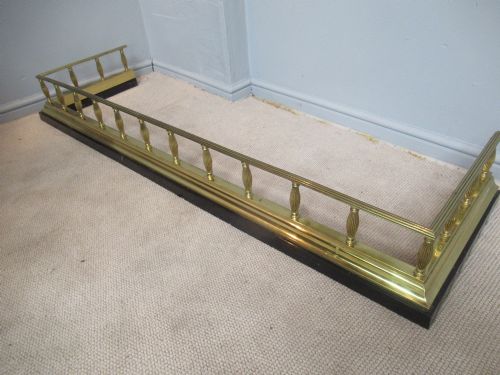
A brass fireplace hearth curb sits directly on the floor around the opening of a fireplace to contain ash and coals. These pieces span the Georgian, Victorian, and Edwardian periods, appearing in standard formats and extending versions.
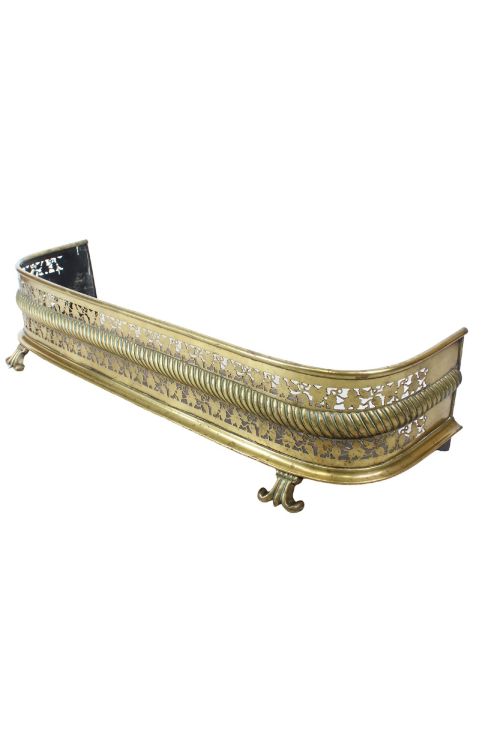
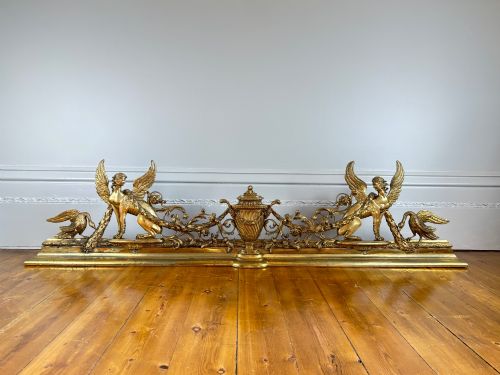
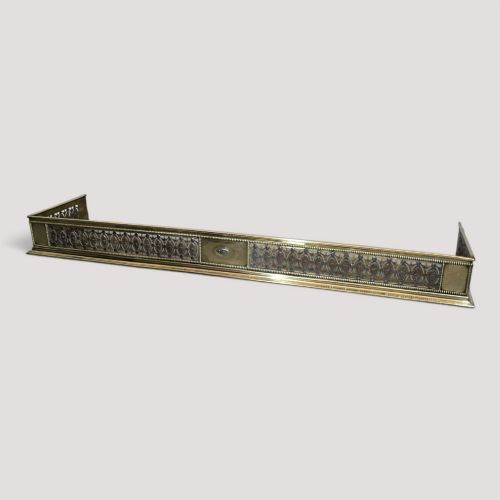
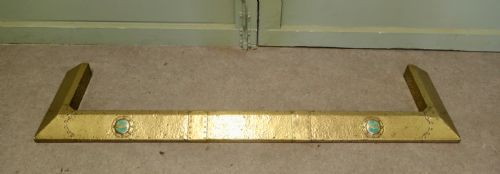
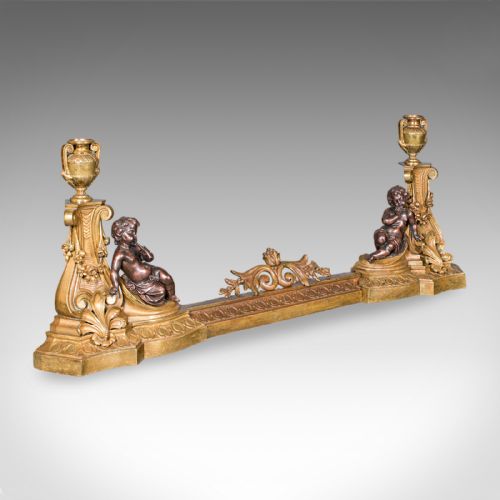
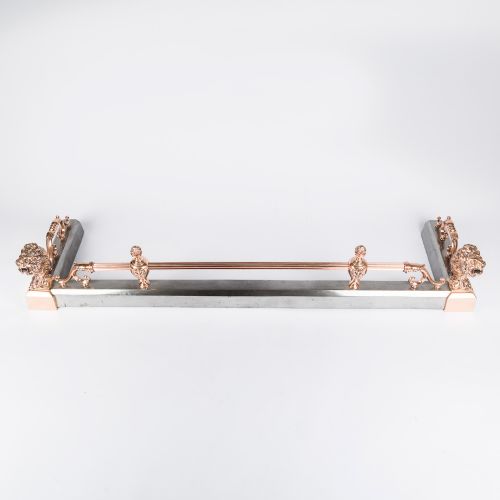
The materials combine bright sheet brass with cast iron, steel, bronze, and copper accents. Pierced galleries, chased decoration, and applied cabochons define the distinct visual character of these hearth surrounds.
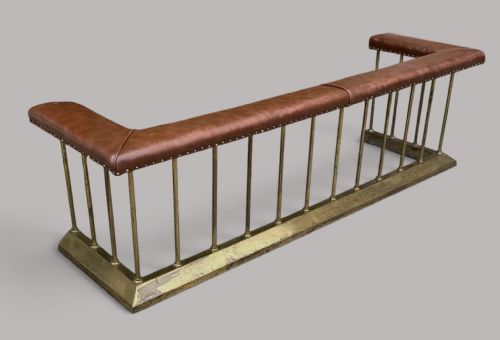
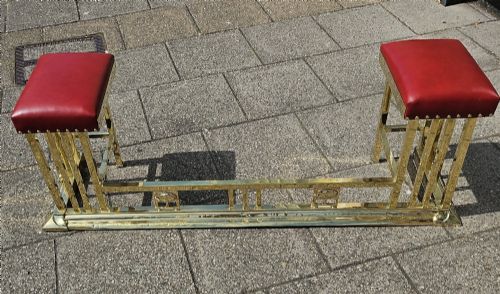
Most examples date from the nineteenth century, ranging from simple polished kerbs to large club fenders fitted with upholstered leather seats. Regional English and French workshops produced the majority of surviving pieces.
Construction and Materials
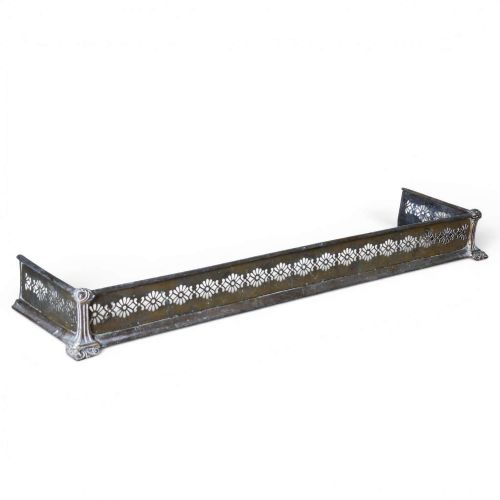
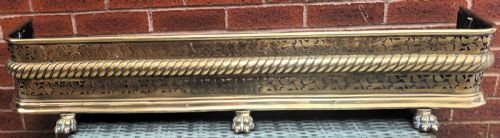
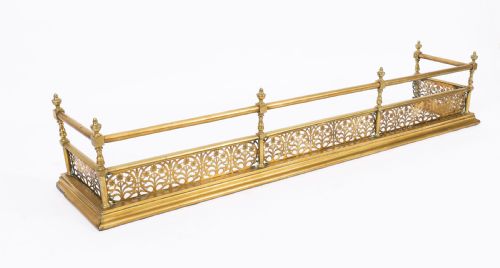
Makers formed the body of a brass fireplace hearth curb from heavy sheet brass, often piercing the metal with geometric or floral pierced frets using hand chisels. Iron and steel internal frames provided structural rigidity to prevent warping near the heat of the fire.
Cast brass ornaments, bronze mounts, and applied copper details were fixed to the main body via hidden pins or screws. Gilt bronze and ormolu finishes appeared on high-end French models, while standard English examples relied on polished or patinated brass surfaces.
Certain Victorian club fenders incorporate hidden shoe-warming compartments for chilly mornings.
Quality and Craftsmanship
Gauge thickness dictates the durability and weight of a brass fireplace hearth curb, separating substantial structural pieces from lighter stamped sheet metal alternatives. Heavier iron cores and thick brass walls prevent bending during daily use around the hearth.
The crispness of chased detailing and the refinement of pierced work reveal the skill of the original metalworker. Pierced galleries with sharp, clean margins demonstrate superior bench work compared to soft, cast-indistinct patterns.
E F Caldwell New York
The Brass Fireplace Hearth Curb Glossary
- Club fender
- A low upholstered seat built over a brass or iron frame surrounding the hearth. These pieces allow people to sit close to the fire.
- Pierced brass
- Sheet brass perforated with decorative patterns such as lattices, hearts, or scrolls. This technique lightened the visual weight of the metal while permitting heat circulation.
- Chenet
- An alternative term for an andiron used in French hearth arrangements. They often accompany matching fenders in continental fireplace setups.
- Cut steel
- Small faceted steel studs riveted to a steel backing plate to catch the firelight. It appears alongside brass on decorative nineteenth-century hearth guards.
Brass Fireplace Hearth Curb: Frequently Asked Questions
How do I measure for a fender?
Measure the width and depth of your hearth stone carefully before selecting a brass fireplace hearth curb to ensure proper clearance.
Take into account any protruding tile work or uneven floorboards that might affect the placement of the metal kerb.
Were these used with real fires?
Original pieces were built specifically to contain coal and wood fires in domestic hearths.
The heavy iron and steel inner frames withstood high temperatures from daily burning.
How do I clean brass fenders?
Use a soft cloth and mild polish to maintain the finish without removing the historic patination.
Avoid abrasive compounds that can scratch thin sheet brass or damage applied lacquer.