

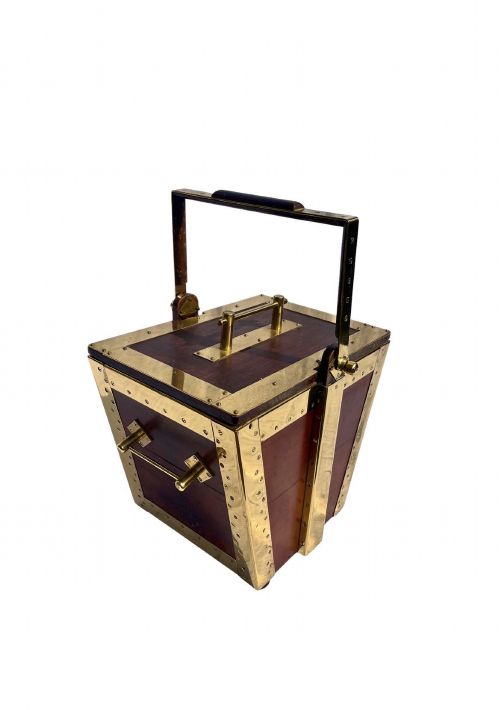

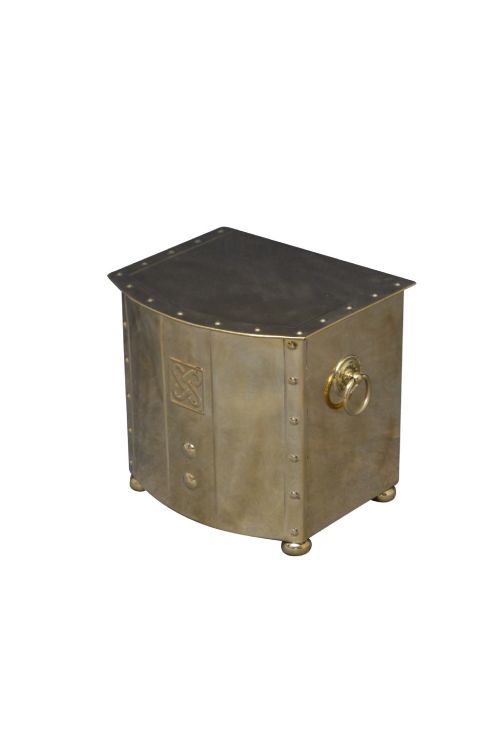
Brass Fireplace Container
A brass fireplace container stands beside the hearth to hold fuel, combining daily utility with the warm gleam of polished metal.
Brass Fireplace Container
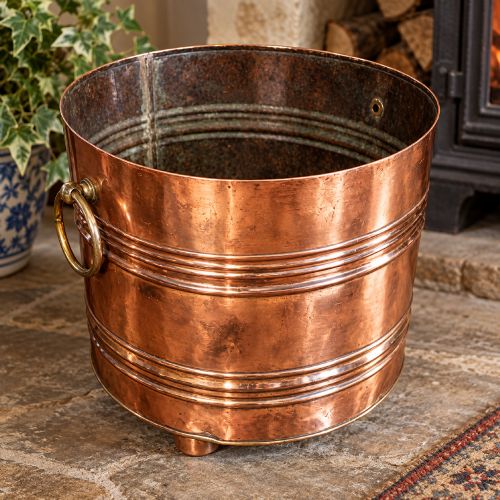
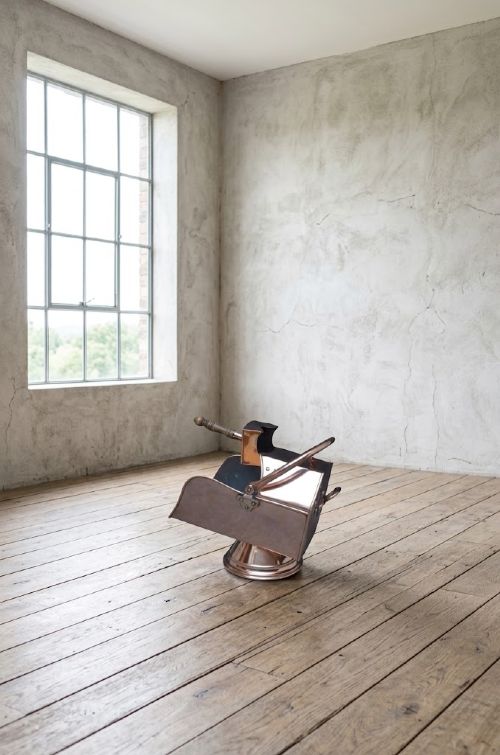
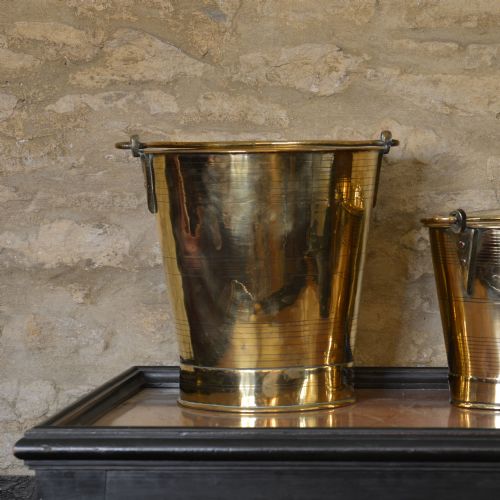
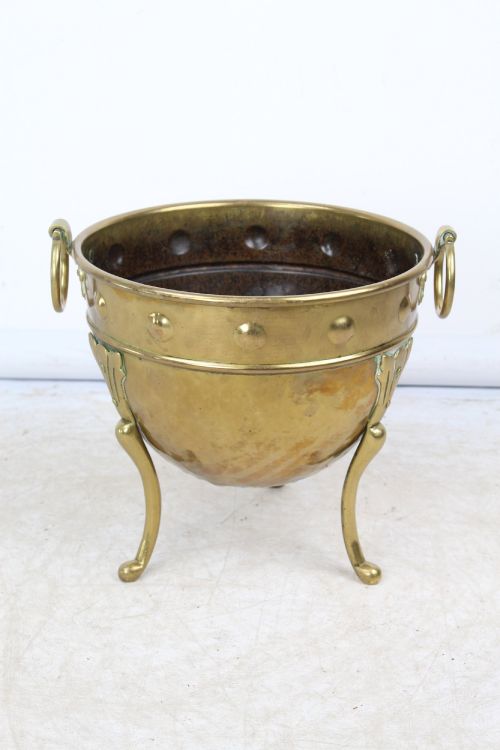
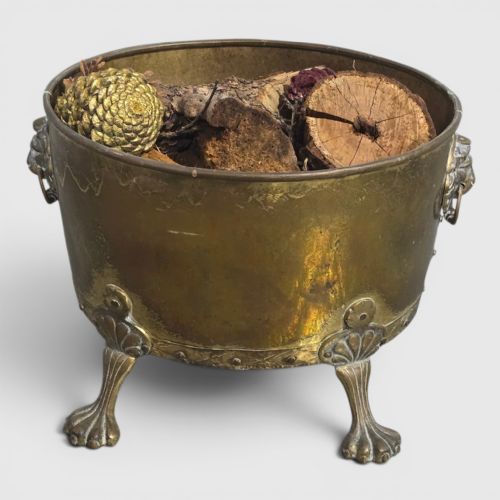
A brass fireplace container serves as a practical vessel for coal, logs, or kindling, keeping solid fuel close to the hearth. These objects take forms such as scuttles, buckets, helmets, boxes, and cauldrons, often doubling as decorative planters.
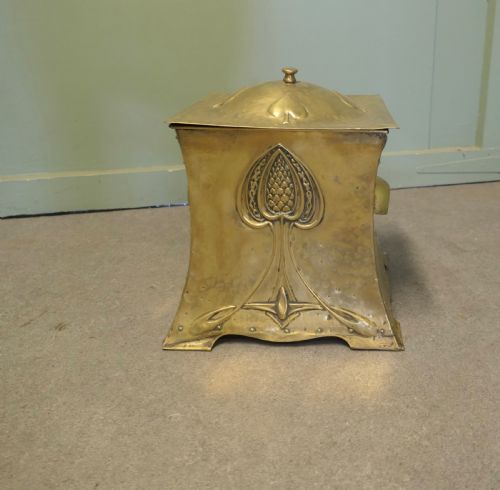
The pieces appearing on this page span from the Victorian and Edwardian eras into the early twentieth century, incorporating styles like Arts and Crafts, Art Nouveau, and rustic farmhouse designs. Makers and origins include English, French, Dutch, and Anglo-Indian workshops.
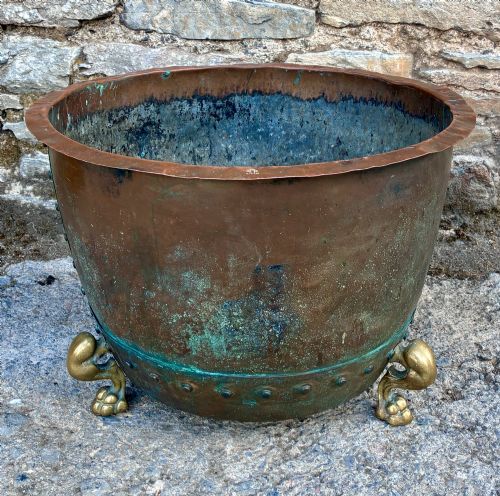
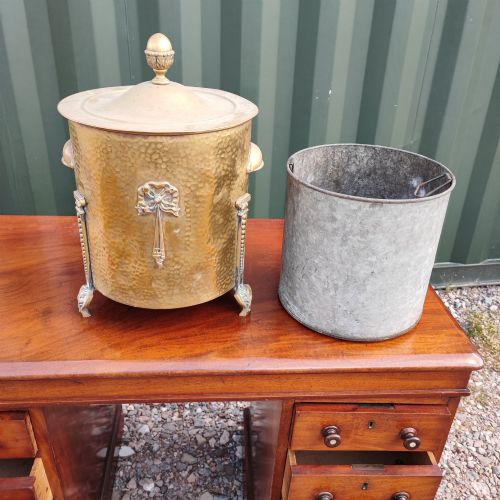
Materials extend beyond pure brass to include copper, iron, oak, mahogany, and galvanised metal. Many retain original liners, wooden handles, or matching shovels for tending the fire.
How They Were Made
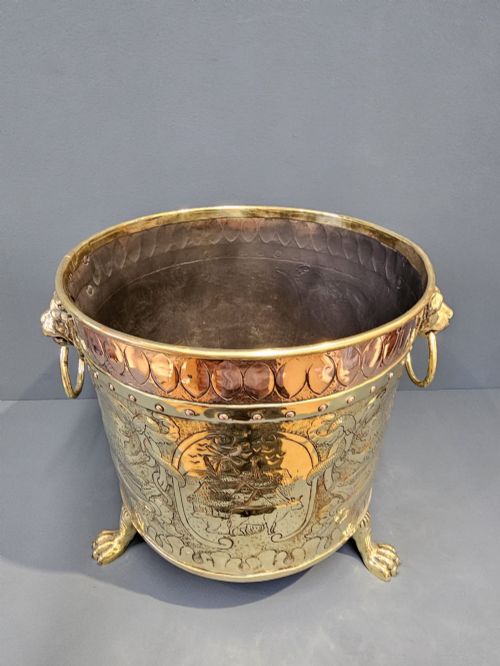
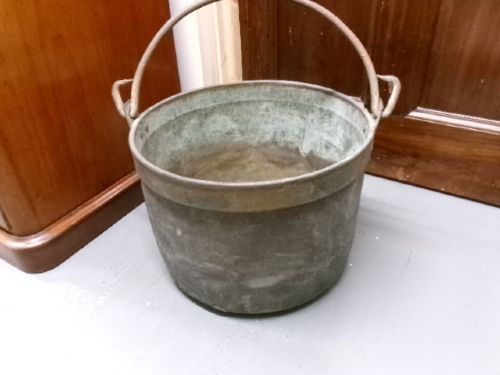
Metal containers rely on techniques such as hand-riveting, heavy stamping, and embossing to shape sheet brass and copper into durable vessels. Artisans utilised contrasting metals, pairing brass bands with copper bodies or adding iron swing handles for lifting weight.
Wooden boxes incorporate carved oak or inlaid rosewood panels fitted with metal interiors to hold solid fuel safely. Surface decoration ranges from hammered Arts and Crafts textures to tavern scenes and embossed floral motifs.
What Varies in Quality
Quality rests on the thickness of the metal gauge and the integrity of construction, seen in solid riveting rather than light assembly. Heavier pieces maintain their structural form under the weight of coal or logs over decades of use.
Detailing distinguishes standard production from finer examples, evident in hand-hammered surfaces, original brass shovels, fitted metal liners, and decorative mounts. Maker attributions to known workshops add notable distinction to surviving items.
Henry Loveridge·Benham and Froud·William Soutter And Sons·Petrus Ramus
The Brass Fireplace Container Glossary
- Coal scuttle
- A vessel designed for carrying coal to the fireplace, frequently shaped like a helmet with a hinged handle and a slanted opening for pouring.
- Log bin
- A large container used to store firewood beside the hearth, often constructed from brass, copper, or carved oak.
- Dinanderie
- An term for objects made from brass, copper, or bronze, particularly decorative vessels produced in European workshops.
- Jardiniere
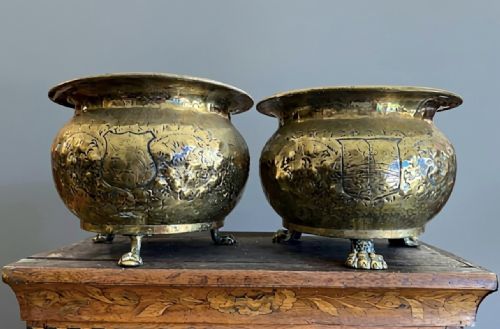
- An ornamental pot or container for plants, though frequently adapted to hold fuel or peat by period households.
- Cauldron
- A round metal pot with a swing handle, historically used for hearth domesticity and repurposed as a fireside fuel holder.
Brass Fireplace Container: Frequently Asked Questions
What is a brass fireplace container used for?
These vessels store coal, logs, or kindling beside the hearth for daily tending of the fire. They keep fuel contained while adding polished metallic warmth to the room.
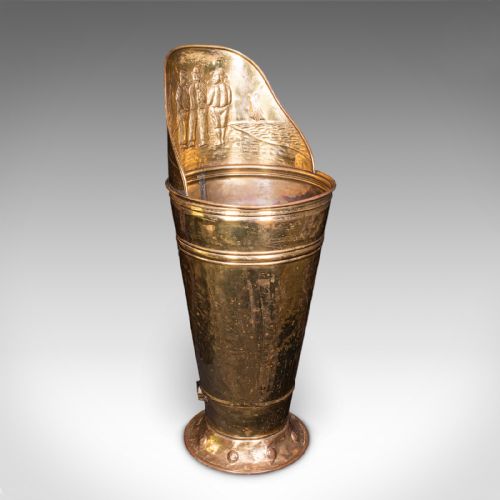
Many designs also function as planters, umbrella stands, or decorative storage bins when not deployed for solid fuel.
How do I clean an antique brass container?
Maintenance requires mild soapy water and a soft cloth to remove dust and soot without stripping the aged patina. Heavy polishing should be avoided to preserve the historic surface character.
Interior metal liners can be removed and washed separately if the vessel is actively used for storing coal or damp wood.
What materials are used besides brass?
Many containers combine brass with copper bodies, iron handles, and riveted construction for added strength. Wooden versions incorporate carved oak or inlaid rosewood with interior metal linings.
Galvanised metal often appears as hidden or secondary lining material designed to resist moisture from fuel.
How can I tell a Victorian container from an Edwardian one?
Victorian examples often feature heavier embossed decoration, swing handles, and deep copper tones associated with mid to late nineteenth-century manufacture. Edwardian pieces tend to display lighter proportions, cleaner lines, and simpler geometric styling.
Arts and Crafts pieces from both periods emphasise hand-hammered surfaces and riveted construction rather than mass-produced stamping.