




Carved Brass Log Bin
These carved brass log bin pieces are robust fireside containers designed to hold fuel, offering both utility and traditional hearth character.
Carved Brass Log Bin
When you search for carved brass log bin items, you encounter functional fireside storage vessels dating from the Victorian and Edwardian eras. These containers serve as practical repositories for wood, kindling, and coal beside the fireplace.
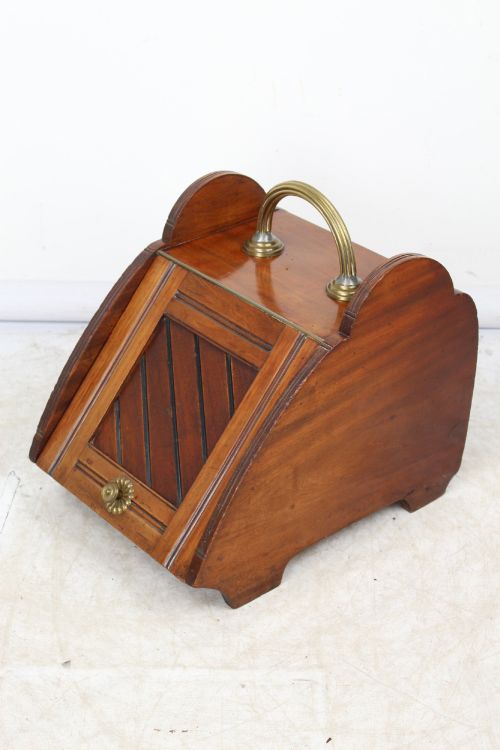
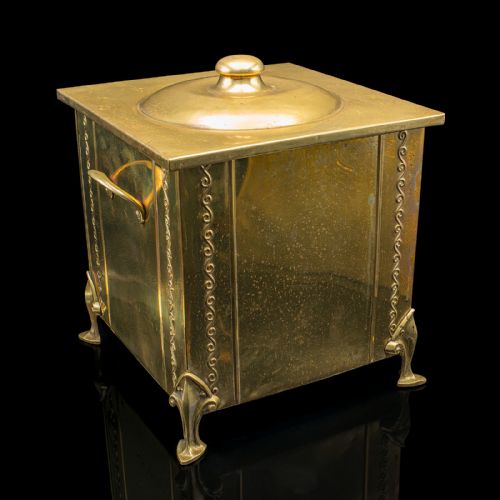
The pieces listed on this page appear under various historical designations including coal scuttles, purdoniums, coal boxes, fire buckets, and log stores. Most examples combine a sturdy wooden carcase with brass fittings and decorative mounts.
Originating from English and Scottish workshops, these containers range from plain utilitarian boxes to elaborately carved specimens. You are most likely to meet Victorian and Edwardian examples featuring hinged lids, drop handles, and fitted shovels.
Materials and construction
These items are constructed primarily from timber carcases clad or accented with brass, utilising woods such as oak, walnut, mahogany, and ebony. The combination of dense hardwood bodies and durable metal hardware provides the necessary weight and resilience for daily hearth use.
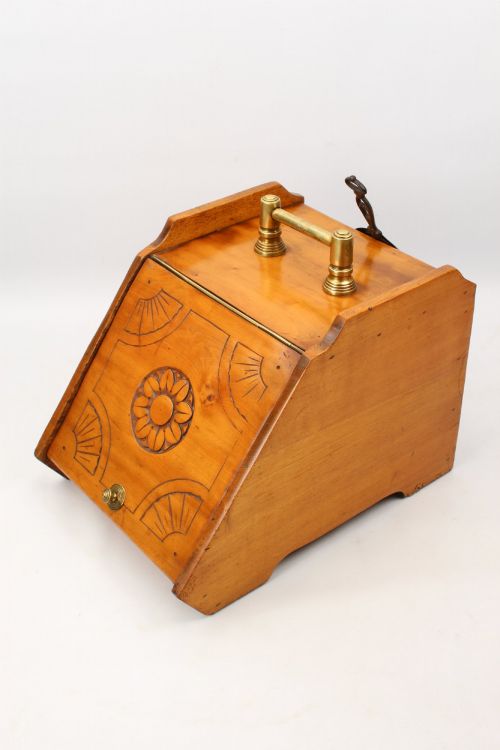
Decoration is achieved through surface carving on the wood fronts, often paired with polished brass handles, hinges, and carrying grips. Iron internal components and metal liners frequently support the storage of heavy fuel loads.
Current listings demonstrate a prevalence of Victorian and Edwardian pieces constructed from oak, walnut, and mahogany combined with brass.
Assessing quality and craftsmanship
The distinction between standard and superior pieces rests on the depth and execution of the carved woodwork and the weight of the brass mounts. Finer examples display crisp, detailed carving across the front panels and employ robust timbers like walnut or figured oak.
Hardware selection also dictates grade, with higher quality vessels featuring substantial cast brass handles and secure lidded mechanisms rather than thin stamped metal elements. The inclusion of original matching shovels and internal metal linings elevates the integrity of an individual piece.
The Carved Brass Log Bin Glossary
- Purdonium
- A specialised coal box or scuttle, typically featuring a sloping front drop-down door and a carrying handle. These containers became popular in British homes during the nineteenth century to store fuel near the grate.
- Coal Scuttle
- A fireside container designed for holding and transporting coal to the fireplace. They often include a matching shovel and swing handle.
- Fireside Storage
- A category of domestic accessories encompassing bins, buckets, and boxes built to keep fuel tidy beside the hearth. These objects balance utilitarian function with period decorative appeal.
- Oak
- A durable hardwood frequently utilised for Victorian and Edwardian furniture and fireside boxes. Its strength makes it ideal for bearing the heavy weight of logs and coal.
- Walnut
- A rich, figured timber chosen by makers for decorative furniture and high-quality coal boxes during the Victorian period. It provides a dark, lustrous finish that complements polished brass.
Carved Brass Log Bin: Frequently Asked Questions
What is a carved brass log bin used for?
These containers are designed to hold fuel such as logs, kindling, and coal close to the fireplace for convenient refuelling. They keep hearth areas tidy while presenting an ornamental face to the room.
Historically, they sat beside Victorian and Edwardian hearths as standard domestic furniture, combining heavy timber or metal construction with decorative brass work.
How do I date a coal box or scuttle?
Dating relies on identifying stylistic markers, timber choices, and construction methods associated with specific periods like the Victorian or Edwardian eras. Elaborate carved fronts and walnut or oak bodies frequently point to mid-to-late nineteenth-century craftsmanship.
Examining the fixings, brass gauge, and internal linings also helps establish whether a piece belongs to the Victorian period or later Edwardian decades.
Are these pieces English or Scottish?
The evidence shows examples originating from both English and Scottish workshops during the nineteenth and early twentieth centuries. Regional variations in timber selection and carving styles often reflect local cabinet-making traditions.
Both origins produced robust fireside storage vessels utilising brass hardware and durable hardwoods.
How do I maintain brass and wood?
Maintenance involves gentle cleaning of the wooden surfaces to preserve the finish and occasional polishing of the brass mounts to maintain their lustre. Avoiding excessive moisture protects the timber carcase and internal metal liners from corrosion.
Regular dusting keeps the carved details clear and maintains the decorative appearance of the piece beside the fire.