



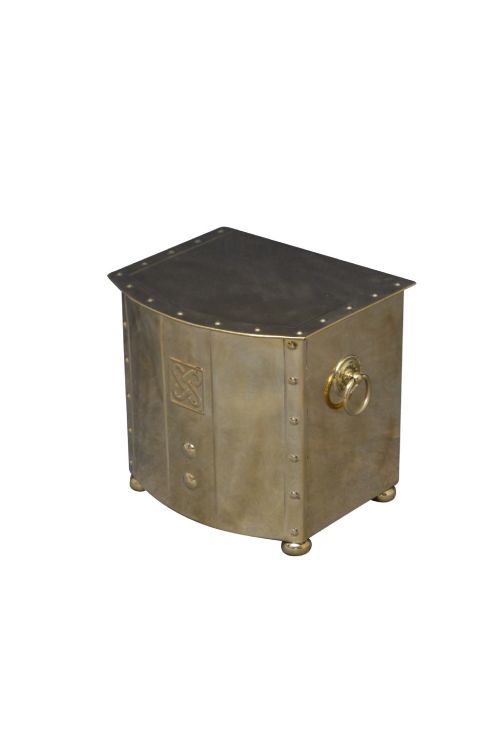


Edwardian Coal Bin
When you search for an edwardian coal bin, you discover utilitarian hearth vessels transformed by period craftsmanship into striking household furnishings.
Edwardian Coal Bin
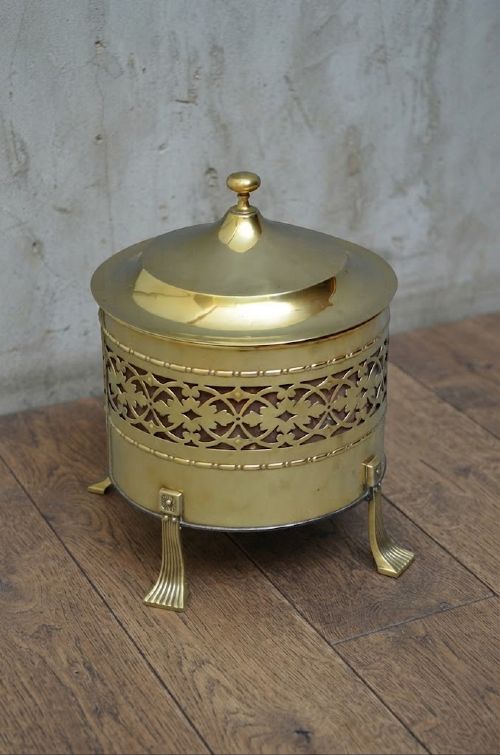
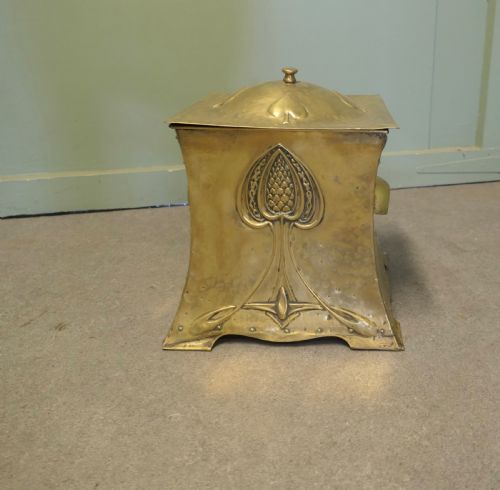
An edwardian coal bin is a sturdy fireside receptacle designed to store fuel, wood, or kindling near the hearth. The items on this page span the Victorian and Edwardian eras, alongside Arts and Crafts and Art Nouveau interpretations.
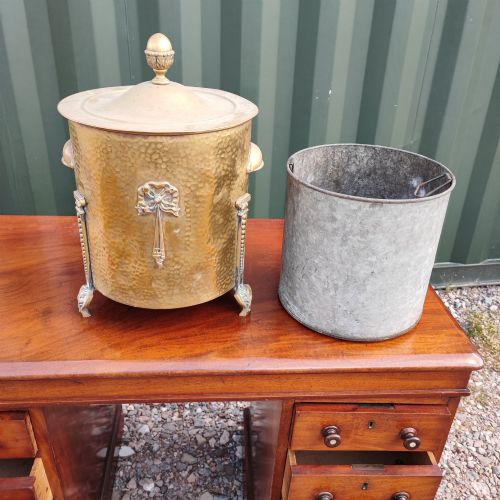
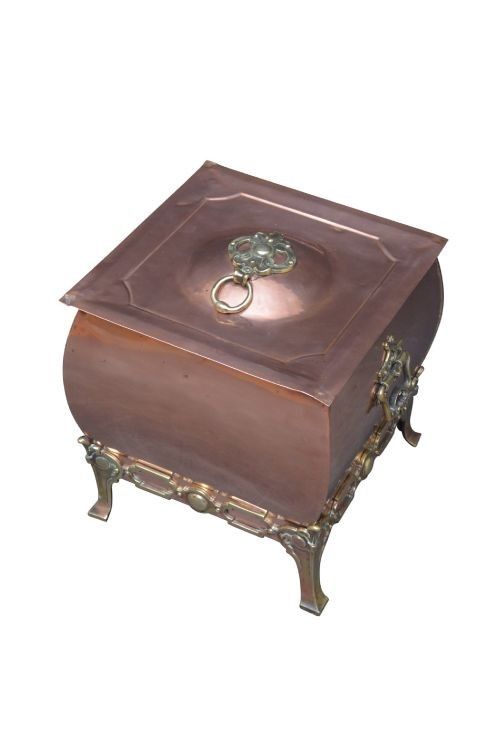
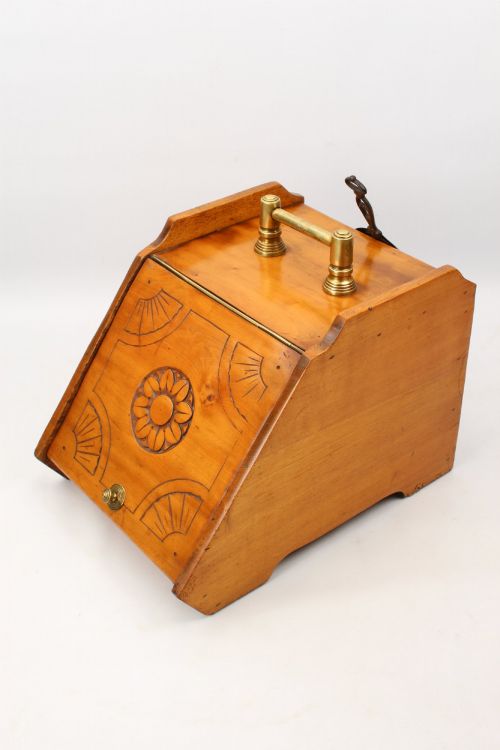
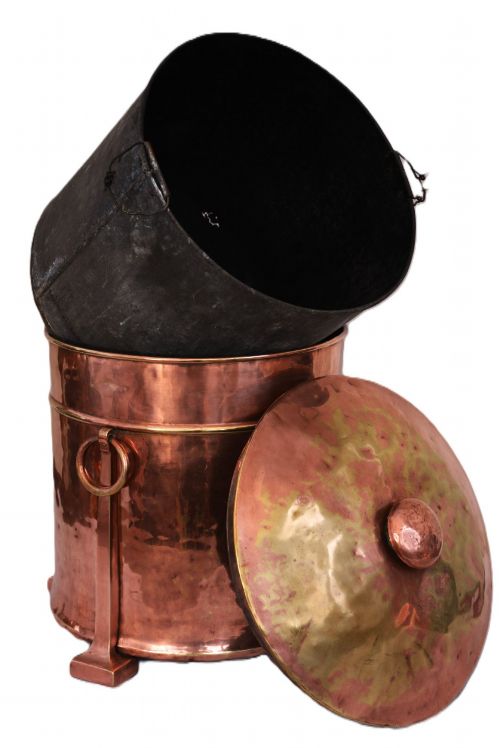
Most examples appear as brass or copper buckets, cylindrical bins, or enclosed wooden cabinets known as purdoniums. Many retain internal metal liners and specific companion tools like shovels.
How they were made
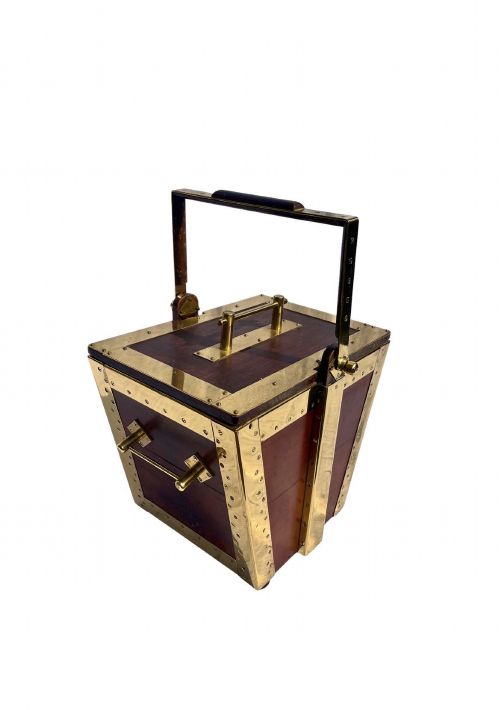
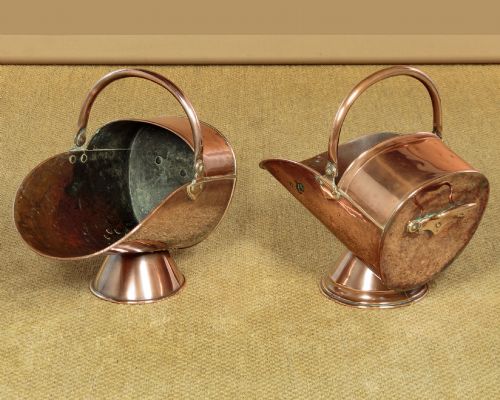
Makers utilised resilient metals such as brass, copper, iron, and wrought iron, often shaping them into helmets, buckets, or rectangular boxes. Many copper and brass surfaces show hand-beaten textures and riveted joints typical of the Arts and Crafts movement.
Wooden variants employ oak, mahogany, walnut, and rosewood, frequently enhanced with carved details, marquetry inlay, or applied ormolu mounts. Coopered wooden staves also appear in Scottish peat buckets.
Several copper coal buckets double happily as plant pots.
What varies in quality
Quality rests in the integrity of construction, from tight coopered joints and secure metal riveting to the presence of original internal liners. Superior pieces feature thoughtful decorative elements such as fretwork designs or hand-hammered panel work.
The choice of materials distinguishes standard items from finer works, particularly where solid timbers are inlaid with contrasting veneers or mounted with decorative brass and ormolu. Condition of the original surface patination further separates basic utility items from refined domestic pieces.
The Edwardian Coal Bin Glossary
- Coal scuttle
- A bucket or container with a handle and sometimes a tilted opening designed for carrying and holding solid fuel. These often take a helmet shape.
- Purdonium
- A specialised cabinet or box built to store coal indoors, frequently featuring a drop-down front and a dedicated compartment for a shovel.
- Coopered
- Constructed using narrow wooden staves bound together by metal hoops, a traditional method used for watertight vessels and buckets.
- Spade decoration
- A specific ornamental motif or included tool associated with fireside fuel storage containers.
Edwardian Coal Bin: Frequently Asked Questions
What is a purdonium?
A purdonium is an enclosed wooden cabinet designed to hold household coal next to the fireplace. These pieces typically feature a sloping front lid and house an internal metal liner.
Many examples include a matching shovel stored within a side or internal rack. This design kept fuel neat and contained within formal rooms.
How do I use a coal bin today?
These historical bins adapt easily to modern interiors as umbrella stands, planters, or log holders for open hearths. Their metallic finishes and carved wooden bodies bring texture to living spaces.
Placing dry logs or kindling inside utilises the original purpose of the container without exposing delicate interiors to moisture.
How do I date an antique coal bin?
Dating relies on identifying material styles, construction techniques, and period characteristics recorded across Victorian and Edwardian manufacturing. Arts and Crafts items often show hand-beaten copper panels, while purdoniums frequently utilise oak or mahogany.
Inlays, brass fretwork, and original iron frames help distinguish late nineteenth century examples from early twentieth century productions.