


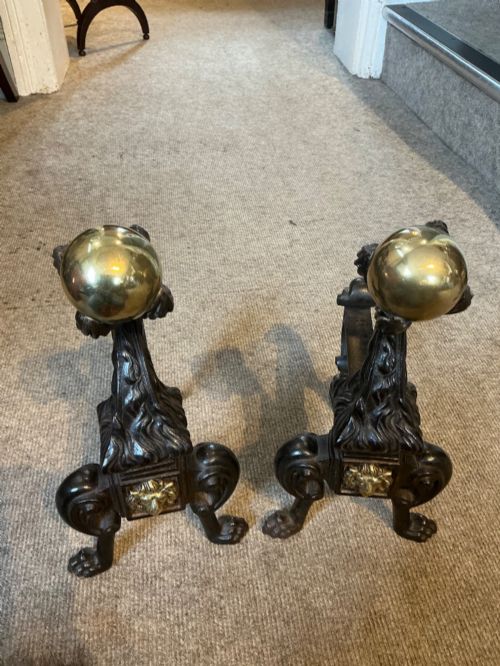

Brass Fire Tools
These brass fire tools bring functional elegance to the hearth, combining polished metal with practical design for daily fireside use.
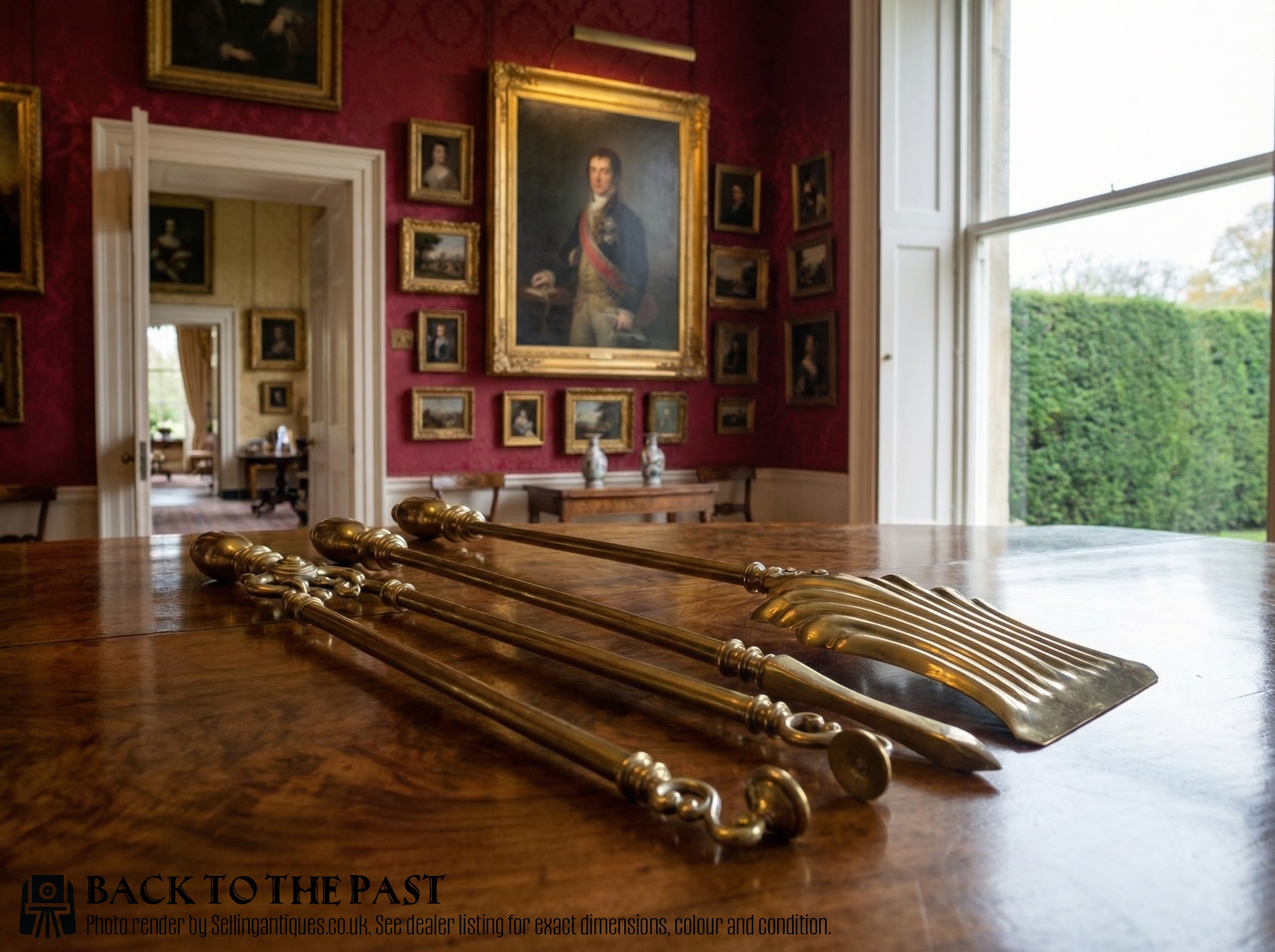
Brass Fire Tools
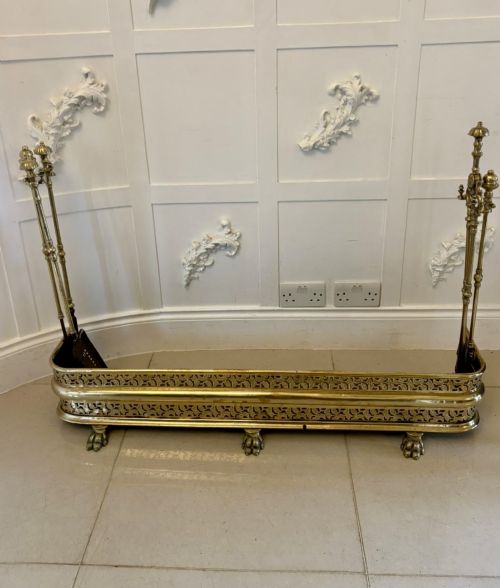
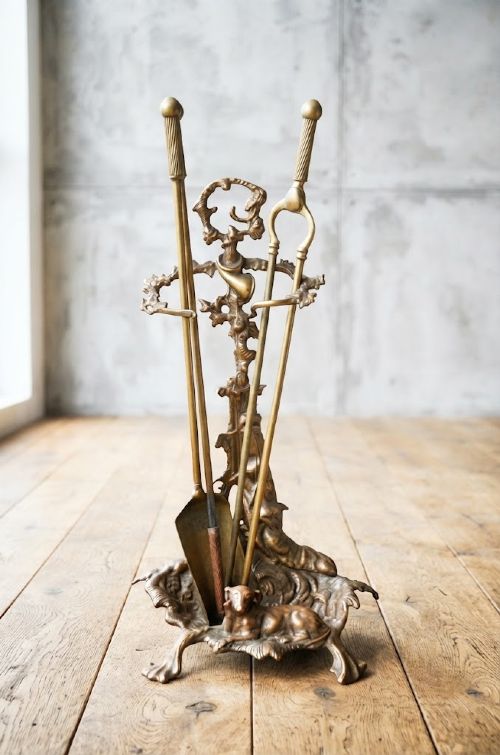
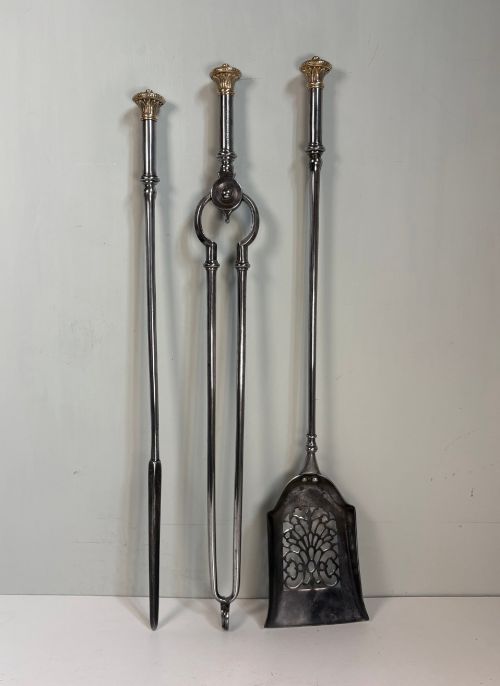
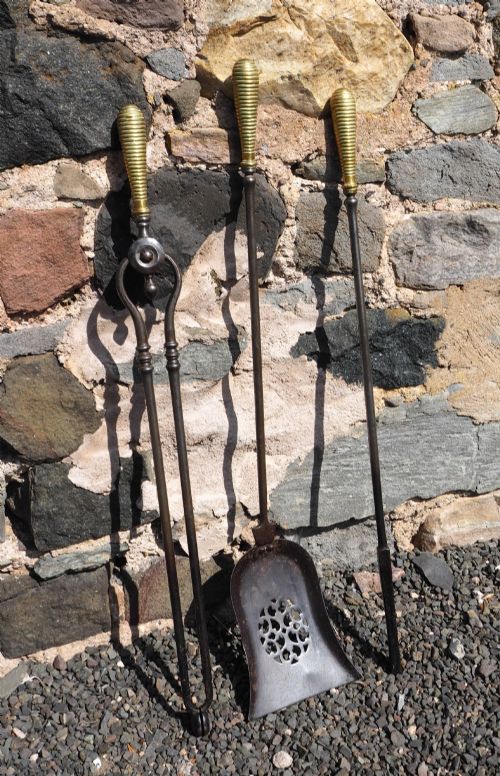
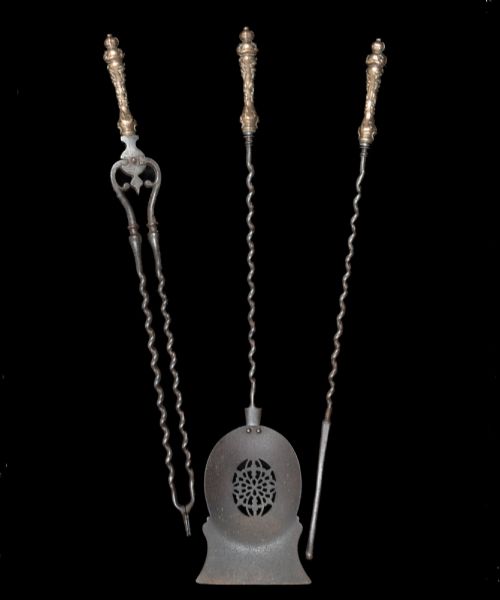
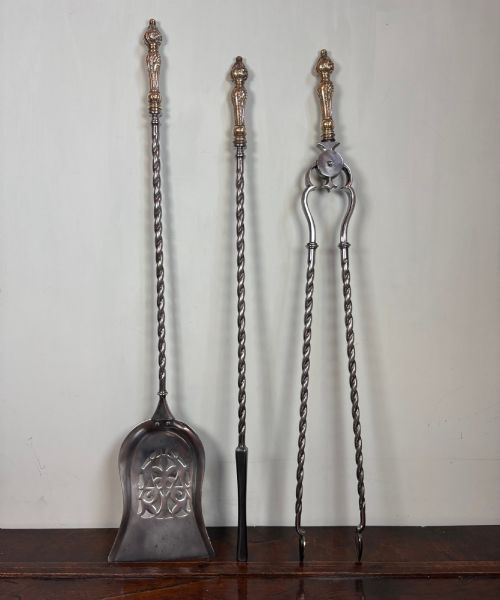
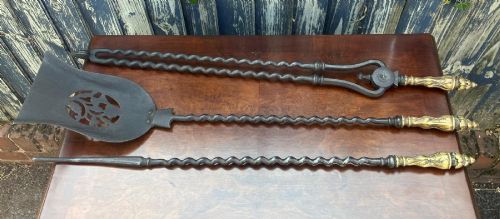
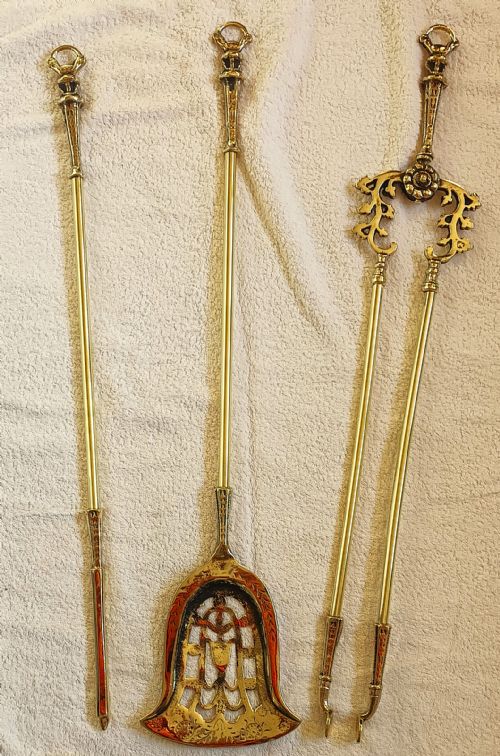
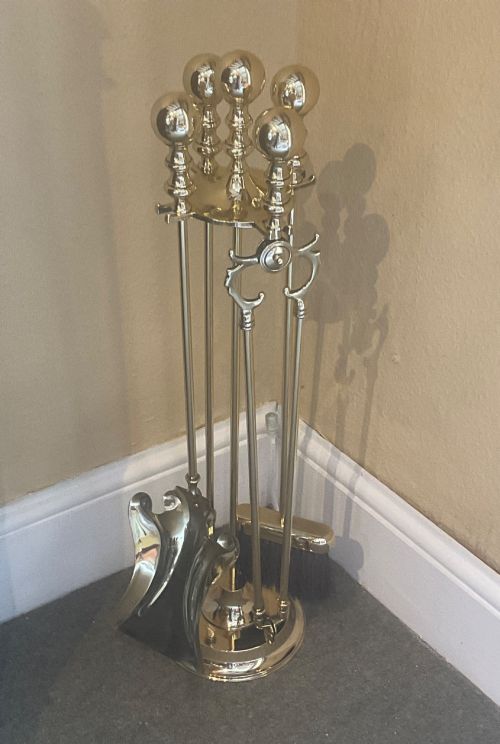
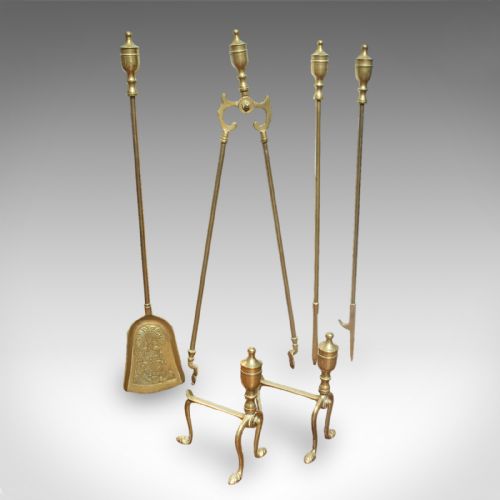
Brass fire tools comprise matching sets of fireplace implements designed to tend a coal or wood fire while complementing the hearth. When exploring brass fire tools, a buyer typically encounters three-piece sets consisting of a shovel, poker, and tongs, frequently accompanied by fire dogs or a stand.
The selections span the Victorian period, including specific dates such as 1850, 1860, 1870, 1890, and the wider nineteenth century, alongside George III and Georgian examples. English origin predominates across the available and archived pieces.
Sets frequently appear alongside companion items like fenders and andirons, creating a coordinated fireside arrangement. The most common configurations on this page combine polished brass elements with sturdy iron or steel components for everyday utility.
Materials and Technique
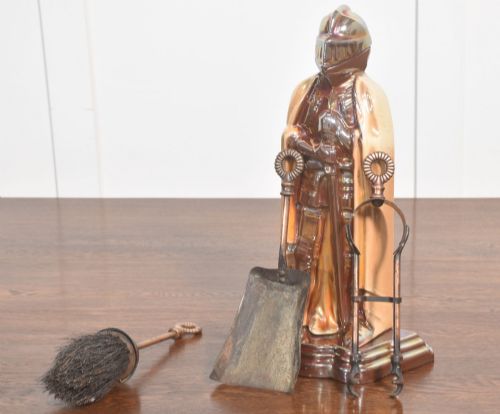
The construction of these pieces relies on a combination of brass, cast iron, and steel, utilising the strength of iron for shafts and pokers alongside the bright finish of brass for handles and decorative mounts. Some examples incorporate copper detailing within Arts and Crafts designs.
Techniques include turning on a lathe for handles, casting for decorative terminals, and forging or riveting for structural parts like shovel blades and tongs. Engraving appears on specific Georgian and Irish pieces to add linear and foliate surface detail.
Polishing achieves the bright reflective surfaces recorded in polished brass sets, while twisted brass techniques create tactile grip sections on handles and shafts.
Retail Price Guide 2026
Typical UK retail prices for brass fire tools, calculated from the Sellingantiques database of over a million retail prices indexed since 2003. This retail price guide relies exclusively on Sellingantiques data; no external sources or auction records are used, so the figures do not describe the wider market.
Some Victorian sets include brass ducks on the companion stand, bringing unexpected waterfowl charm to the hearth.
Quality and Construction
Quality reveals itself in the substantial weight of the metal and the integrity of the joints connecting handles to shafts. Heavy, solid construction separates robust companion sets from lighter, purely decorative variants.
Design sophistication distinguishes standard production from finer pieces, where Rococo styling, foliate engraving, or crisp cast details demonstrate superior craftsmanship by makers such as James Cartland and Sons. The balance and spring tension of the tongs also indicate the care taken in their original assembly.
Material consistency matters; pieces that integrate steel for working parts like poker tips offer better durability under heat than softer metals alone.
James Cartland and Sons
The Brass Fire Tools Glossary
- Tongs
- A scissor-like tool with two arms joined at a pivot, used for grasping and moving hot coals or logs. Nineteenth-century examples often use spring tension for grip.
- Fire shovel
- A flat-bladed implement used for clearing ash and gathering small fuel. Shovels in these sets match the decorative style of the accompanying poker and tongs.
- Companion set
- A coordinated collection of fireplace tools presented together on a stand or with fire dogs. These sets ensure a unified appearance by the hearth.
- Fire dogs
- Support irons placed inside a fireplace to hold logs above the hearth floor. They often match the finish and style of the accompanying fire tools.
Frequently Asked Questions
What tools come in a set?
Standard sets typically include three essential pieces: a shovel for ash, a poker for the fuel, and tongs for handling logs or coal.
Additional items such as stands, fire dogs, or companion frames occasionally accompany these three core implements.
How do I date a set?
Dating relies on stylistic clues such as Rococo curves, Georgian proportions, or Victorian manufacturing marks where present.
Heavier cast brass elements and specific handle turnings also help assign pieces to periods like the nineteenth century or earlier George III eras.
Are these tools safe to use?
Most antique sets feature iron or steel shafts paired with brass handles, making them structurally sound for traditional fireplace tending.
Inspect the pivot on tongs and the shaft stability on pokers to ensure they handle active fires without bending.
Why are some parts iron?
Makers used iron and steel for working parts because those metals withstand high heat and heavy leverage better than solid brass.
Brass was reserved for handles and decorative surfaces to provide a bright appearance without sacrificing structural strength.