






Brass Double Inkstand
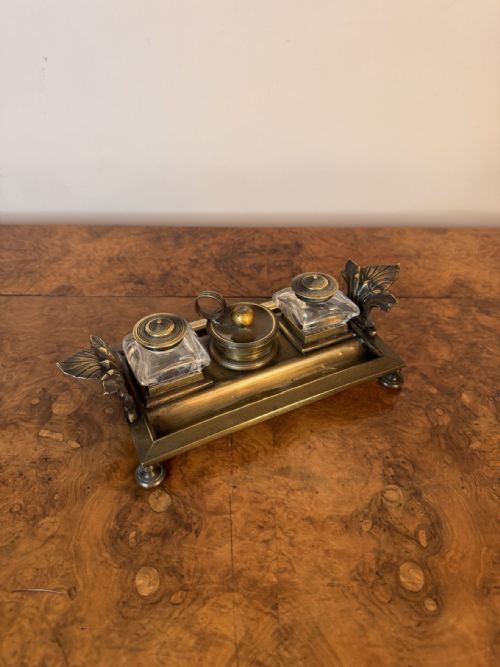
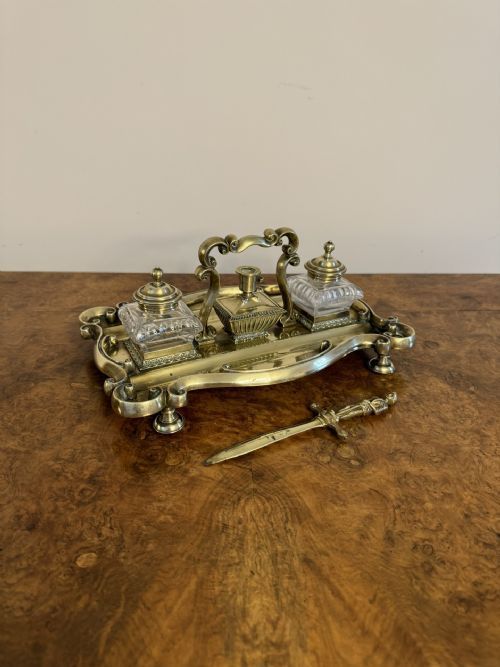
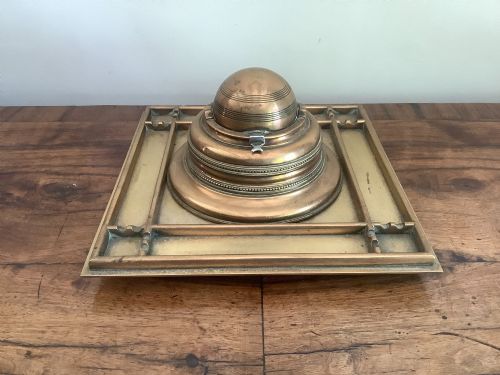
A brass double inkstand organises the writing desk with twin inkwells and solid metal casting, offering a handsome anchor for traditional correspondence.
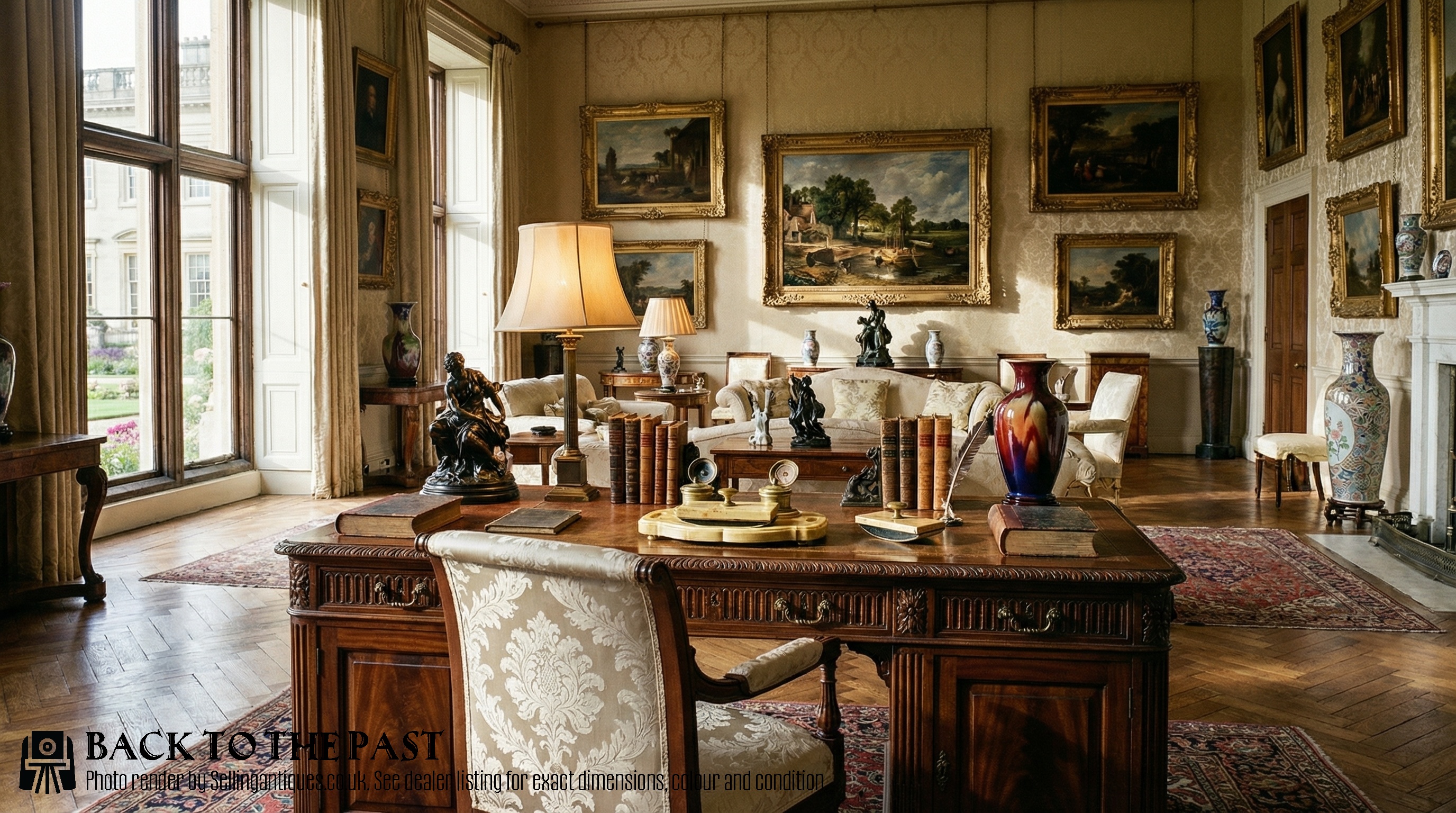
Brass Double Inkstand
A brass double inkstand provides two receptacles for ink alongside a tray or pen rest, serving as a functional centrepiece for nineteenth-century and earlier writing desks.
The versions most commonly found here date from the Victorian period, though examples span from the eighteenth century through the Edwardian era.
These desk accessories appear either as solid cast metal or mounted upon wooden bases such as walnut, mahogany, and oak.
Materials and construction
Foundry work dominates these pieces, utilising cast brass, ormolu, and gilt bronze shaped through traditional moulding and chasing techniques.
Many designs incorporate cut glass ink bottles fitted with hinged metal lids, often sitting within dedicated recesses on the metal tray.
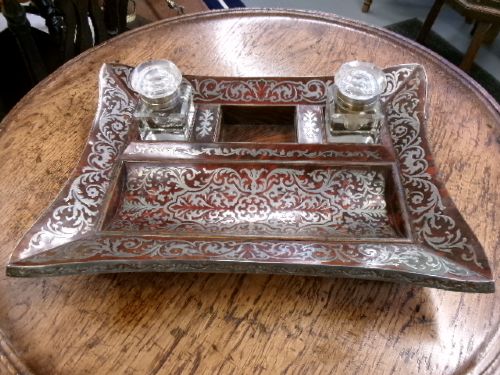
Wooden elements such as walnut and mahogany provide contrasting bodies, frequently enhanced with brass stringing, boulle work, or marble inserts.
Brass Double Inkstand Retail Price Guide 2026
Typical asking prices for brass double inkstand among the pieces listed under this phrase on Sellingantiques today, from the lower quarter to the upper quarter. They describe what is for sale here now, not the wider market.
Some desk stands include a chaff-cutter escapement, proving that nineteenth-century desk accessories could occasionally share mechanics with farm machinery.
Assessing quality and craftsmanship
The weight of the casting and the crispness of the chased detail separate standard production pieces from finer examples.
Survival of original components, particularly matching cut glass ink inserts and undamaged hinged lids, distinguishes superior items.
The integration of secondary materials like vert marble or elaborate wood veneers indicates the ambition of the original maker.
James Cartland & Sons·Moser
The Brass Double Inkstand Glossary
- Standish
- An alternative term for an inkstand, often including compartments for pens, wafers, and sanders alongside the inkwells. This traditional desk furniture dates back centuries before the common use of fountain pens.
- Boulle work
- A form of marquetry employing tortoiseshell and brass inlaid into a dark wood ground. It appears on French desk sets from the mid-nineteenth century.
- Ormolu
- Gilded bronze or brass applied to decorative objects and furniture mounts. The technique creates a rich golden finish that resists tarnishing over decades.
- Cast brass
- Molten metal poured into a mould to form intricate three-dimensional shapes. It gives desk accessories their structural rigidity and ornamental relief.
- Cut glass
- Glass decorated by cutting facets or patterns into the surface using a rotating wheel. It provides weight and sparkle to the ink bottles housed within the stand.
Brass Double Inkstand: Frequently Asked Questions
What is a brass double inkstand?
A brass double inkstand is a desk accessory designed to hold two separate inkwells, usually accompanied by a tray for resting dip pens. These pieces formed an essential part of nineteenth-century writing equipment.
They range from simple cast brass trays to elaborate sets mounted on marble or exotic woods, incorporating matching glass ink pots with hinged lids.
How were these inkstands used?
They sat permanently on a desk or writing table to provide a steady supply of ink for correspondence and bookkeeping. The two wells typically held different coloured inks, such as black and red.
Additional troughs or small boxes on the stand often accommodated steel nibs, sand for drying wet ink, and sealing wax.
How do I date a brass inkstand?
Stylistic clues and materials help determine the period, with Georgian examples showing restrained classical lines and Victorian pieces tending towards ornate ornamentation. Edwardian and later nineteenth-century pieces often display Art Nouveau curves or registration marks.
The presence of original glass inserts and the manufacturing method of the brass casting also offer chronological indicators.
How do I clean a brass inkstand?
Dusting with a soft dry cloth maintains the surface without removing the accumulated patina valued by collectors. Aggressive metal polishes can strip historic finishes and damage delicate chased details.
Wooden bases require appropriate wax treatments, while glass ink bottles can be washed separately with warm water if handled with care.