

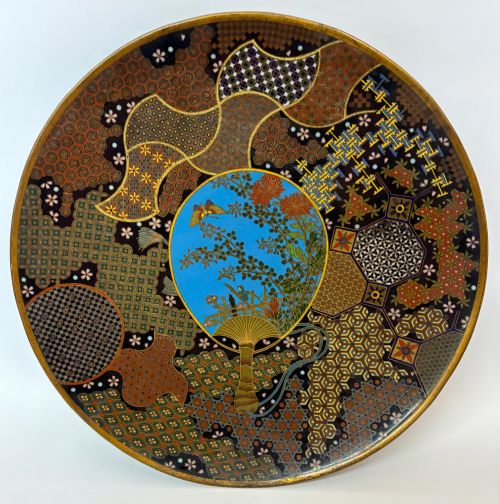


Brass Display Dish
These brass display dish examples bring together heavy metallic ground and intricate enamel work to anchor a wall or surface with striking visual depth.
Brass Display Dish
A brass display dish takes the form of wide chargers, wall plaques, and decorative plates designed primarily for visual impact rather than dining use. When you search for a brass display dish, you encounter large circular formats intended to hang on walls or rest on side tables.
The pieces appearing here span the eighteenth, nineteenth, and early twentieth centuries, drawing heavily on Japanese Meiji and Edo periods as well as Chinese export traditions. You frequently meet large Japanese cloisonne enamel chargers featuring subjects like birds, dragons, and Mount Fuji.
Alongside these Asian export works, European classical revival plaques surface, depicting figures such as Neptune in solid metal relief. These diverse origins mean a brass display dish can range from vibrant multicolored enamel surfaces to plain polished metal plates.
How they were made
The primary structure relies on hammered or cast brass, sometimes paired with copper plates to form a stable metallic body. Artisans shaped these metals into wide shallow bowls and flat-rimmed chargers capable of supporting heavy surface decoration.
Many examples incorporate cloisonne enamel, where thin metal wires soldered to the brass base create individual cells. These bounded compartments were filled with coloured glass pastes and fired multiple times to achieve a smooth, vitreous pictorial surface.
Brass Display Dish Retail Price Guide 2026
Typical asking prices for brass display dish among the pieces listed under this phrase on Sellingantiques today, from the lower quarter to the upper quarter. They describe what is for sale here now, not the wider market.
The listings span the eighteenth, nineteenth, and early twentieth centuries, featuring brass, copper, and cloisonne enamel.
What varies in quality
The fineness of the wirework and the complexity of the pictorial subject separate standard utility items from superior artistic achievements. Pieces depicting detailed natural scenes like leaping koi or chrysanthemums require exceptional dexterity in bending wire and grading enamel tones.
The weight of the metal ground and the depth of the finished enamel layer indicate the level of care invested during production. Superior examples maintain crisp outlines and vibrant colour retention across the entire face without pitting in the glassy surface.
The Brass Display Dish Glossary
- Charger
- A large ornamental plate traditionally used for display rather than serving food. These expansive surfaces provide ample room for intricate pictorial designs.
- Cloisonne enamel
- A technique where metal wires are soldered onto a base to form cells filled with enamel paste. This method creates distinct coloured sections defined by fine metal lines.
- Edo period
- A historical Japanese era spanning from sixteen hundred and three to eighteen hundred and sixty-eight. Works from this time often display restrained natural motifs and meticulous craftsmanship.
- Meiji period
- A Japanese era lasting from eighteen hundred and sixty-eight to nineteen hundred and twelve. Pieces from this period frequently exhibit bold coloration and ambitious pictorial subjects.
- Wall plaque
- A decorative flat or shallow object equipped for hanging directly on a vertical surface. These items serve to showcase metalwork and enamel artistry at eye level.
Brass Display Dish: Frequently Asked Questions
How do I hang a heavy charger?
Large metal chargers require sturdy wall hooks and specialised bracket hangers that support the entire rim without slipping.
Ensure the fixing secures directly into wall studs or uses appropriate masonry anchors to bear the substantial weight safely.
Are these dishes meant for food?
These decorative pieces serve strictly as visual ornaments rather than tableware for serving meals.
Using enamel or antique metal surfaces for food risks damaging delicate wire partitions and historical finishes.
How do I clean cloisonne enamel?
Dust the surface gently with a soft, dry cloth to remove everyday particles without scratching the glass paste.
Avoid abrasive polishes or liquid cleaners that might seep into wire joints and tarnish the underlying brass.
How do I date an antique brass dish?
Examine the style of the motifs, the weight of the metal base, and any associated signatures or reign marks.
Comparing the manufacturing technique against known periods like the Meiji era helps narrow down the production window.