
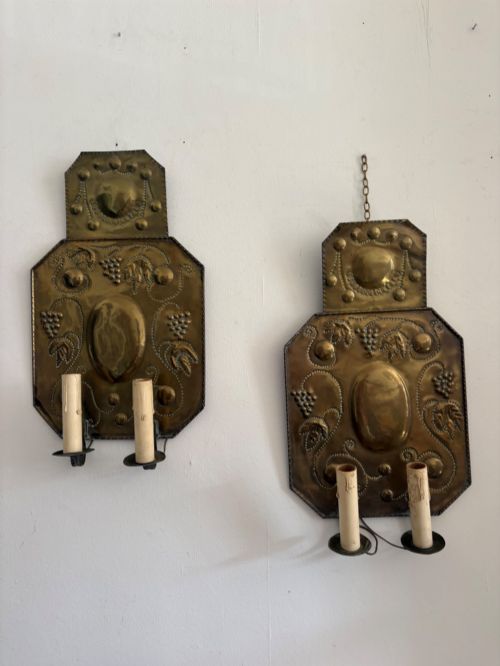


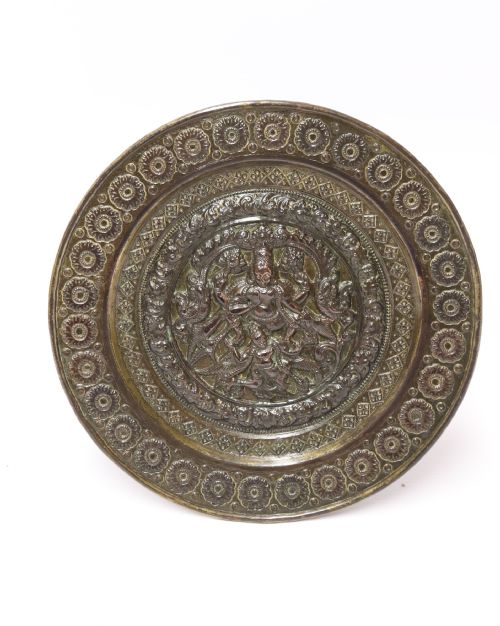
Repousse Brass Plaque
These repousse brass plaque items are heavy metal wall vessels and chargers that bring texture and historic shine to a room.
Repousse Brass Plaque
A repousse brass plaque is typically a wall-hung decorative dish, charger, or sconce featuring hammered surface relief. Collectors searching for a repousse brass plaque will frequently encounter circular trays, wall plates, and heraldic dishes spanning the eighteenth, nineteenth, and early twentieth centuries.
The surviving selection includes diverse regional styles such as Arts and Crafts, Anglo-Indian Raj work, Dutch traditional designs, and classical revivals. Wall plaques, decorative plates, and large circular chargers dominate the forms available for interior display.
Materials and construction methods
These items rely on sheet brass, copper, and bronze, often worked with hand tools to push the metal from behind. Artisans used hammers and punches to create raised motifs, occasionally combining copper and brass elements within a single piece.
Surface finishing involved hand piercing, hammering, and embossing to define animal motifs, coats of arms, and mythological figures such as Diana and Neptune.
Several pieces depict aquatic themes, including three fish swimming around a central fountain.
Understanding quality in metalwork
Quality rests upon the crispness of the hammered relief and the depth of the hand detailing across the metal surface. Pieces displaying high skill in the reverse-hammered repousse technique show sharper definition in figures and patterns.
The balance of the composition and the integrity of the original metal gauge distinguish superior items from simpler production wares.
The Repousse Brass Plaque Glossary
- Repousse
- A metalworking technique where the artisan hammers the design from the reverse side to create raised relief on the front. This method allows for detailed pictorial scenes and ornamental borders.
- Charger
- A large decorative plate or platter intended for display rather than dining use. These pieces often feature extensive chased or embossed decoration across the wide rim.
- Alms dish
- A bowl or basin traditionally used for collecting church offerings, frequently rendered in embossed brass with central motifs. Older examples date back to the eighteenth century or earlier.
- Sconce
- A wall-mounted lighting fixture designed to hold candles or branches. Pairs of these metal fixtures often incorporate heavy repousse backplates to reflect candlelight.
Repousse Brass Plaque: Frequently Asked Questions
How do I hang a heavy plaque safely?
Most large chargers and wall plaques require sturdy picture wire secured to existing mounting loops or reinforced brackets on the reverse.
Ensure the fixing enters a wall stud or uses appropriate masonry anchors to support the weight of the metal securely.
Should I polish these brass and copper surfaces?
Light dusting is generally preferred to preserve the aged patina that accumulates over decades of oxidation.
Aggressive cleaning can strip away the historical character and softening tones valued by collectors.
What is the difference between a charger and a tray?
Chargers are primarily made for vertical wall display and feature deep pictorial embossing or heraldic motifs.
Trays are typically flat-bottomed utility pieces designed for horizontal placement, though larger antique examples transition easily to wall hanging.
How do I date an antique brass plaque?
Dating relies on examining the manufacturing marks, the hand-hammering characteristics, and the specific stylistic influences of the period.
Nineteenth-century pieces often display distinct neoclassical or Arts and Crafts motifs that separate them from eighteenth-century alms dishes.