

Brass Corinthian Column Lamp
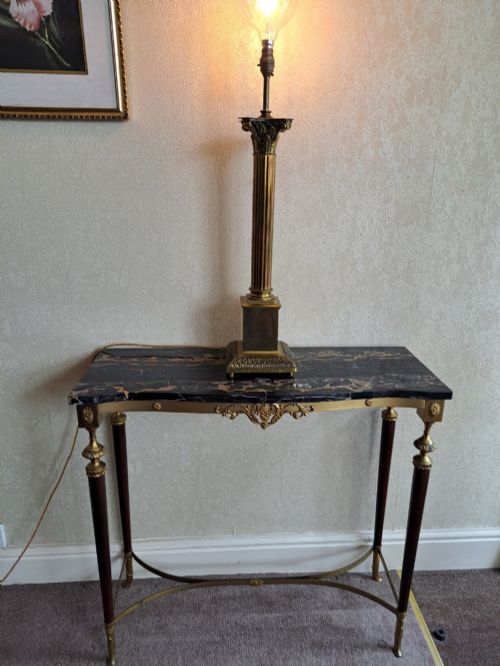
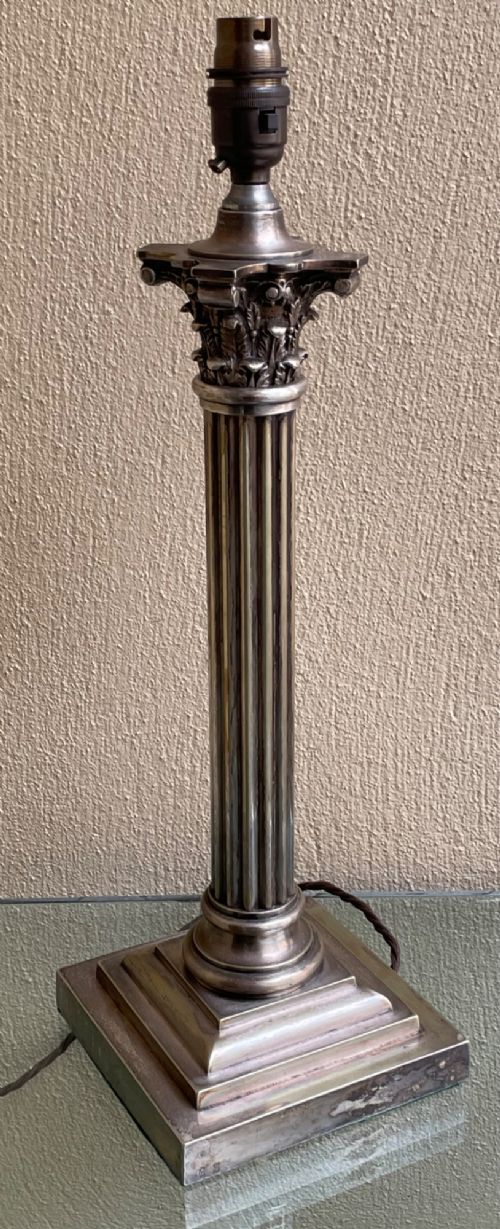
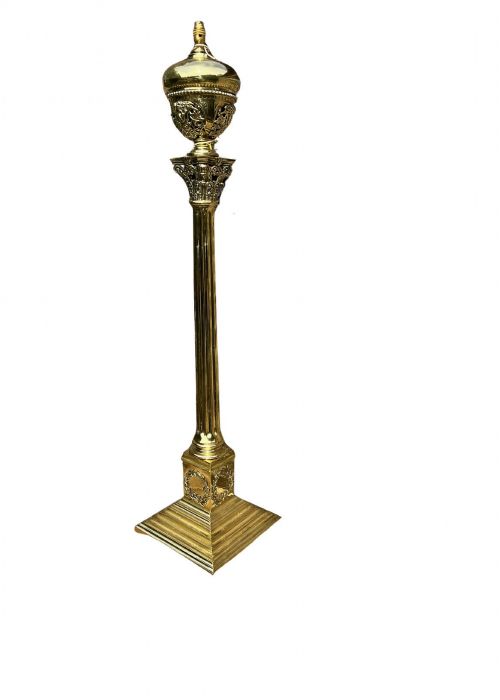
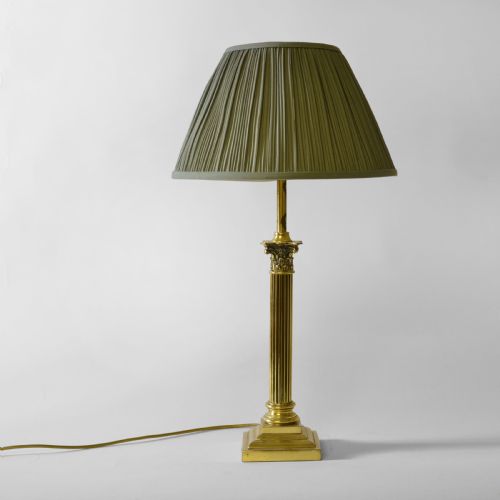
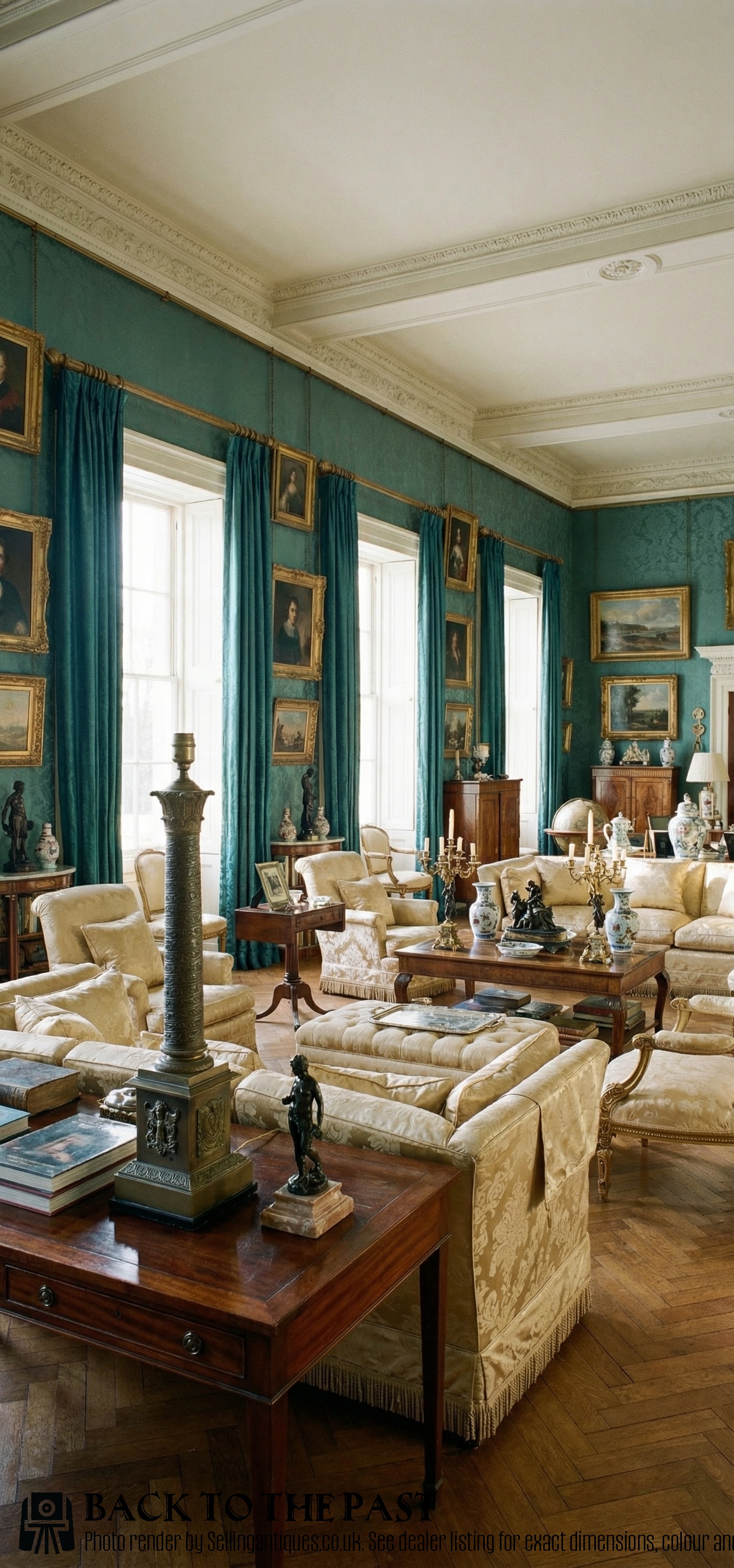
A brass corinthian column lamp brings classic architectural proportion and warm illumination to an interior.

Brass Corinthian Column Lamp
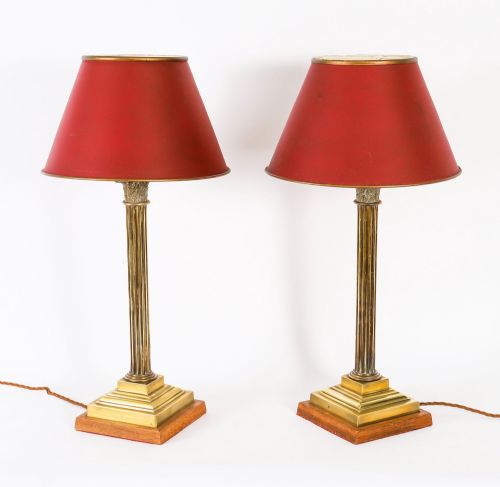
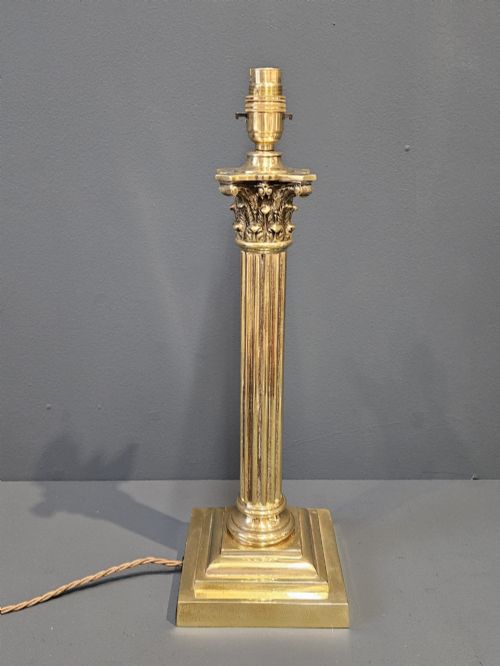
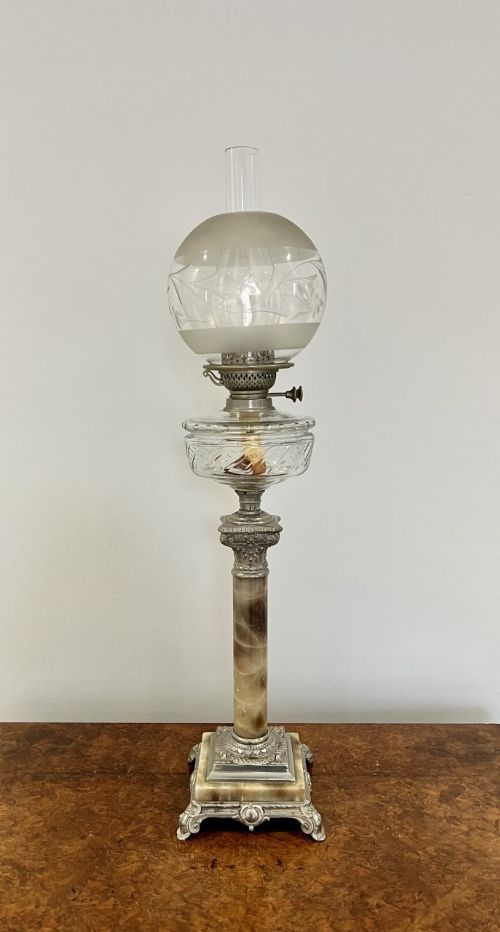
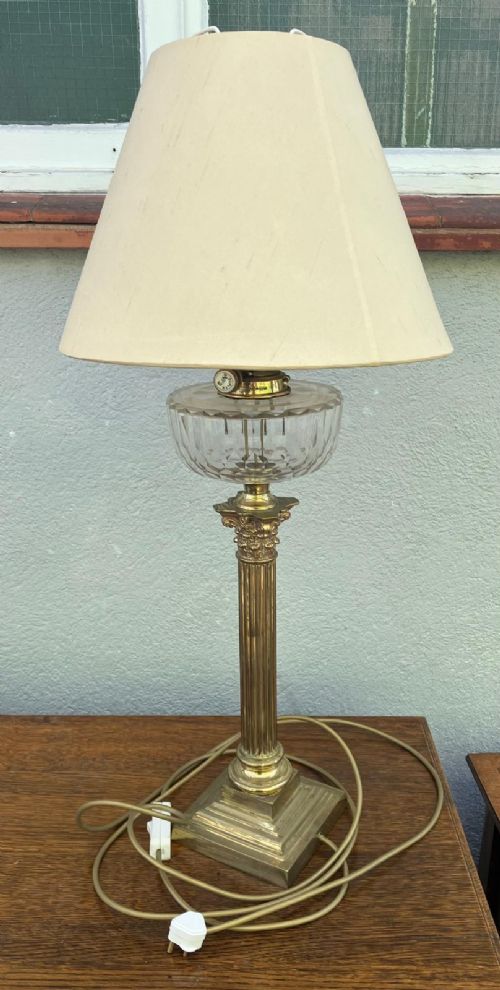
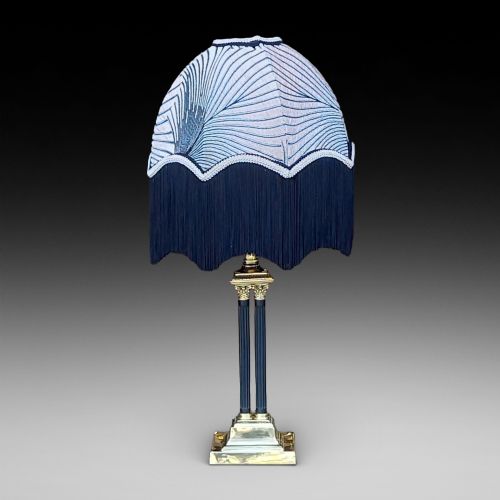
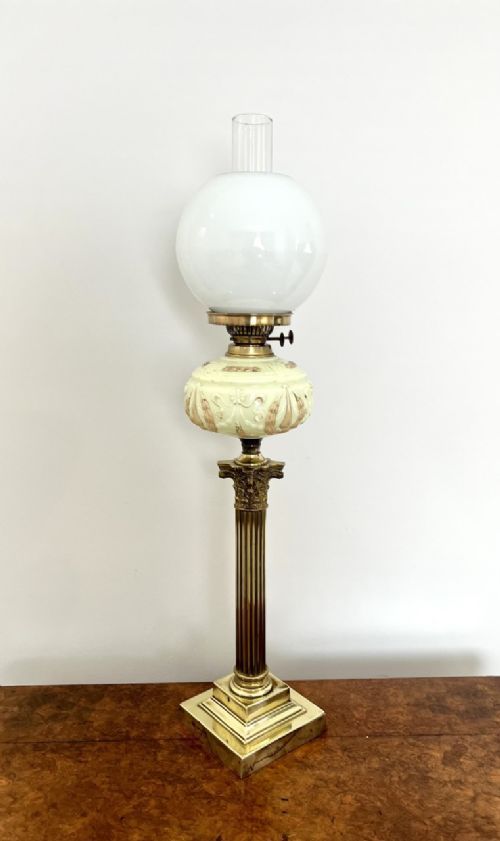
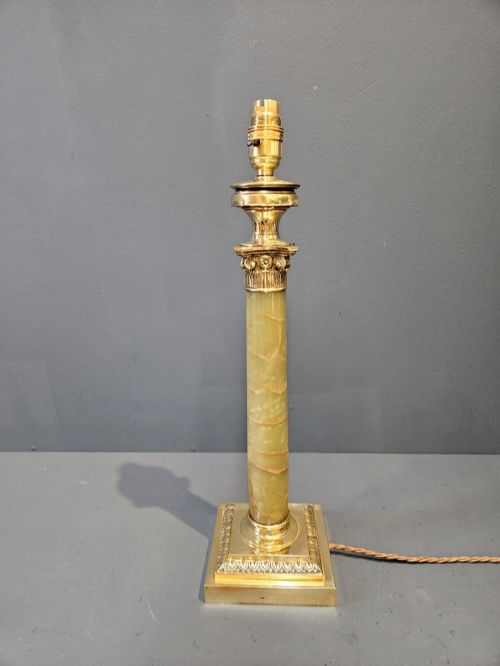
A brass corinthian column lamp takes its design from classical architecture, translating stone orders into cast metal shaft and capital forms. The pieces available here span the Victorian and Edwardian eras, stretching from the late 19th century into the early 20th century.
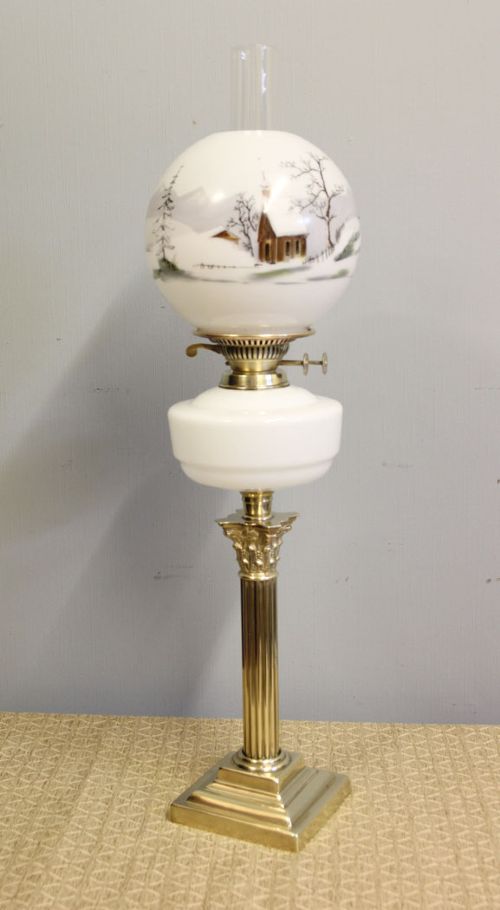
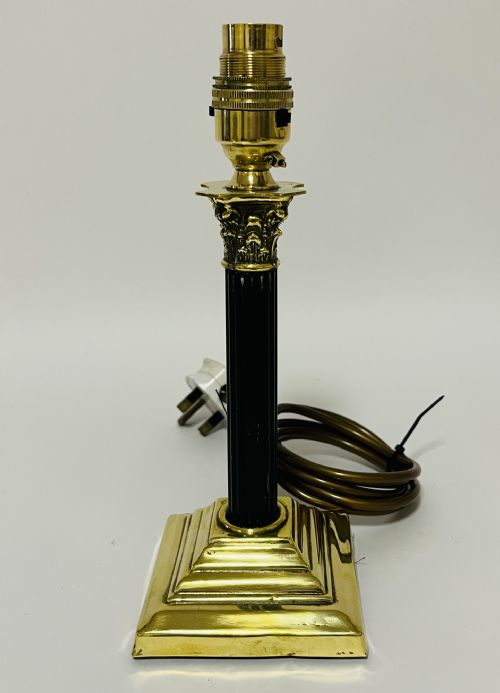
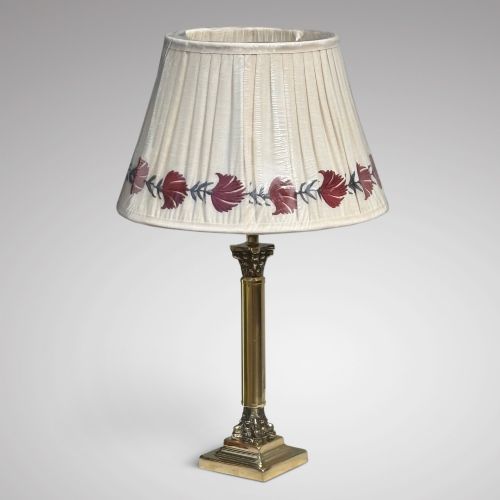
Most examples appear as table lamps or tall floor-standing standard lamps, frequently adapted from earlier oil-burning formats to electrical power. These pieces draw on neoclassical revival styles, often pairing stepped plinths with detailed acanthus leaf capitals.
Materials and Construction
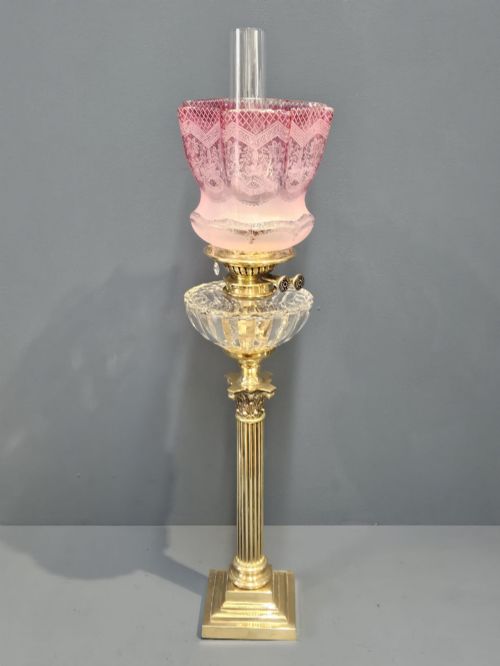
Makers cast the central columns and ornate capitals in brass, sometimes incorporating marble or mounting the shafts on weighted iron bases for stability. Glass components appear in the fonts and shades, utilising coloured, etched, or cranberry glass alongside plain crystal.
Many specimens combine cast brass elements with hand-finished detailing on the capital leaves and stepped plinths. Silk and fabric shades complete the construction on surviving examples, paired with metal fonts or glass vessels.
Brass Corinthian Column Lamp Retail Price Guide 2026
Typical asking prices for brass corinthian column lamp among the pieces listed under this phrase on Sellingantiques today, from the lower quarter to the upper quarter. They describe what is for sale here now, not the wider market.
Listings feature table lamps and floor-standing standard lamps produced across the Victorian and Edwardian periods.
Design and Proportion
Quality rests in the crispness of the cast brass acanthus leaves and the proportional balance between the stepped base, the fluted shaft, and the capital. Heavy gauge brass and substantial scale distinguish finer productions from lighter commercial equivalents.
Maker signatures on the metalwork or turning mechanisms indicate superior workshops, while unmarked pieces rely entirely on the precision of the casting and the retention of original glass fonts and shades.
Hinks·Hinks and Sons
The Brass Corinthian Column Lamp Glossary
- Font
- The oil reservoir sitting atop the column structure. These vessels frequently use cranberry or etched glass.
- Standard lamp
- A tall floor-standing lamp designed to rise above furniture level. Several examples feature adjustable stems.
- Duplex burner
- A double-wick mechanism found on period oil lamps. Many surviving table and standard lamps retain these fittings alongside later electrical conversions.
Brass Corinthian Column Lamp: Frequently Asked Questions
How do I date a brass column lamp?
Dating relies on stylistic clues, construction methods, and materials recorded across the Victorian and Edwardian periods. Heavier cast brass components and specific burner mechanisms typically point towards the late 19th century.
Later Edwardian and early 20th-century examples often introduce adjustable stems or simplified stepped bases. Comparing the weighting and the joinery helps separate nineteenth-century production from subsequent revivals.
Were these lamps originally for oil?
Many examples began life as oil or paraffin burners before undergoing conversion to electricity during the 20th century. Surviving glass fonts, galleries, and burner assemblies indicate this primary function.
When viewing standard lamps and table lamps, look for evidence of old wick adjusters or threaded collars. These conversions preserve the original metalwork while updating the illumination for modern interiors.
How do I choose between a table and floor lamp?
Table lamps function best on sideboards, desks, or large tables where their classical proportions can anchor a room. Standard lamps, standing much taller, suit corners and seating areas where they provide ambient vertical light.
Consider the scale of the space and the height of the ceiling when selecting between formats. Both variants share the characteristic fluted shaft and acanthus capital.
What is a duplex burner?
A duplex burner uses two parallel flat wicks to produce a brighter flame than single-wick oil lamps. This mechanism frequently appears on Victorian table and standard lamps.
Identifying a duplex fitting helps confirm the period use of the lamp before any electrical conversion took place. These brass components often carry maker stamps.