

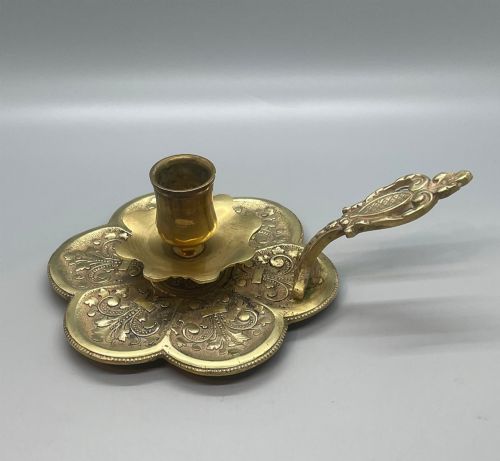
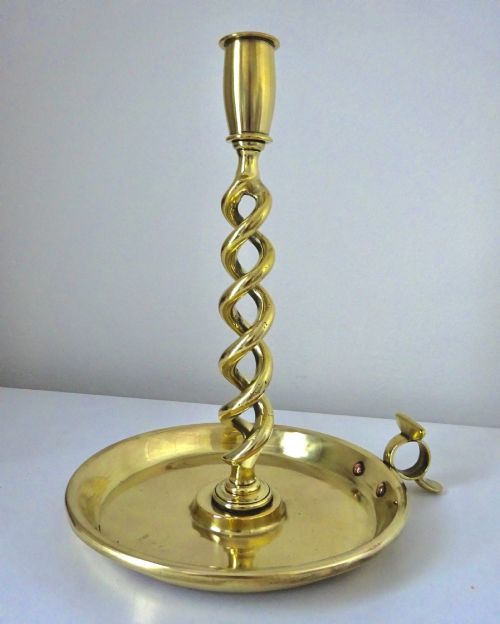


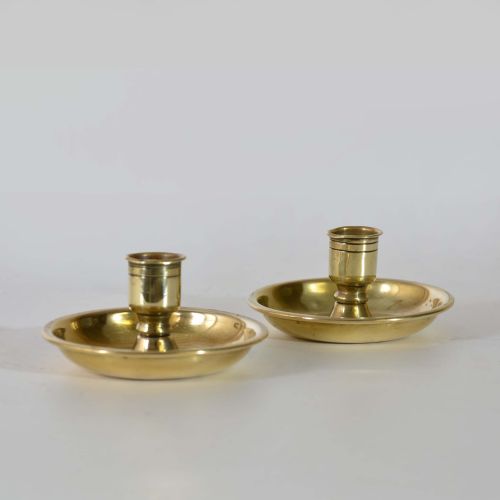


Brass Chamber Candlestick
These brass chamber candlesticks offer a practical way to light old rooms, combining portable design with solid metal construction.
Brass Chamber Candlestick
A brass chamber candlestick is a low-profile portable holder designed for carrying wax illumination safely from room to room. When you search for this phrase, you find compact lighting equipment fitted with wide drip pans and loop handles for a secure grip during transit.
The pieces appearing on this page span the eighteenth, nineteenth and early twentieth centuries, covering Georgian, Regency and Victorian periods. You will encounter simple domestic examples alongside travelling forms and hybrid designs incorporating trays or desk lamps.
Methods and materials of construction
Makers shaped these objects primarily from cast and sheet brass, frequently incorporating copper, bronze, patinated bronze and silver plate. Some specialised items combine wood elements such as walnut with metal components, or feature applied surface decoration like cloisonné and micro mosaic.
Brass Chamber Candlestick Retail Price Guide 2026
Typical asking prices for brass chamber candlestick among the pieces listed under this phrase on Sellingantiques today, from the lower quarter to the upper quarter. They describe what is for sale here now, not the wider market.
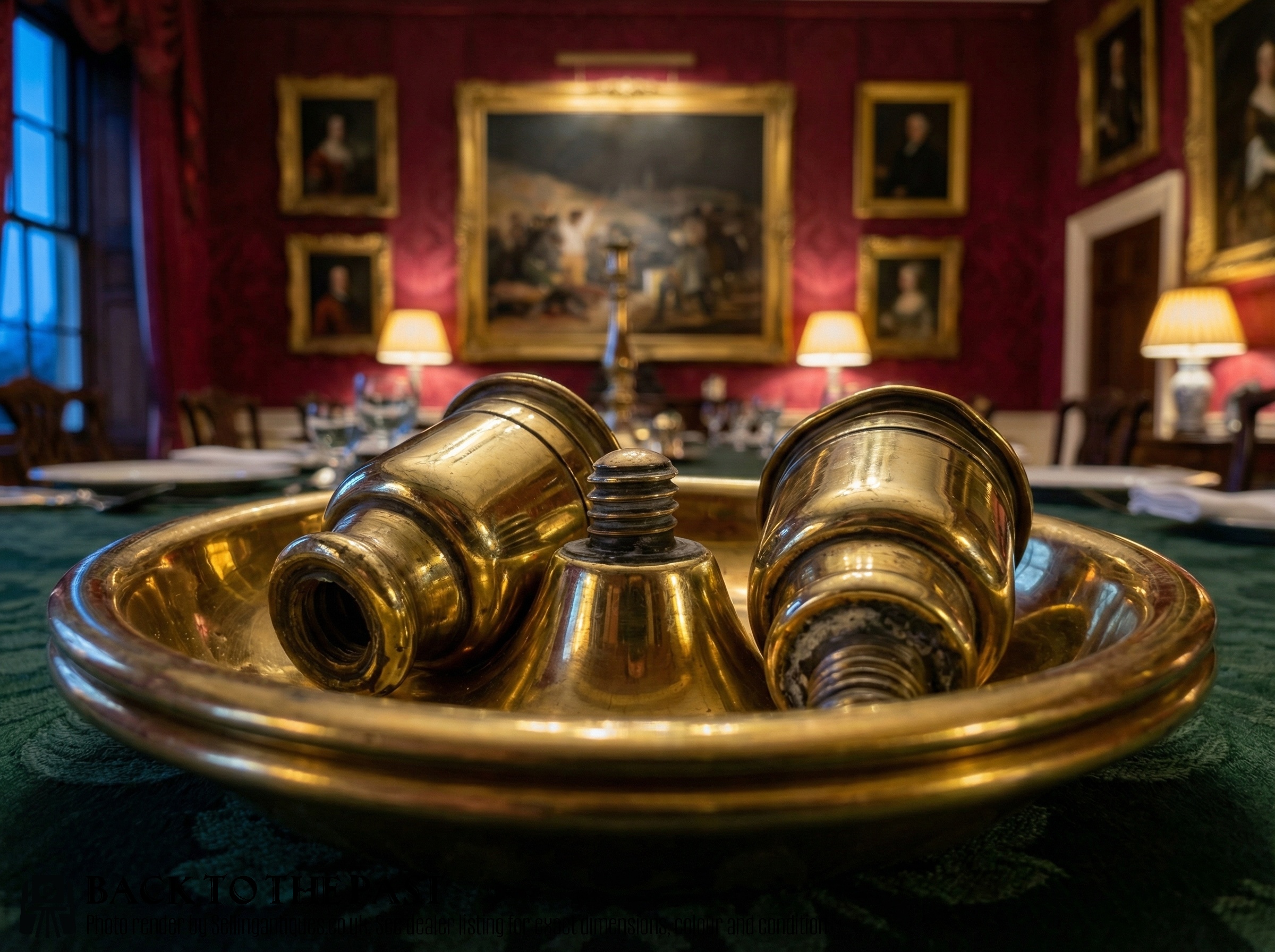
Some nineteenth-century travellers carried portable candlesticks shaped like small buns so the gear packed neatly into luggage without snagging.
Assessing build quality and design
Quality in a brass chamber candlestick rests on the weight of the metal and the precision of its assembly. Heavier cast examples demonstrate superior substance compared to lighter spun or stamped alternatives, holding their balance securely when loaded with a heavy wax taper.
Refinement of detail distinguishes standard utilitarian items from finer decorative pieces. Superior items feature integrated accessories like matching snuffers, well-fitted handle attachments and carefully executed decorative motifs rather than plain, purely functional surfaces.
The Brass Chamber Candlestick Glossary
- Chamberstick
- A portable candle holder featuring a shallow dish or tray base and an upright loop handle. This form allowed safe movement through dark hallways before electric lighting.
- Brighton bun
- A compact, often round travelling chamber candlestick that resembles a bun shape. These pieces unscrew or fold down for easy packing during journeys.
- Paktong
- A copper-nickel-zinc alloy originating from China that mimics silver. Eighteenth-century makers utilised this bright metal for high-status domestic hardware.
- Old Sheffield plate
- A material made by fusing a thin sheet of silver to a thicker copper base. Makers employed this composite technique for luxury candlesticks before modern electroplating.
- Grand Tour
- A term describing souvenirs and decorative objects acquired by wealthy travellers in Europe during the nineteenth century. These items often showcase distinct regional ornamentation like micro mosaic work.
Brass Chamber Candlestick: Frequently Asked Questions
What is a brass chamber candlestick?
A brass chamber candlestick is a portable lighting device designed with a shallow saucer base and a loop handle. It allowed people to carry a burning candle through corridors and up staircases without dripping hot wax.
The wide pan catches any molten wax as the candle burns down, while the handle keeps fingers safely away from the flame. Many surviving examples include a small socket to hold a extinguisher cone.
How were chambersticks used historically?
These pieces served as personal bedroom lighting in large houses before the arrival of gas and electric illumination. Servants prepared them each evening so residents could light their way to bed.
In the morning, the same holders illuminated the return journey downstairs. Travellers also packed specialised versions for use in coaching inns where fixed wall lighting was absent.
How do I date a brass chamber candlestick?
Dating relies on observing manufacturing marks, material composition and overall stylistic design. Eighteenth-century examples often display simpler cast lines and heavy Paktong or brass construction, while Victorian pieces incorporate heavier ornamentation and sometimes fitted trays.
Component assembly also provides clues, as early pieces use hand-threaded parts and cast sockets rather than modern machine threads. Comparing form against known period styles helps narrow the manufacturing decade.
How do I clean antique brass?
Antique brass benefits from gentle dusting and minimal intervention to preserve its historical surface patina. Aggressive chemical polishing strips away the aged appearance that collectors value.
If cleaning is necessary, warm water with mild soap and a soft cloth removes accumulated dirt safely. Dry the metal thoroughly afterwards to prevent spotting or corrosion.