
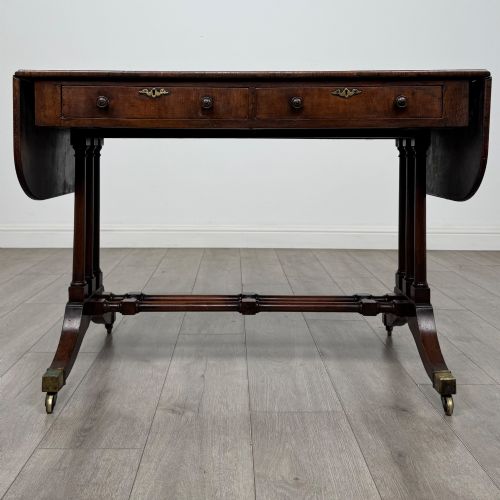
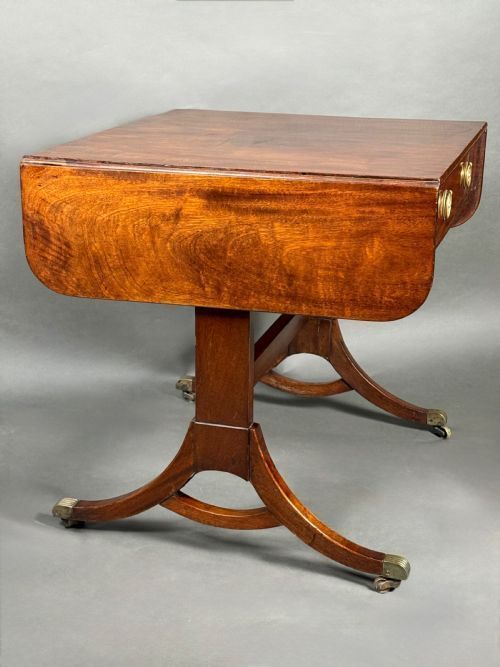
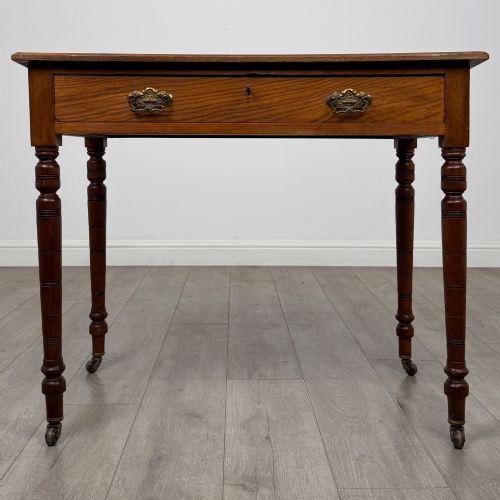
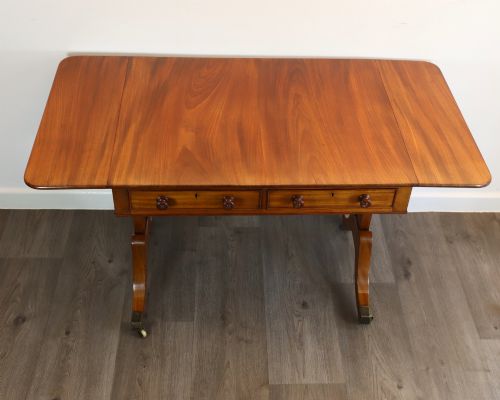
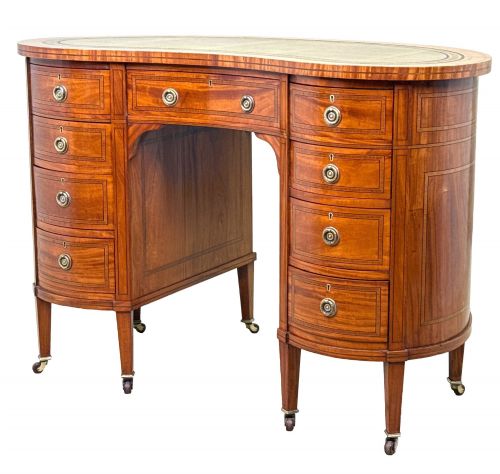
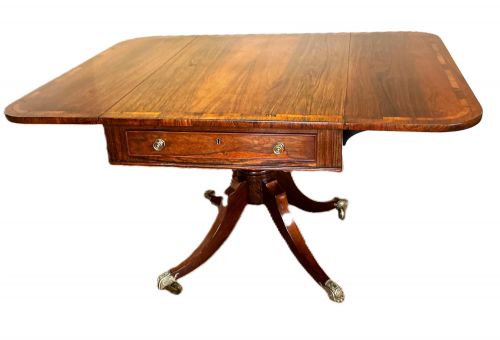


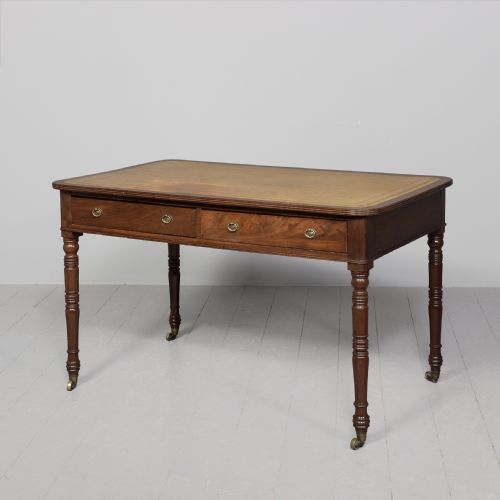


Brass Castor Writing Table
These pieces for a brass castor writing table bring together period woods and brass fittings to anchor a study or library.
Brass Castor Writing Table
A brass castor writing table stands as a functional piece of period furniture, drawing from Georgian, Regency, Victorian, and Edwardian eras. Buyers exploring this category will find various formats including sofa tables, library tables, drum tables, and kidney-shaped desks.
Mahogany and rosewood dominate the listings, frequently accompanied by satinwood, oak, yew wood, and walnut. Many items incorporate drop flaps or drawers, supported on legs fitted with brass castors to allow smooth movement across a room.

Materials and construction
Cabinet makers utilised solid timbers and figured veneers, particularly flame mahogany and rosewood, often enhanced with boxwood inlay and leather writing surfaces. The structural integrity relies on traditional joinery paired with turned or reeded supports.
Metalwork played a defining role, utilising brass for handles, mounts, and the crucial castors that allowed heavy library and drum tables to be repositioned easily.
Current listings feature pieces spanning the Georgian, Regency, Victorian, and Edwardian periods, constructed from mahogany, rosewood, oak, yew, walnut, and satinwood.
Judging quality
Quality rests upon the choice of timber figure, the crispness of inlaid details, and the integrity of the secondary woods used in drawer construction. Pieces that retain their original brass castors and fitted leather inserts command higher regard among collectors.
Proportion and execution separate standard utility items from exceptional examples, seen in the harmony of drop-flap mechanisms and the subtlety of carved or reeded supports.
W Williamson And Sons Of Guildford
The Brass Castor Writing Table Glossary
- Castor
- A small wheel mounted on a swivel assembly, attached to the base of furniture legs to ease movement. Brass versions are typical on higher-quality tables from the Georgian and Regency periods.
- Drum table
- A circular library table containing a deep top with alternating drawers and dummy drawers around the perimeter. These pieces usually stand on a central pillar with tripod or quadruped brass-capped feet.
- Sofa table
- A rectangular occasional table designed to stand in front of a sofa, featuring drop leaves on either side and usually two drawers. They emerged during the late eighteenth century and remained popular through the Regency era.
- Kidney-shaped desk
- A compact writing table featuring a concave curve at the front to accommodate the user. They appear frequently in Victorian and Edwardian variations using satinwood or mahogany.
- Drop flap
- A hinged leaf on the side of a table that can be raised to extend the surface area or lowered when space is restricted.
Brass Castor Writing Table: Frequently Asked Questions
What is a brass castor writing table?
These tables are functional antique items designed for study or correspondence, featuring writing surfaces often lined in leather. They date primarily from the Georgian, Regency, and Victorian periods.
The inclusion of brass castors indicates a design intended for mobility within a grand room or library, allowing the furniture to be shifted without damaging floors.
How do I identify a Regency table?
Regency tables typically display rich timbers such as rosewood and flame mahogany, sometimes accented with brass inlay or gilt mounts. Their silhouettes draw on classical restraint.
Look for drum formats, sofa tables with drop leaves, and sturdy brass castors supporting reeded or pillar legs characteristic of the early nineteenth century.
Where were these tables used?
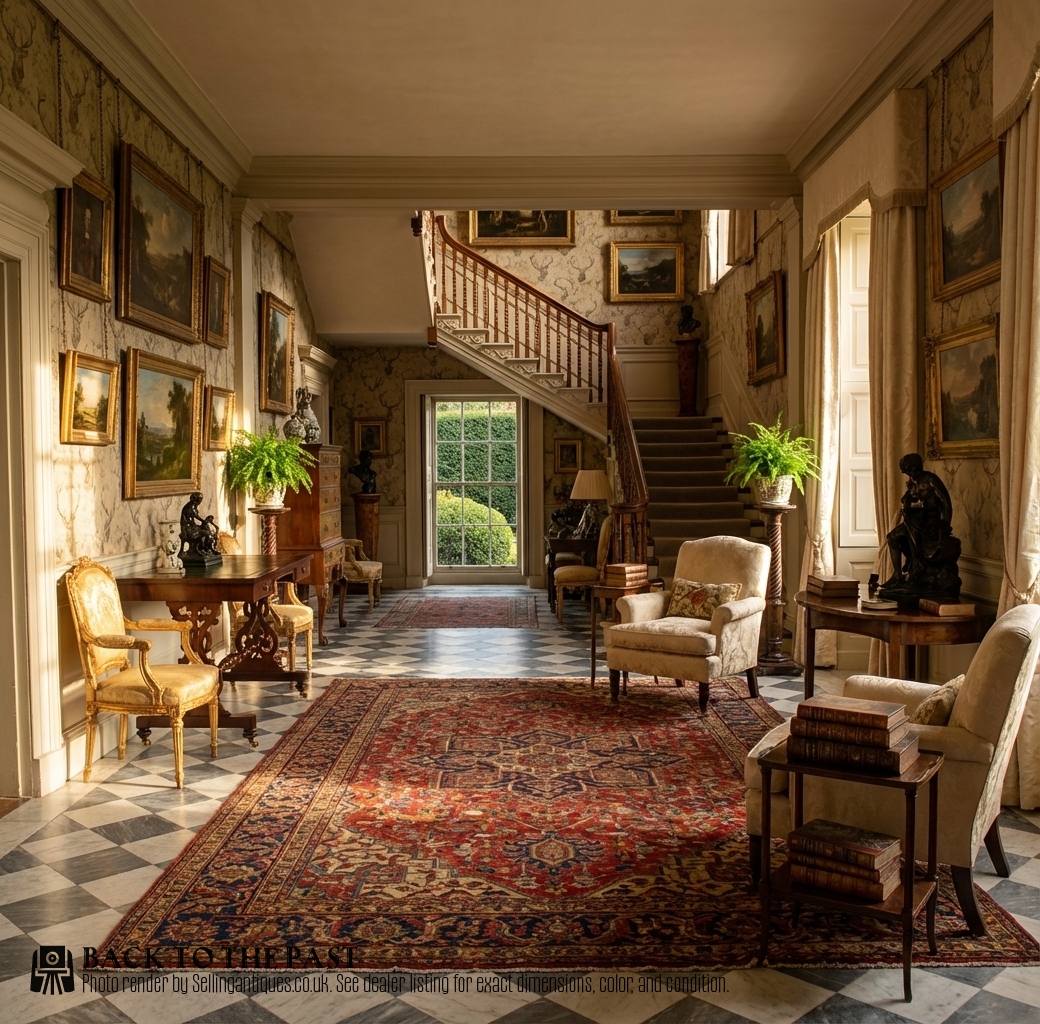
Historically, these pieces served in private libraries, studies, and drawing rooms as designated spaces for reading, writing, and correspondence. Drum tables often stood in the centre of rooms.
Today, they function well in contemporary homes as executive desks, console surfaces, or central library tables that anchor a room's layout.
Are writing tables and sofa tables the same?
While both fall under the broader category of tables with brass castors, sofa tables are distinguished by their drop leaves on either end and twin drawer configuration. Writing tables focus on a dedicated writing surface.
Sofa tables were designed to sit before seating furniture, whereas writing tables functioned independently against walls or freestanding in rooms.