



Brass Castor Music Rack
These pieces for a brass castor music rack combine timber and metalwork to hold scores, folios, and newspapers with elegance.

Brass Castor Music Rack
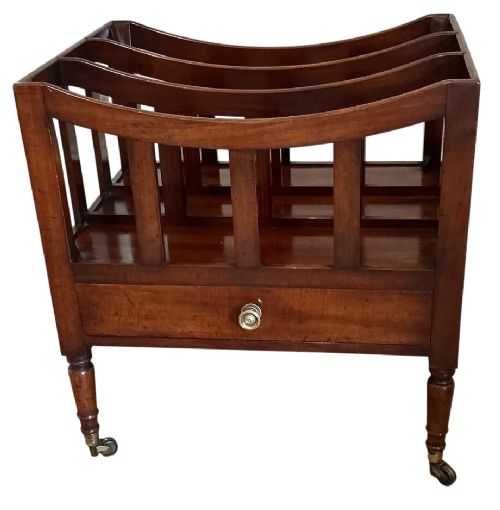
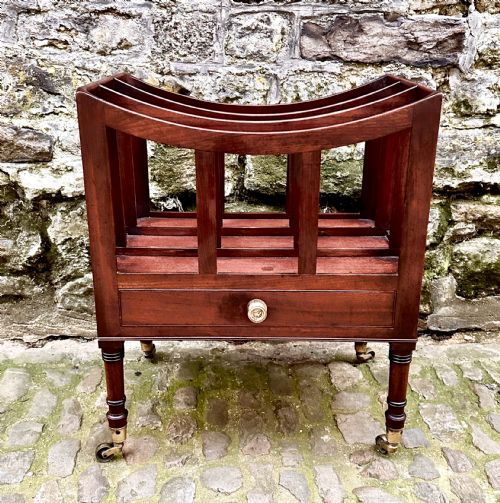
A brass castor music rack typically takes the form of a canterbury or folio stand, serving as a designated holder for sheet music, newspapers, and magazines in the home. These items appear in materials such as mahogany, rosewood, and ebonised mahogany, reflecting the cabinetmaker's choice of fine timbers.
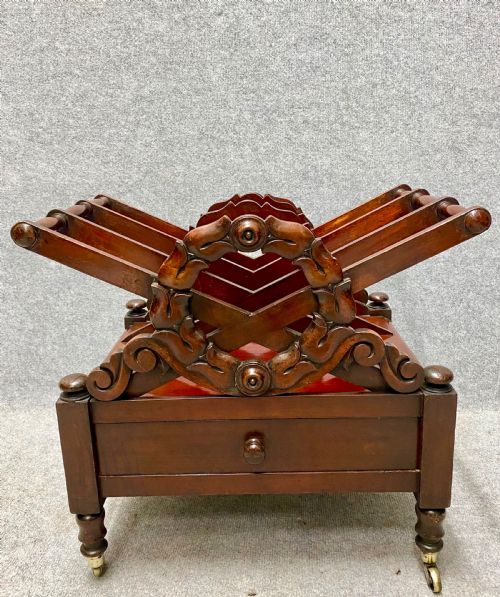
The selections encountered on this page span the Regency, George III, and Victorian periods, with pieces dated to the nineteenth century including circa 1820 examples. Forms range from boat-shaped designs and four-division canterburys to oversized country house proportions and what-not combinations.
Makers and design influences recorded in the evidence connect certain items to Gillows of Lancaster and the publications of J.C. Loudon. Buyers seeking a brass castor music rack will find that these furnishings bridge the gap between functional storage and refined period aesthetics.
How They Were Made
Cabinetmakers constructed these pieces using dense hardwoods such as mahogany and rosewood, often employing ebonised finishes on mahogany frames for contrast and visual weight. The timber is shaped into turned uprights, slatted partitions, and drawer bases.
Metalwork is integral to the construction, utilising brass for the castors that allow the stands to move smoothly across carpets and floors. Fine joinery unites the partitions and the lower box or drawer sections securely.
Listings feature mahogany, rosewood, and ebonised mahogany across Regency, George III, and Victorian periods.
What Varies in Quality
The distinction between standard examples and finer works rests upon the selection of timber grain, the crispness of turned details, and the integration of the brass castors. Heavier, oversized country house proportions demand more robust structural framing.
Attribution to documented workshops like Gillows elevates an item through superior execution of joinery and proportion. The complexity of the division framework, from simple four-division layouts to expansive folio stands, also shapes the character of each piece.
Gillows of Lancaster·J.C. Loudon
The Brass Castor Music Rack Glossary
- Canterbury
- A low stand fitted with divisions for holding sheet music, folios, or periodicals, usually raised on castors. Originating in the late eighteenth century, it often incorporates a small drawer beneath.
- Folio Stand
- A large piece designed specifically for holding oversized books, prints, or music sheets. These stands feature adjustable or fixed frames and frequently appear in generous proportions.
- Castor
- A small wheel mounted on a swivel attached to the base of furniture for ease of movement. In these pieces, brass forms the primary metal for both the wheel and its mounting socket.
- Ebonised
- Wood treated with a finish that darkens the surface to resemble ebony. This technique was popular in Victorian cabinetmaking for creating sharp contrasts.
- Boat Shaped
- A curved outline reminiscent of a vessel hull, seen in the sides of specific Regency canterburys. This silhouette softens the rectangular geometry typical of storage stands.
Brass Castor Music Rack: Frequently Asked Questions
What is a music rack?
A music rack is a specialised piece of furniture designed to hold sheet music, folios, and scores near a piano or seating area. These items keep scores organised and accessible in a domestic setting.
Historical examples frequently double as newspaper or magazine stands, reflecting how nineteenth-century households stored their daily and weekly reading materials.
How do I identify a Regency canterbury?
Regency canterburys often feature distinct design elements such as boat-shaped frames, finely turned uprights, and slender brass castors. The proportions remain balanced and lean upon classical motifs.
Timber choices during this period centre on rich mahogany and rosewood, sometimes accented with subtle brass inlay or mounts.
Where were these pieces used?
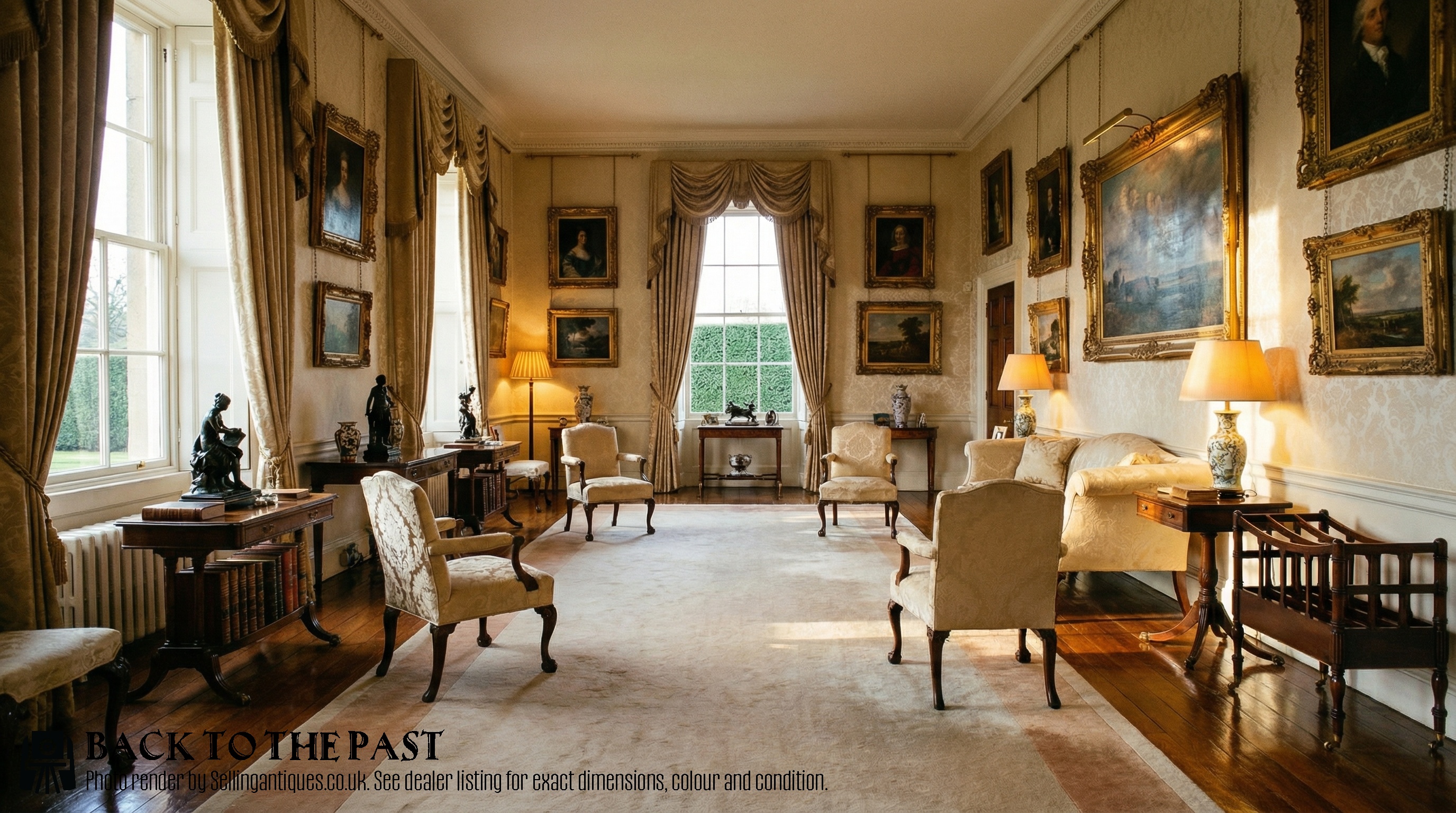
These stands occupied music rooms, drawing rooms, and libraries where residents gathered to play instruments or read periodicals. Their mobility allowed servants or family members to reposition them easily.
Oversized variations served grand country houses, accommodating large folios and heavy collections of scores.
What distinguishes a folio stand from a canterbury?
A folio stand provides larger storage capacity intended for oversized prints, maps, or bound music books rather than standard sheet music. They often feature an adjustable or inclined structure.
A canterbury typically incorporates vertical divisions for upright storage and frequently includes a small drawer at the base for smaller accessories.