
Brass Cast Iron Stand
When you search for brass cast iron stand, you find practical hallway furniture designed to hold wet umbrellas and walking sticks.
Brass Cast Iron Stand
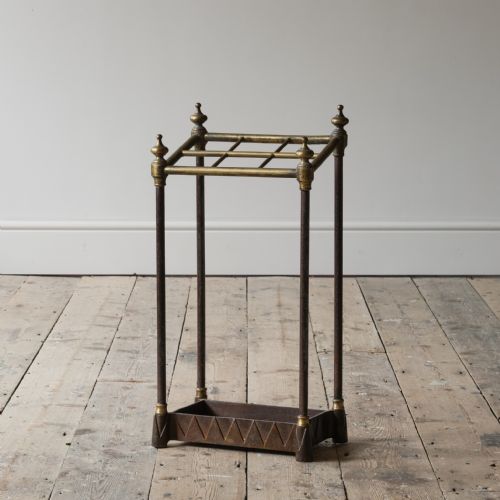
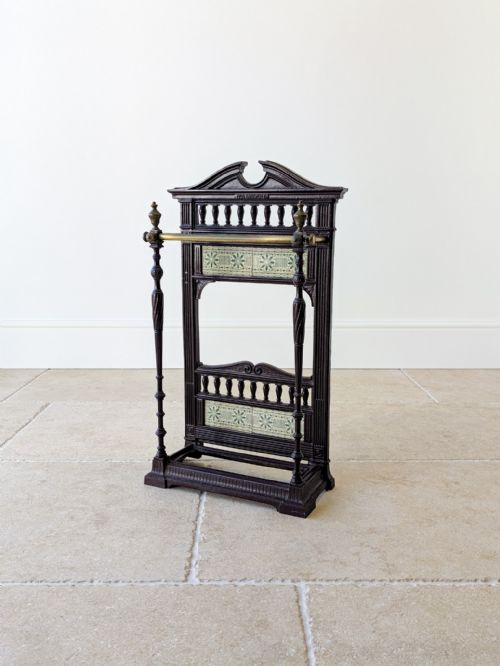
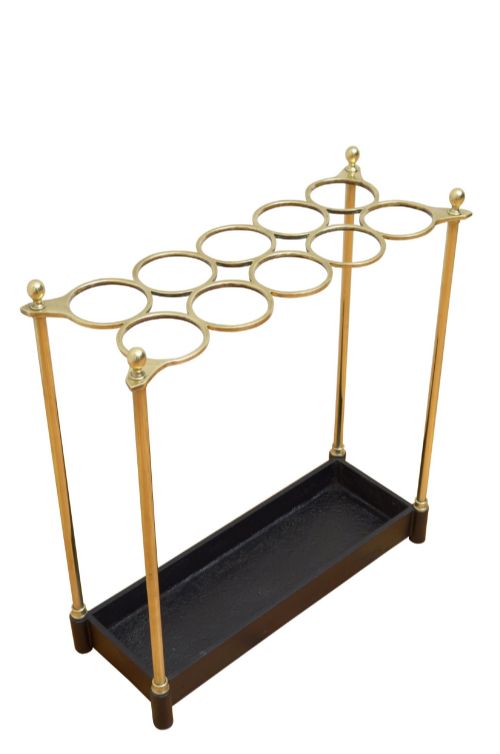
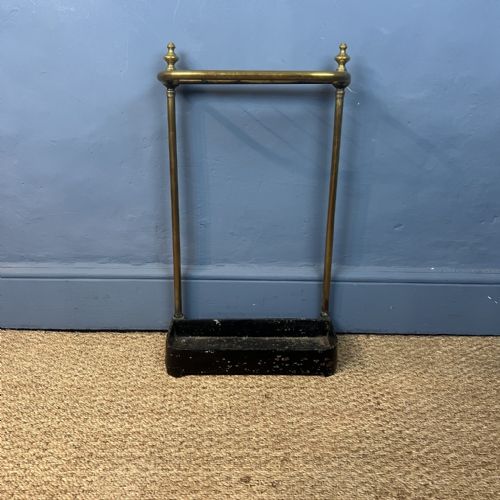
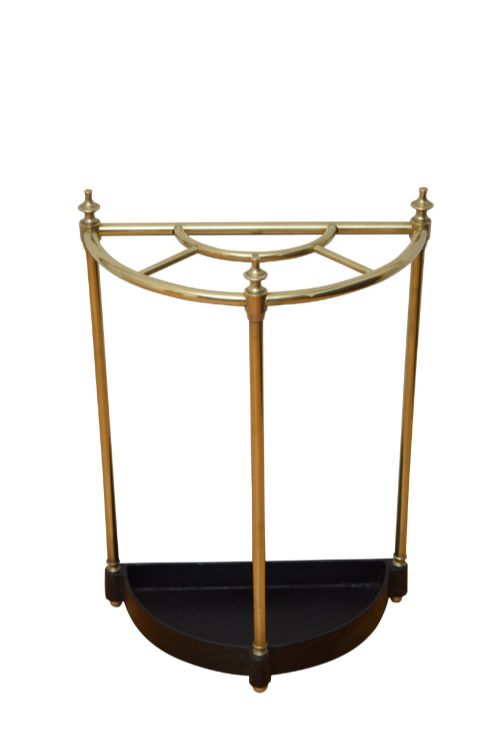
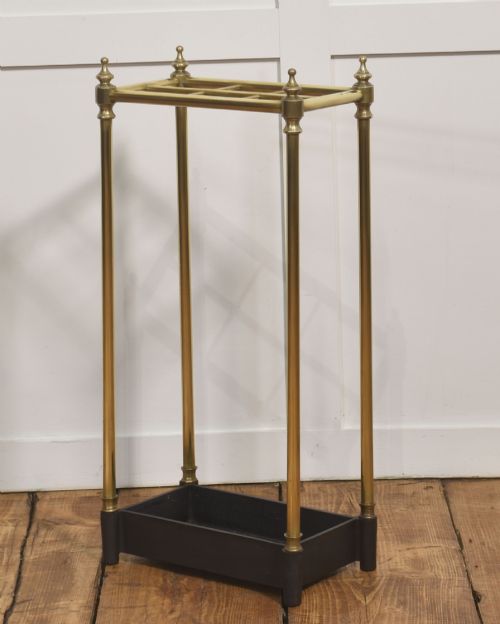
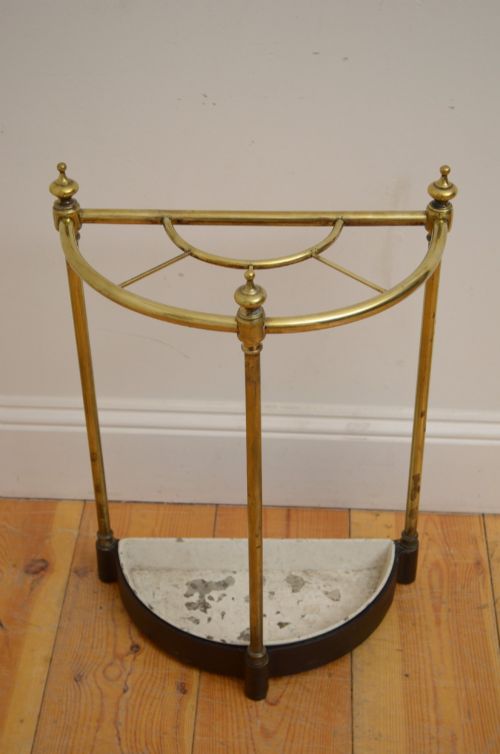
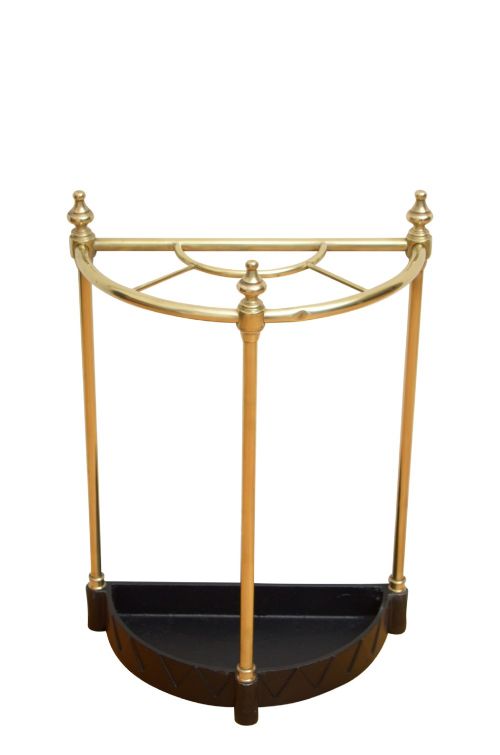
A brass cast iron stand typically takes the form of an umbrella or walking stick holder designed for the Victorian or Edwardian hallway. These utilitarian pieces combine a heavy metal base with polished metal rails and loops to keep wet weather gear organised.
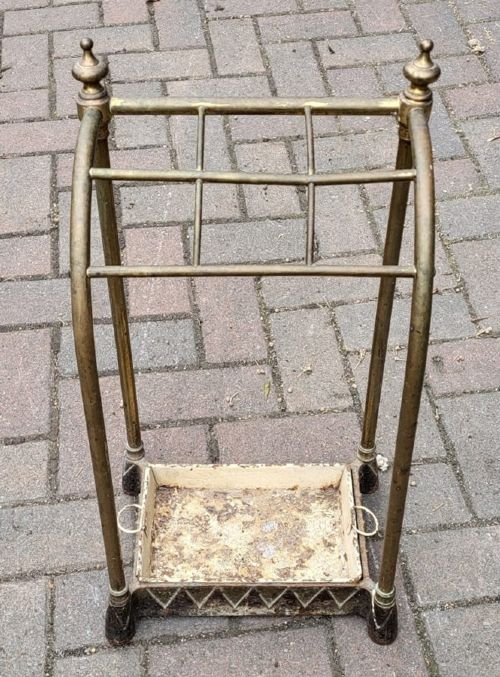
The most common examples on this page are demi-lune or half-moon shapes intended to sit flush against a hallway wall. Other variations include rectangular frames and corner configurations featuring multiple divisions for individual sticks.
Originating predominantly from the nineteenth and early twentieth centuries, these objects served domestic households by protecting floors from dripping water. The heavy foundation ensured the rack remained stable when loaded with heavy timber and metal shafts.
How They Were Made
Manufacturers relied on a combination of foundry casting and sheet metal working, pairing heavy cast iron bases with tubular brass rails and uprights. The iron provided essential ballast at ground level, while the brass components offered a bright, rust-resistant framework above.
Casting allowed foundries to produce intricate motifs and sturdy drip trays, often incorporating decorative patterns such as botanical designs, animal figures or geometric divisions. Sections were typically joined with threaded fixings, allowing the heavy base to anchor the lighter brass superstructure securely.
Several stands feature entwined iron snakes or swans waiting patiently to hold your wet walking sticks.
What Varies in Quality
Quality in these stands rests upon the crispness of the iron casting and the substantial gauge of the brass components used in the frame. Finer examples display sharp detailing in the base and heavy, rigid divider bars that resist bending under daily domestic use.
The presence of an original removable drip tray at the base significantly elevates a piece, as many missing trays have been replaced with modern alternatives. Engineering touches, such as robust division loops and heavier overall weight, distinguish workshop standards from ordinary production items.
Coalbrookdale·Thomas Jeckyll·Shoolbred·Carter
The Brass Cast Iron Stand Glossary
- Demi-lune
- A half-moon shape designed to fit flat against a hallway wall. This configuration maximises floor space in narrow corridors.
- Drip tray
- The shallow metal pan situated at the base of the rack. It catches rainwater running off umbrellas and protects floor coverings.
- Division
- An individual section or loop that separates walking sticks and umbrellas within the rack. Higher division counts indicate larger capacity.
- Finial
- A decorative terminal knob or ornament fitted to the top of the upright posts. These brass details often screw into the structural framework.
- Aesthetic Movement
- A late nineteenth-century design style emphasising visual beauty over narrative content. Pieces from this movement often feature stylised natural motifs.
Brass Cast Iron Stand: Frequently Asked Questions
Where were these stands placed in the home?
These pieces traditionally stood in the entrance hall or vestibule near the front door. This placement allowed household members and visitors to deposit wet umbrellas and walking sticks immediately upon entering.
The semi-circular designs were particularly useful for narrow corridors because they hugged the wall closely without obstructing pathways. Corner models also made efficient use of awkward transitional spaces in large Victorian and Edwardian houses.
How do I clean the brass and iron?
The brass framework responds well to gentle dusting and occasional cleaning with a non-abrasive metal polish to maintain its brightness. Care should be taken to avoid getting polish onto the cast iron base, which is usually finished with dark paint or lacquer.
The iron sections simply require wiping with a dry cloth to prevent dust accumulation. Preserving the original dark finish on the heavy base maintains the historical character of the object.
What is the difference between a stick stand and an umbrella stand?
In period usage, the terms were largely interchangeable because walking sticks and umbrellas shared identical storage needs in the hallway. Many historical catalogue entries and contemporary listings refer to the exact same dual-purpose form.
However, stands with narrower divisions and tighter loops are frequently described as walking stick stands. Wider sections and larger drip trays were better suited to bulky Victorian rain umbrellas.
How can I tell the period of a stand?
Dating relies heavily on stylistic clues such as the presence of Aesthetic Movement or Gothic Revival ornamentation popular in the nineteenth century. Heavier, ornate cast iron bases with detailed flora or fauna typically point to Victorian manufacture.
Edwardian examples often feature simpler, lighter brass frameworks with cleaner geometric lines. Patent marks and manufacturer names stamped into the iron provide definitive chronological anchors when present.