


Brass Carriage Cannon
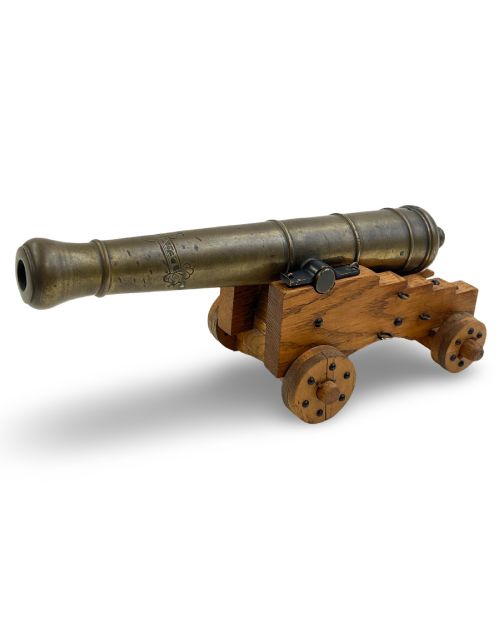
A brass carriage cannon brings maritime history and military tradition to a desk, combining polished metal and timber.
Brass Carriage Cannon
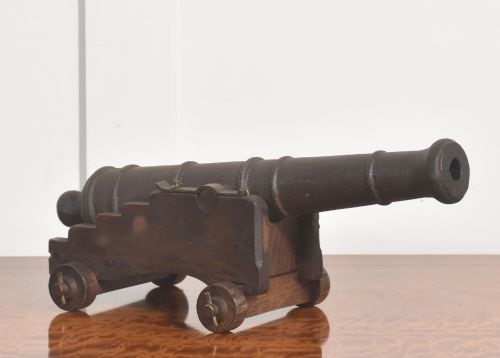
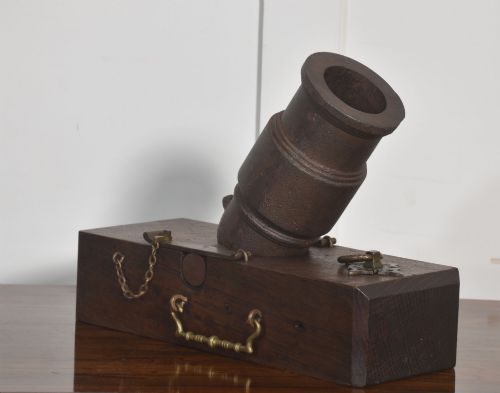
A brass carriage cannon represents a scale model or signal piece produced across the eighteenth, nineteenth and early twentieth centuries. These items appear as desk ornaments, maritime antiques and militaria, often paired with wooden carriages.
The versions most commonly met on this page include nineteenth-century brass and bronze barrels mounted on oak or cast iron carriages. Pieces range from French and English maritime examples to commemorative items marking historical events like the Crimean War.
How they were made
Barrels are cast in brass, bronze, cast iron or polished steel, showing the metalworking techniques typical of nineteenth-century foundries and workshops. These metal components are sometimes inscribed or marked to record commemorations.
Carriages are constructed from oak, wood and cast iron, providing a sturdy base to support the heavier metal barrels. The combination of timber beds and metal ordnance reflects standard naval and field artillery designs scaled down for display.
One cheerful piece marks the end of the Crimean War with a bang rather than a treaty.
What varies in quality
The refinement of the casting and the fidelity of the scaling distinguish superior examples from simpler desk ornaments. Finer pieces display crisp barrel inscriptions, polished surfaces and carefully proportioned carriages that mirror actual ordnance.
Materials also influence the character of each piece, with heavy bronze barrels and well-grained oak carriages representing the more substantial end of the range. The integration between the metal ordnance and its supporting carriage shows the care taken by the maker.
The Brass Carriage Cannon Glossary
- Signal cannon
- A small ordnance piece utilised to make a loud report rather than fire a projectile, often employed for starting races or signalling across water.
- Carriage
- The mounting or frame upon which the cannon barrel rests, typically constructed from timber or cast iron.
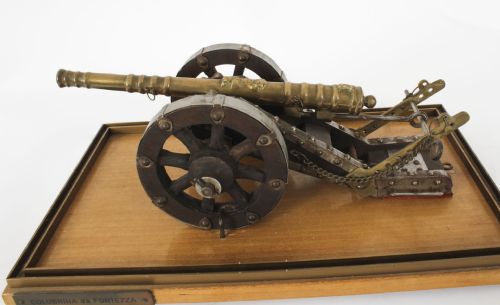
- Colubrina
- An early type of long cannon or culverin, represented in scaled model form within nineteenth-century militaria.
- Militaria
- Antiques and collectables relating to warfare, military history, and armed forces memorabilia.
Brass Carriage Cannon: Frequently Asked Questions
Were these cannons actually fired?
Signal cannons were designed to discharge gunpowder to create a loud report for alarms or maritime communication.
Many decorative models remain functional, though surviving examples on this page are typically kept for display.
What is the difference between signal and model cannons?
Signal cannons feature a proper touchhole designed for ignition and noise-making during maritime or celebratory use.
Pure scale models serve primarily as desk ornaments without the capability to discharge.
How do I date a brass cannon?
Dating relies on the style of the carriage, metal composition, and any inscribed dates or historical markers on the barrel.
Nineteenth-century pieces often feature cast iron carriages and specific Victorian or Edwardian design traits.
Where were these displayed originally?
Officers and maritime enthusiasts placed these objects on desks, mantels and ship cabins as decorative items.
They reflect an era when naval and military ordnance inspired domestic display pieces.