


Vintage Metal Cannon
These vintage metal cannon models and ornaments bring centuries of military history into study, garden, and hearth.
Vintage Metal Cannon
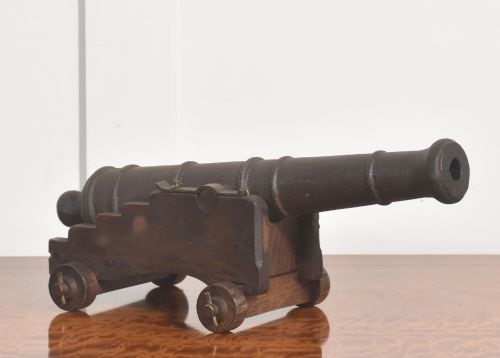
When you search for vintage metal cannon items, you encounter scale models, signal cannons, desk ornaments, and fire screens spanning the eighteenth, nineteenth, and early twentieth centuries. These objects range from heavy cast iron garden pieces to small brass and bronze desk ornaments mounted on wooden carriages.
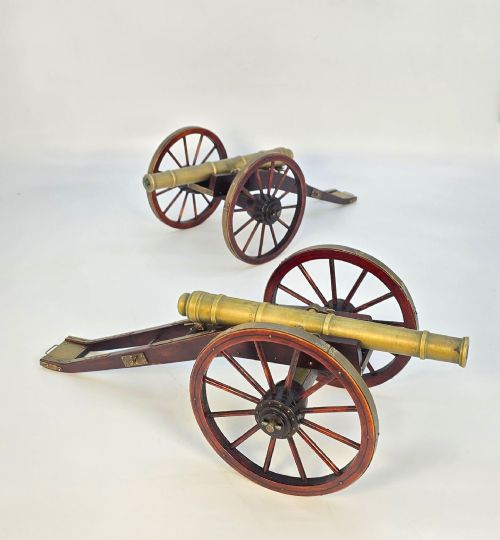
The most common versions met on this page are nineteenth century brass and cast iron scale models and desk ornaments, often paired with oak or mahogany carriages. You also find specialised forms such as Arts and Crafts copper fire screens and French style field gun models.
How they were made
Makers utilised durable metals including cast iron, brass, bronze, copper, and polished steel to cast and shape the barrels and ordnance components. These metal barrels are frequently combined with wooden elements such as oak, mahogany, and general hardwood for the wheeled carriages and undercarriages.
Construction techniques include hand building, casting, and polishing, resulting in finished models that range from functional signal cannons to purely decorative desk ornaments.
Someone once needed a copper fire screen with a built in cannon to ensure the living room hearth stayed strictly defended.
What varies in quality
The standard of a piece depends heavily on the precision of the metal casting and the fidelity of the carriage woodwork. Heavier bronze and cast iron models with well rendered barrels command greater attention than lighter decorative castings.
Detailing on the metalwork and the quality of the timber undercarriage separate standard decorative models from finely rendered historical scale representations.
The Vintage Metal Cannon Glossary
- Signal cannon
- A small cannon used historically for firing blank charges to signal time, warnings, or celebrations. These are frequently mounted on wooden bases.
- Gribeauval field gun
- A type of artillery system developed in France, often replicated in nineteenth century decorative bronze and iron models.
- Carriage
- The mounting or wheeled frame upon which the cannon barrel rests. These are typically fashioned from oak, mahogany, or cast iron.
- Colubrina
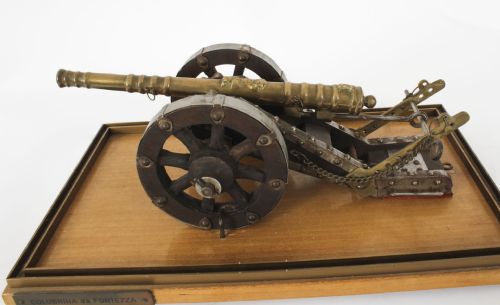
- An early type of long barrelled cannon represented in antique decorative brass and bronze models.
Vintage Metal Cannon: Frequently Asked Questions
What were vintage metal cannons used for?
Many of these pieces served as decorative desk ornaments, miniature scale models of historical artillery, or functional signal cannons fired on special occasions. Others, such as copper fire screens, integrated ordnance imagery into domestic hearth accessories.
Heavier cast iron versions were also produced as garden ornaments, designed to sit outdoors on lawns or terraces.
How do I date a metal cannon model?
Dating relies on stylistic clues, the specific metals utilised, and construction methods. Pieces from the eighteenth and nineteenth centuries often reflect contemporary military campaigns or styling.
Victorian and Edwardian examples frequently feature polished brass or bronze barrels paired with heavy wooden carriages characteristic of the period.
How should I display a model cannon?
These pieces suit studies, libraries, and mantelpieces, where their brass, bronze, and cast iron finishes contrast against wood and leather furniture. Larger cast iron examples are heavy enough for garden placement.
Ensure the wooden undercarriages are kept away from direct heat sources to protect the oak or mahogany from drying out.
What is a signal cannon?
A signal cannon is a smaller ordnance piece designed to make a loud noise rather than fire a projectile. They were commonly utilised at sea or on estates to mark hours or events.
On this page, they appear in brass and polished steel, often mounted on wooden bases.