

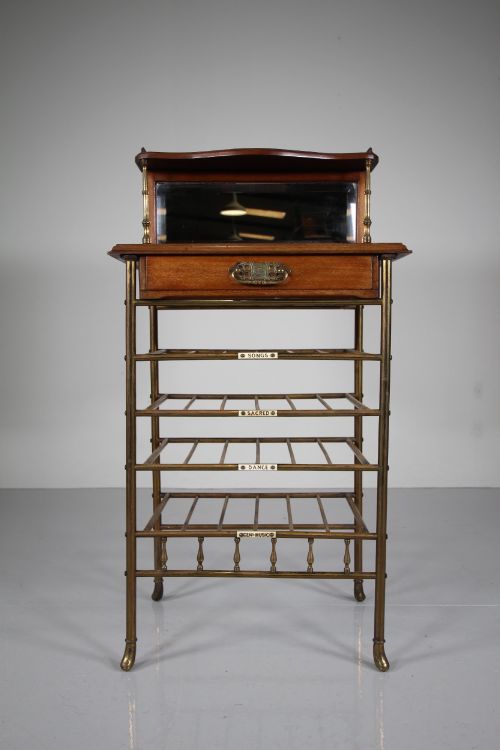
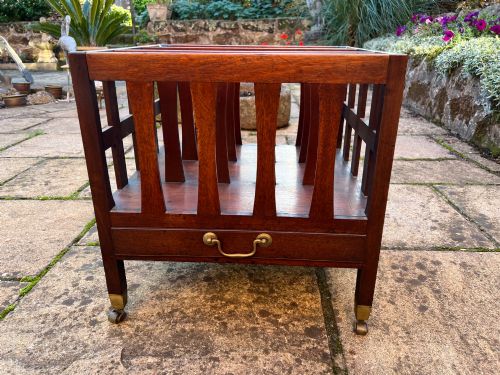
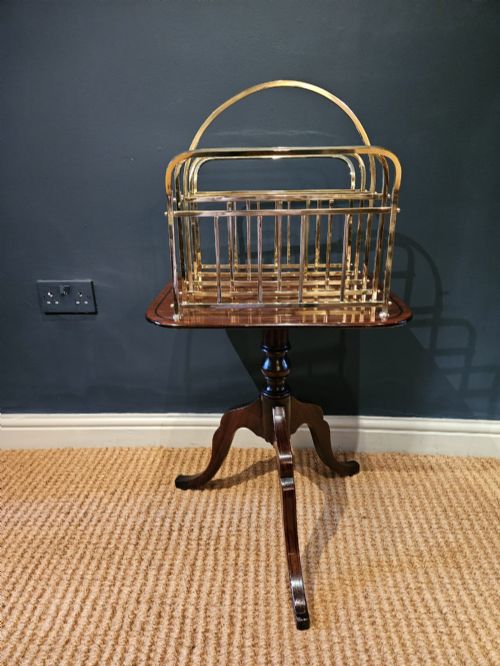
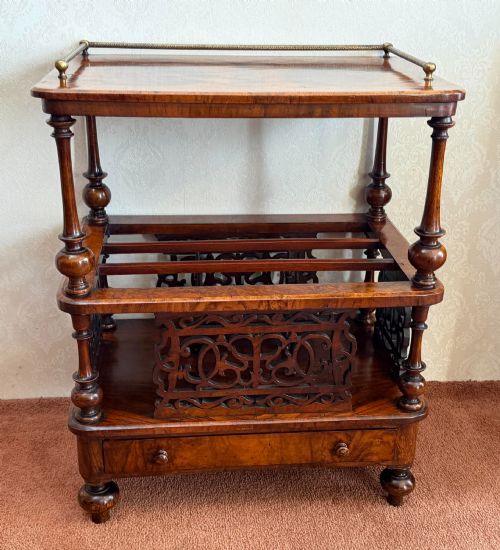
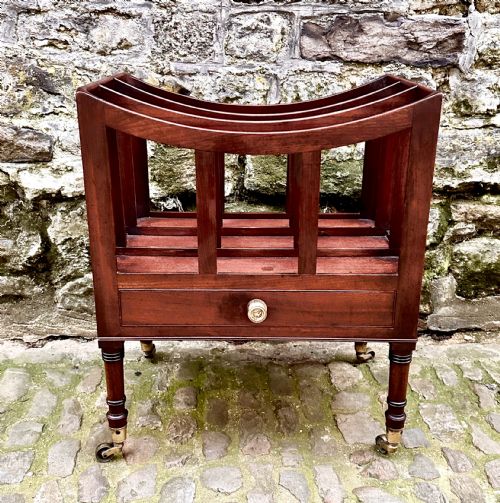
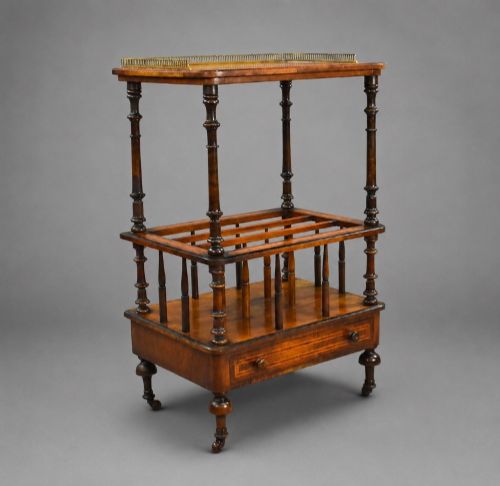


Brass Canterbury Stand
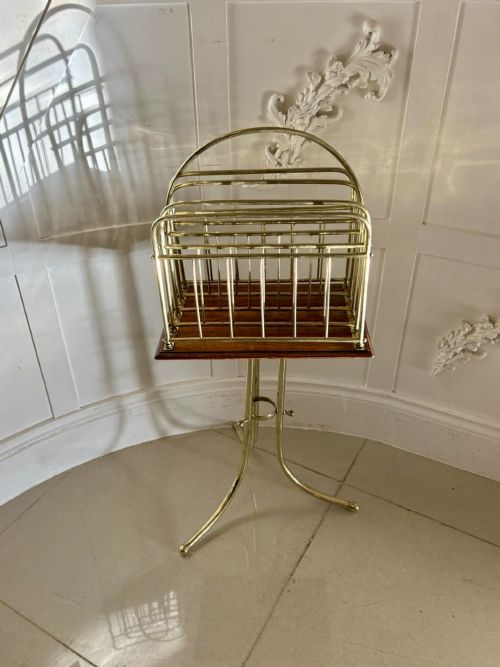
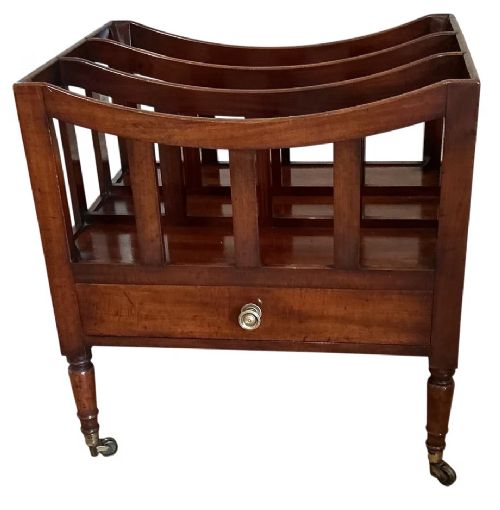
These pieces for a brass canterbury stand combine timber frames with metal fittings to hold folios and journals.
Brass Canterbury Stand
A brass canterbury stand serves for holding music sheets, newspapers, and magazines in domestic rooms. The form appears across the Georgian, Regency, Victorian, and Edwardian periods.
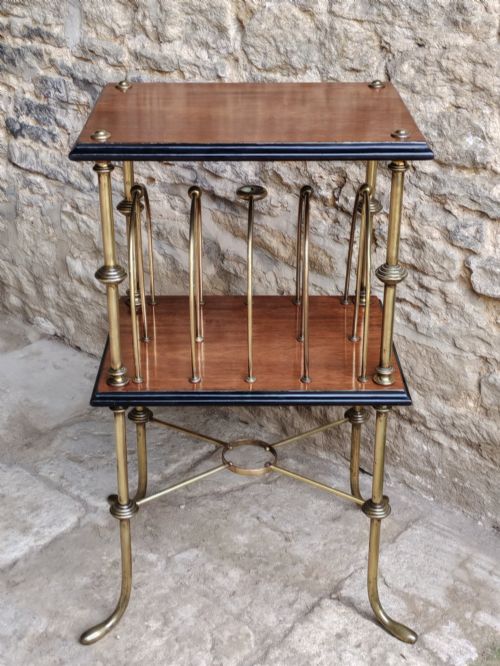
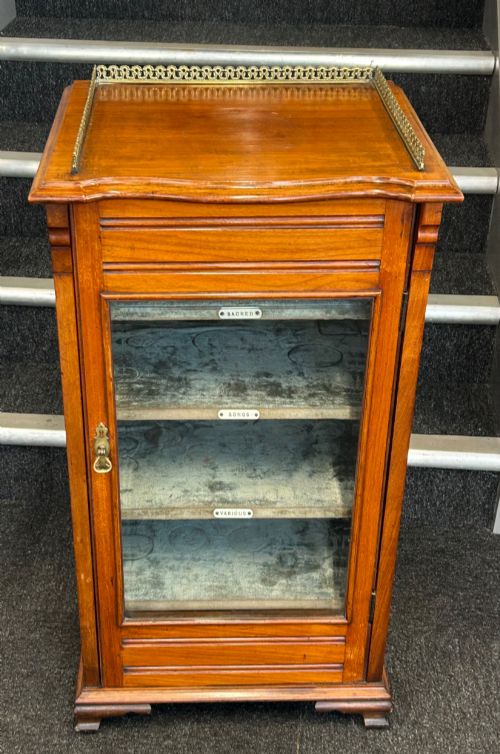
The selections on this page include traditional compartmentalised racks alongside revolving stands and music cabinets. Timber frameworks paired with metal spindles or mounts dominate the available examples.
How they were made
Cabinet makers utilised dense hardwoods such as mahogany, walnut, rosewood, and burr walnut for the main structures. These timbers frequently feature inlaid details, contrasting veneers, and glass panels.
Metalwork components in brass and copper form the upright divisions, handles, and revolving mechanisms. Castors and structural mounts integrate these metals securely into the wooden framework.
Brass Canterbury Stand Retail Price Guide 2026
Typical asking prices for brass canterbury stand among the pieces listed under this phrase on Sellingantiques today, from the lower quarter to the upper quarter. They describe what is for sale here now, not the wider market.
Listings feature woods including mahogany, walnut, rosewood, and burr walnut, combined with brass, copper, and glass.
What varies in quality
Construction methods determine durability, separating straightforward utilitarian racks from elaborate cabinet-work. Hand-cut dovetails and precise veneer matching indicate higher workshop standards.
The proportion and gauge of the metal components affect the visual weight of the piece. Substantial brass turnings and clean casting indicate superior production values.
Henry Ogden & Son·Gillows of Lancaster·J.C.Loudon
The Brass Canterbury Stand Glossary
- Canterbury
- A low stand fitted with divisions for holding sheet music, folios, or periodicals. The designation dates from the eighteenth century when the Archbishop of Canterbury supposedly commissioned the first such rack.
- Whatnot
- An open set of general display shelves standing on upright supports. This form frequently incorporates canterbury sections at the base.
- Inlay
- A technique where pieces of contrasting timber, brass, or shell are inserted into depressions within a solid wood surface. This decoration adds pattern and colour contrast to the panels.
- Folio stand
- A large rack designed specifically for storing oversized books and unbound sheets of paper. These stands often feature adjustable supports.
Brass Canterbury Stand: Frequently Asked Questions
What is a brass canterbury stand used for?
These stands serve to organise sheet music, newspapers, and periodicals within sitting rooms and music parlours. The compartments keep loose folios upright and accessible.
Later revolving versions allowed users to access a larger volume of reading material from a stationary seating position.
How do I date a mahogany canterbury?
Dating relies upon timber selection, structural joinery, and the style of the brass mounts. Georgian and Regency examples display linear frames with slender supports.
Victorian and Edwardian variations introduce heavier turned columns, marquetry inlay, and revolving mechanisms constructed with cast iron and brass.
Are revolving magazine stands period pieces?
Revolving magazine stands appear frequently from the Victorian and Edwardian eras. These pieces accommodated the growing volume of periodical literature produced in the late nineteenth century.
The inclusion of a heavy brass spider base or central spindle facilitated smooth rotation.
How do I clean the brass fittings?
Maintenance requires gentle dusting and occasional cleaning with a dry microfibre cloth to preserve the metal surface. Avoid abrasive polishes that remove patination from the brass.
Care should be taken to protect adjacent mahogany or walnut veneers from cleaning agents.