
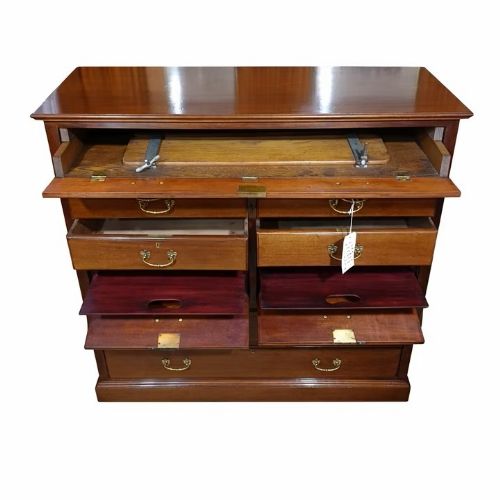


Brass Campaign Cabinet
A brass campaign cabinet is a robust, transportable piece designed for officers on the move, combining rich timbers with flush metal fittings.
Brass Campaign Cabinet
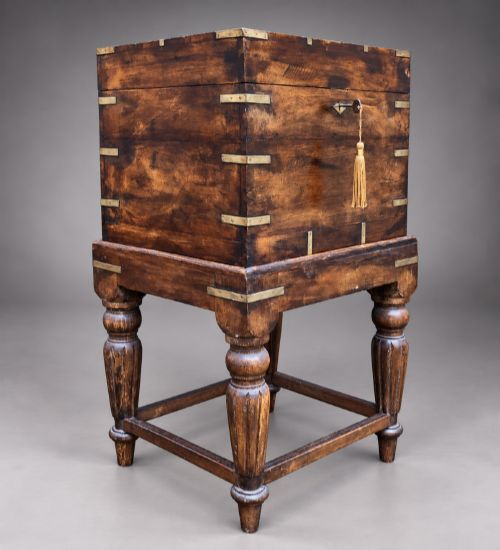
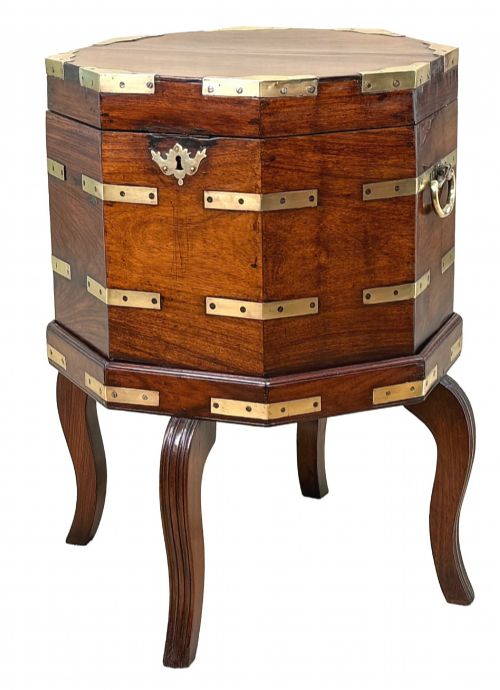
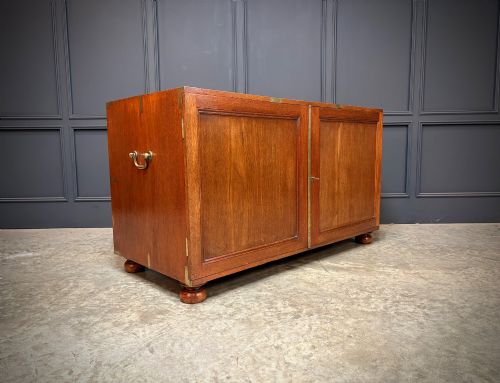
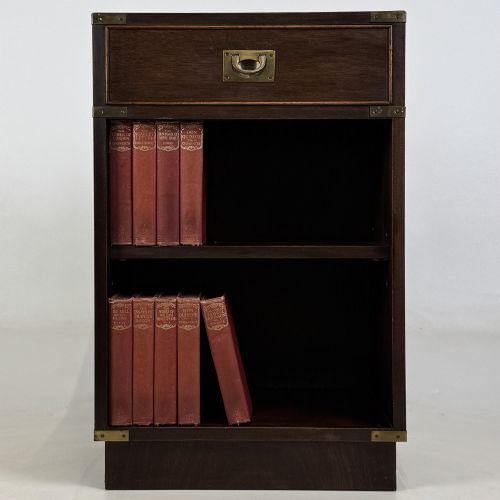
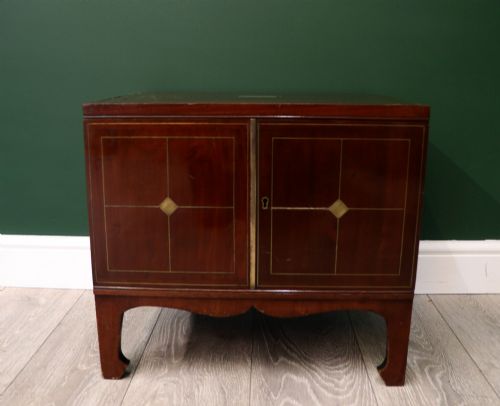
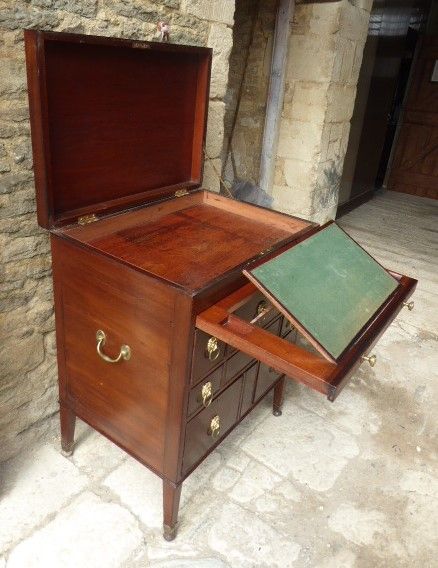
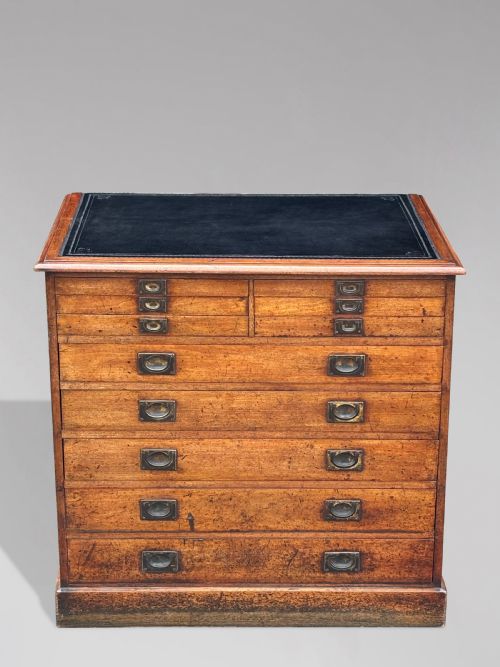
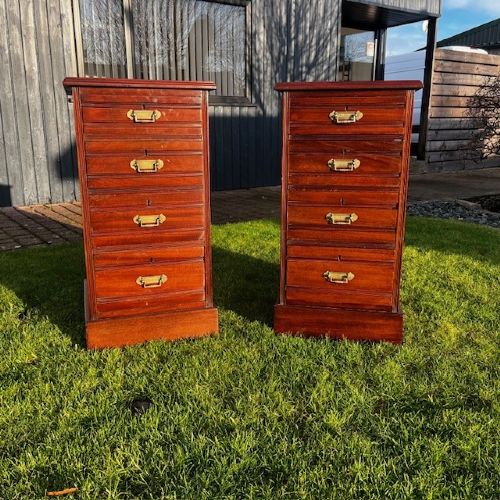
A brass campaign cabinet bridges the gap between domestic utility and military readiness, engineered for easy dismantling and transport during the eighteenth and nineteenth centuries. When you search for a brass campaign cabinet, you encounter compact chests, cellarettes, side cabinets, and secretaires fitted with recessed handles to prevent snagging.
Beyond strict military usage, the category encompasses ship's chests, officers' correspondence boxes, and collectors' cabinets adapted from the same portable design principles. These pieces suit modern spaces needing adaptable storage with historical weight.
How they were made
Cabinetmakers built these pieces primarily using durable hardwoods such as mahogany, teak, and padouk, selected for their stability in shifting climates. Burr walnut and oak also appear, sometimes paired with secondary pine or leather elements.
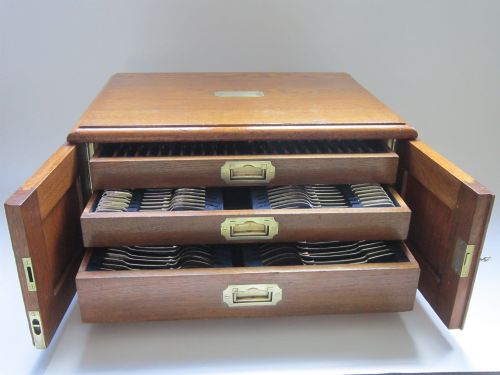
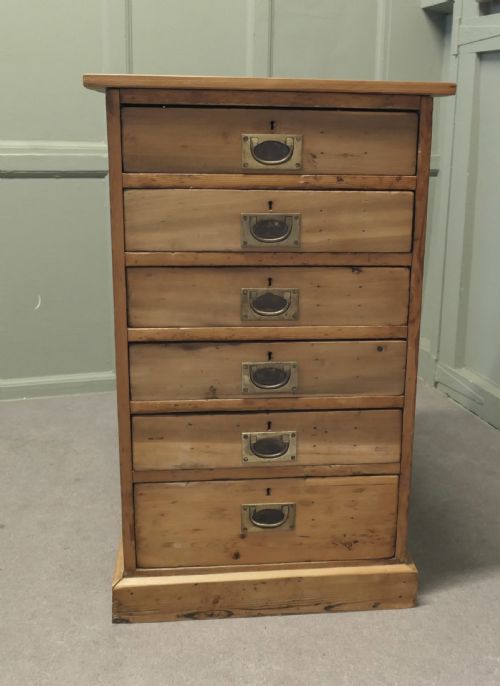
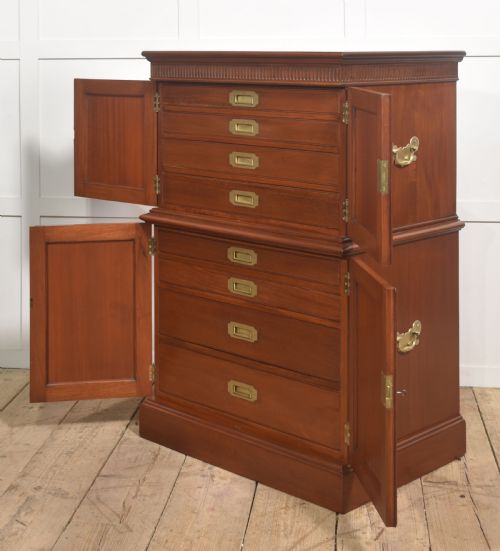
Brass hardware defines the construction, featuring flush-fitting drop handles, protective corner brackets, and straps countersunk directly into the wood. Dovetailed joints and secure internal locking mechanisms ensured the drawers and compartments remained shut under arduous travel conditions.
Listings span the eighteenth to the twentieth centuries, featuring mahogany, teak, oak, burr walnut, and leather.
What varies in quality
Quality rests in the precision of the brasswork and the selection of the timber grain, distinguishing utilitarian field furniture from high-status officer commissions. Superior pieces feature heavier gauge brass tightly fitted into precise recesses rather than surface-mounted plates.
The integrity of the internal compartments and the smoothness of sectional dismantling separate fine workshop output from standard production. Well-preserved original surfaces and matching flush hardware elevate an item well above later adaptations.
The Brass Campaign Cabinet Glossary
- Campaign chest
- A modular set of drawers designed to split into separate sections for military transport. These units typically feature inset brass pulls and removable feet.
- Cellarette
- A lockable container used for storing wine bottles or decanters safely during travel or dining. They often sit on low stands or incorporate heavy brass carrying handles.
- Padouk
- A dense tropical hardwood prized for its reddish-brown colour and exceptional durability. Makers utilised it extensively in Anglo-Indian and Georgian campaign furniture.
- Secretaire
- A cabinet or chest incorporating a fitted writing drawer with a drop-front flap. This provides a portable desk surface alongside standard storage capacity.
- Flush handle
- A metal pull let into the face of a drawer or door so it does not project beyond the surface. This prevented snagging during loading and transit.
Brass Campaign Cabinet: Frequently Asked Questions
What defines a campaign cabinet?
A campaign cabinet is a piece of modular furniture built for easy transport by military officers, featuring recessed brass hardware and sectional construction. The design prioritised structural resilience during long journeys.
These cabinets often separate into distinct stacking boxes or include folding elements to minimise space. The heavy brass strapping and corner brackets served to reinforce the timber against rough handling.
How were these cabinets used?
Officers utilised them in field tents, barracks, and aboard ships to store clothing, documents, wine, or valuables securely. The internal compartments kept personal items organised despite constant movement.
Many examples doubled as field desks or writing boxes, allowing officers to maintain records on campaign. Their sturdy construction ensured contents remained protected from moisture and impact.
How do I care for the wood and brass?
Maintain the timber by applying traditional beeswax sparingly to nourish the grain without building up sticky residue. Avoid placing these pieces in direct sunlight or near heat sources to prevent timber splitting.
Clean the brass fittings gently with a soft cloth to preserve their natural tone rather than polishing them to a bright glare. Regular dusting prevents grime accumulation around the flush-mounted edges.
How can I tell different periods apart?
Georgian pieces generally show finer joinery and simpler brass strapwork on dense mahogany, reflecting domestic luxury adapted for travel. Victorian examples often incorporate heavier brass corners, split-carcase designs, and durable teak suitable for harsher colonial climates.
Edwardian and later iterations frequently adopt earlier campaign styles for static domestic use, sometimes utilising secondary woods or lighter construction. Examining the interior linings, secondary timbers, and fastening methods helps clarify the date.