

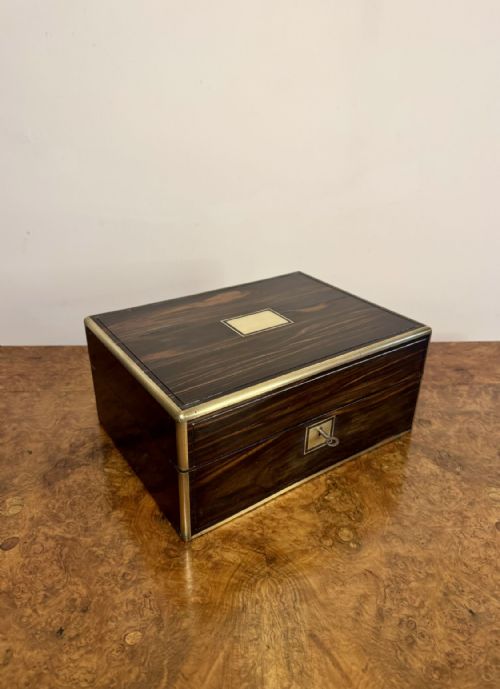


Brass Bound Dressing Box
A brass bound dressing box is a stout travelling case built to carry bottles, brushes and precious items securely across the nineteenth century.
Brass Bound Dressing Box
When you search for a brass bound dressing box, you encounter heavy wooden travel chests reinforced with metal corners and straps to withstand rough carriage journeys. Most examples on this page date from the Victorian and Regency periods, constructed to serve travellers or domestic dressing tables alike.
These pieces double as vanity cases, writing slopes and jewellery boxes, featuring fitted interiors designed to keep small personal possessions secure. The wood varies from rich rosewood and burr walnut to exotic coromandel and amboyna, each offering a distinct surface texture.
The layout typically includes lift-out trays, secret drawers and compartments lined with velvet or leather. A travelling vanity case of this type provided portable organisation for gentlemen and ladies on the move.
How they were made
Cabinet makers constructed the foundational carcase from dense hardwoods like mahogany, rosewood and walnut, often applying expensive veneers such as burr walnut and coromandel over a solid wood core. Brass strips and corner mounts were then hand-fitted and screwed into flush recesses across the exterior to protect the edges from impact.
Interiors required meticulous joinery to create secret compartments, bottle trays and stationery slots alongside velvet or leather linings. Glass inkwells and jars with matching metal or silver lids completed the fitted compartments within the box.
Brass Bound Dressing Box Retail Price Guide 2026
Typical asking prices for brass bound dressing box among the pieces listed under this phrase on Sellingantiques today, from the lower quarter to the upper quarter. They describe what is for sale here now, not the wider market.
The listings show diverse nineteenth-century materials, spanning rosewood, burr walnut, coromandel, glass, velvet, leather and solid brass mounts.
What varies in quality
The distinction between standard containers and superior pieces lies in the choice of timber and the precision of the metal inlay. Finer examples display expertly matched veneers and substantial brass mountings that sit perfectly flush with the wood surface.
Complexity of internal fittings also separates the tiers, with top-grade items featuring secret mechanisms, comprehensive glass and metal sets, and undisturbed velvet or leather linings. The integrity of the original construction and the weight of the timber dictate the lasting value.
H Mitchell
The Brass Bound Dressing Box Glossary
- Brass bound
- A method of reinforcing wooden box edges and corners with fitted metal strips and plates fixed by small screws. This protected the chest from the knocks of travel.
- Coromandel
- A dense, heavily figured timber imported from Asia, prized for its dark brown colour and striking contrasting streaks. It was frequently utilised for luxury Victorian boxes.
- Writing slope
- A hinged box that opens to reveal an inclined writing surface, often combined with compartments for inkwells, pens and stationery. Many dressing boxes incorporated these dual functions.
- French Campaign
- A style of portable furniture designed for military officers on campaign, characterised by flush-fitting brass handles and sturdy construction for easy transport.
Brass Bound Dressing Box: Frequently Asked Questions
How do I date a brass bound dressing box?
Dating relies on timber choices, brass mount styles and construction methods visible inside and out. Regency and Victorian periods brought distinct changes in lock types and internal layouts.
Examining the hinges, screws and secondary woods often provides the clearest indication of the decade in which the piece was constructed.
Were these boxes meant for travel?
Yes, these sturdy wooden cases were designed specifically for carriage, ship and train journeys during the nineteenth century. The heavy brass banding protected the corners from rough handling.
Inside, secure compartments kept glass bottles and personal items anchored firmly in place while in motion.
What is inside a typical dressing box?
A standard interior contains fitted trays, velvet or leather surfaces, and compartments shaped to hold glass jars, brushes and jewellery. Many include secret drawers hidden beneath removable floor panels.
Some configurations also incorporate folding writing desks and small mirrors set into the underside of the lid.
How should I care for the wood and brass?
Maintain the timber by applying a microcrystalline wax to nourish the grain and protect against humidity. Avoid placing the box in direct sunlight or near heat sources.
Polish the brass mounts gently with a dry microfibre cloth to remove dust without disturbing the surrounding veneer.