




Vintage Travel Vanity Box
These vintage travel vanity box examples are portable fitted cases for grooming and trinkets that let you carry your dressing table on the road.
Vintage Travel Vanity Box
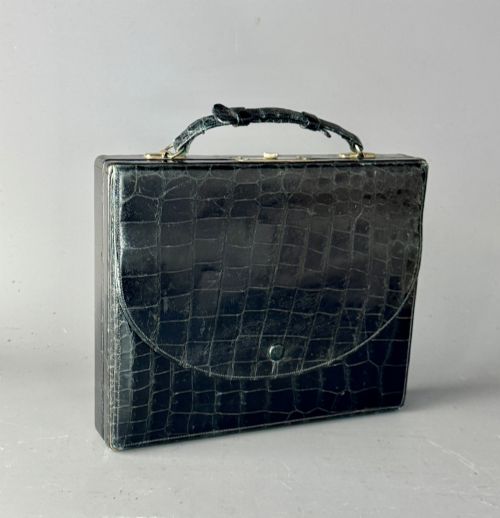
A vintage travel vanity box serves as a portable dressing table, designed to keep grooming items, cosmetics, and jewellery orderly during journeys. When you explore this selection, you encounter forms ranging from robust leather officer trunks and gentleman valets to inlaid wooden folding mirrors and fitted ladies dressing cases.
The pieces span several eras, appearing in Regency, Victorian, Edwardian, and Art Deco designs. You are most likely to meet mid to late nineteenth-century specimens in rosewood or brass-bound timber, alongside leather examples from the early twentieth century.
Beyond standard vanity cases, the category encompasses related travel containers such as shaving sets, watch cases, medicine bottle flasks, and combined jewellery and sewing boxes. Each variant reflects the specific grooming habits of past travellers who required secure compartments for delicate glass, silver, and personal valuables.
Materials and construction
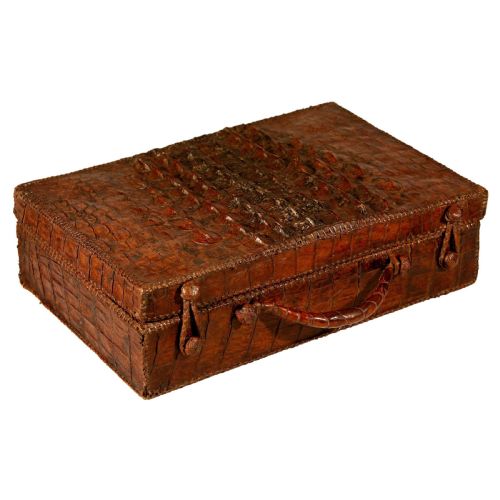
Maker workshops built these boxes using sturdy timber foundations such as rosewood, olive wood, and general hardwoods, frequently reinforcing the exterior edges with brass banding. Outer surfaces were often covered in leather, crocodile leather, or hornback alligator skin to withstand the rigours of transit.
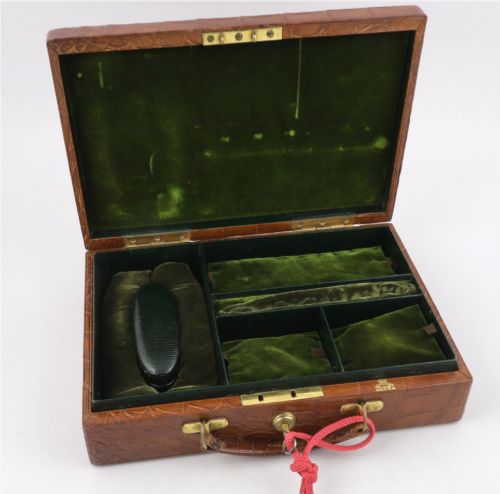
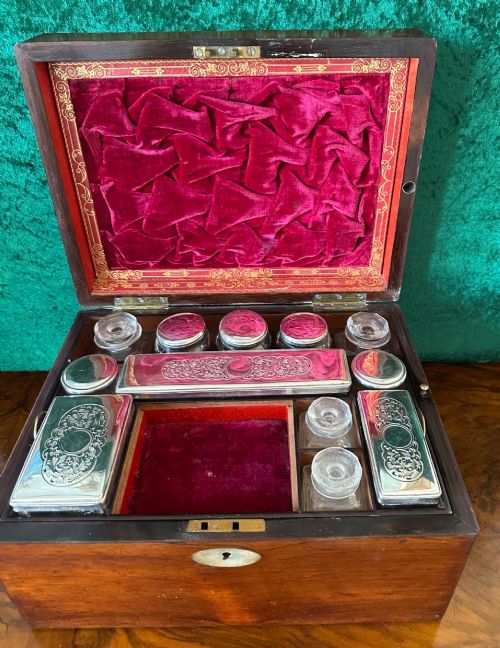
Interiors required meticulous carpentry to create fitted compartments lined with velvet to secure glass bottles, silver flasks, and small tools. Metal elements included silver, silver plate, and guilloche enamel, while specialised glass containers utilised cut glass for jars and pill boxes.
Vintage Travel Vanity Box Retail Price Guide 2026
Typical asking prices for vintage travel vanity box among the pieces listed under this phrase on Sellingantiques today, from the lower quarter to the upper quarter. They describe what is for sale here now, not the wider market.
Quality and distinction
Quality rests in the completeness of the fitted interior and the integrity of the original contents, such as matched sets of silver-topped glass bottles and functional internal trays. Finer examples retain their original velvet linings, working locks, and specialised leather compartments without later replacements.
The choice of exterior material and decorative technique also marks the tier of the piece, moving from plain timber to exotic crocodile leather, brass inlay, or Sorrento wood marquetry. Master workshops demonstrated superior skill in the tight tolerances of folding compartments, concealed drawers, and secure hinges designed for constant travel.
The Vintage Travel Vanity Box Glossary
- Fitted interior
- An internal arrangement of wooden partitions, velvet slots, and custom compartments designed to hold specific bottles, brushes, and instruments securely in place. This layout ensures every item stays protected during movement.
- Guilloche enamel
- A decorative metal technique where a precise geometric pattern is engine-turned onto a metal surface and covered with translucent enamel. It frequently appears on travel clock cases and vanity lids.
- Sorrento ware
- Wood marquetry and inlay work originating from the Italian town of Sorrento, often utilised for folding travel mirrors and small decorative boxes. The technique creates intricate pictorial or geometric designs using contrasting woods.
- Dressing case
- A large portable box equipped for personal grooming and hygiene, housing mirrors, brushes, and bottles. These cases functioned as mobile dressing tables for affluent travellers.
- Writing slope
- A portable slanted desk incorporated into combined boxes to provide a surface for correspondence while away from home. It often conceals hidden drawers and inkwells beneath the writing lid.
Vintage Travel Vanity Box: Frequently Asked Questions
What is inside a vintage travel vanity box?
These boxes typically contain fitted compartments designed to hold glass bottles, silver flasks, grooming tools, and jewellery. Many retain their original velvet-lined trays and specialised slots for razors, brushes, and pill containers.
Depending on the specific form, some variations include integrated writing slopes or folding mirrors. The internal layout matches the specific grooming and administrative needs of travellers from the nineteenth and early twentieth centuries.
How do I date a travel vanity box?
Dating relies on observing the combination of materials, construction styles, and internal hardware used in the piece. Victorian examples often feature rosewood with brass banding, while 1920s and 1930s specimens frequently utilise crocodile leather and Art Deco silver fittings.
Maker marks, hallmarks on silver elements, and patent stamps on locks provide further chronological clues. Examining the evolution from heavy wooden officer trunks to streamlined leather suitcases helps place the item in its proper period.
Were these boxes used by men or women?
Both gentlemen and ladies utilised travel vanity boxes, with internal fittings reflecting the distinct grooming routines of each. Gentleman variants often house shaving sets, valet gear, and heavy leather suit styles, while ladies examples focus on dressing bottles, jewellery trays, and sewing compartments.
Descriptions in this category span both traditions, including specific officer trunks, valet suitcases, and dedicated ladies dressing cases. The contents and layout immediately indicate the intended user.
How should I clean a leather vanity box?
Leather exteriors require gentle maintenance using specialised leather conditioners to prevent the hide from drying out or cracking. Care must be taken around crocodile leather and antique fastenings to preserve the original surface texture.
Internal velvet linings respond best to careful dry dusting rather than moisture, which can damage aged wood and adhesives underneath. Preserving the integrity of the original materials ensures the box maintains its historical character.