





Brass Bound Coromandel Box
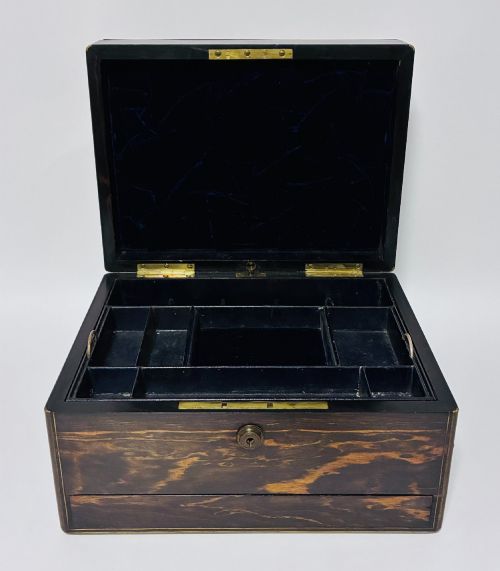
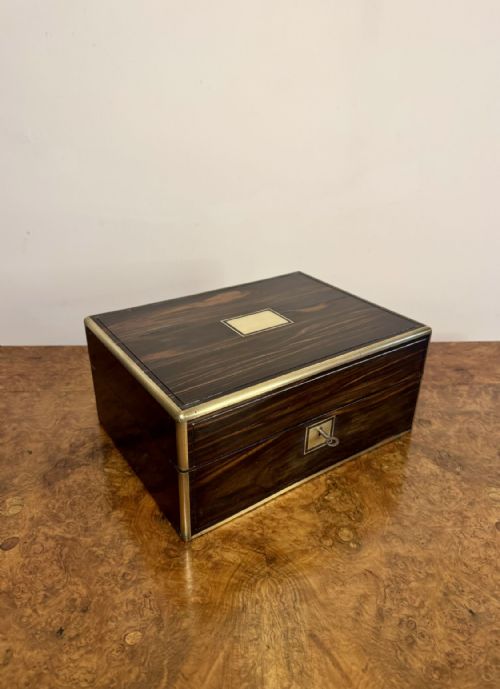
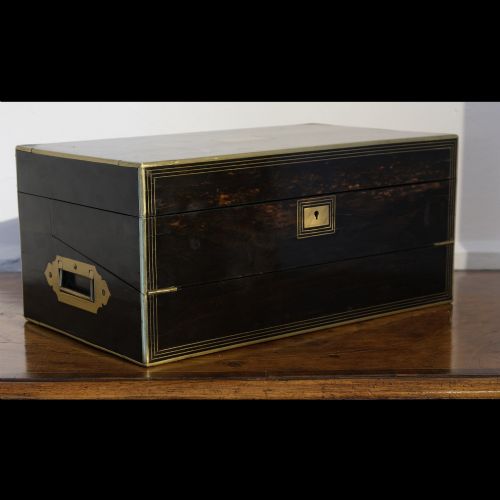
A brass bound coromandel box brings rich timber and heavy metalwork together, offering a secure and handsome vessel for letters, jewels or bottles.
Brass Bound Coromandel Box
A brass bound coromandel box is a heavy, durable receptacle designed for writing, travelling, or storing valuables during the nineteenth century. These pieces appear primarily from the Victorian period, alongside examples originating in the Regency era.
The functional forms span writing slopes, stationery boxes, jewellery cases, and decanter boxes fitted for domestic or campaign use. A buyer frequently encounters slope fronts, dome tops, and letter caskets lined with velvet or fitted with glass bottles.
Originating mostly from English workshops, these items serve as practical desk accessories and decorative caskets. The combination of exotic timber and metal reinforcement marks them out as luxury items from their inception.
Materials and construction
Makers constructed these objects using dense, striated coromandel wood over sturdy carcases, sometimes incorporating rosewood elements. This exotic timber provides a dark, heavily figured grain that takes a high polish.
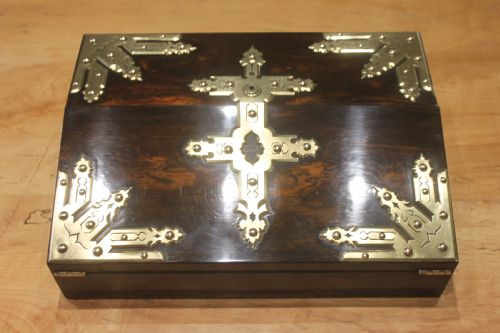
Heavy brass banding and corner mounts reinforce the edges, fixed securely with flush-fitting screws to protect the corners during travel. Interiors frequently integrate velvet linings, secret drawers, and ceramic or glass components.
Select examples incorporate mother of pearl inlay or pietra dura plaques set into the lids or doors. Mechanics inside writing slopes and stationery boxes rely on precise joinery to conceal compartments and secret drawers.
Brass Bound Coromandel Box Retail Price Guide 2026
Typical asking prices for brass bound coromandel box among the pieces listed under this phrase on Sellingantiques today, from the lower quarter to the upper quarter. They describe what is for sale here now, not the wider market.
The inventory records pieces spanning the Regency period through the late Victorian era, featuring materials such as coromandel, brass, velvet, and mother of pearl.
Assessing quality and execution
Quality rests in the intensity of the coromandel grain and the weight of the brass mounts. Finer examples display continuous, richly figured timber across all visible surfaces rather than patched veneers.
The complexity of the interior fittings dictates the distinction between standard items and luxury productions. Elaborate stationery boxes, multi-bottle decanter cases, and writing slopes with secret drawers and original velvet represent superior craftsmanship.
Signed maker's plates or engraved brass escutcheons elevate certain pieces by identifying urban London workshops. The precision of the brass inlay work and the integrity of the closing mechanism complete the hierarchy.
H Mitchell·Briggs·C.G. Hope Hastings·Leuchars of London
The Brass Bound Coromandel Box Glossary
- Coromandel
- A dense, heavy tropical hardwood featuring dark brown and black striations against a warm background. It gained favour for high-end nineteenth-century luxury boxes.
- Writing slope
- A portable desk featuring a hinged, sloping lid that opens to reveal a writing surface, inkwell compartments, and storage for paper. Many incorporate secret drawers beneath the inner stationery compartment.
- Pietra dura
- An artistic technique using cut and fitted polished coloured stones to create pictorial designs. On these boxes, small mosaic plaques appear set into the lid.
- Stationery box
- A desk accessory designed to hold writing paper and envelopes upright in tiered slots. They often feature a hinged lid and fall-front mechanism.
- Decanter box
- A fitted wooden case lined to hold glass bottles securely during transit. They range from two-bottle pairings to larger four-bottle configurations.
Brass Bound Coromandel Box: Frequently Asked Questions
What is a coromandel box?
A coromandel box is a nineteenth-century container fashioned from dense tropical timber and reinforced with brass corners and straps. These pieces served varied functions including writing desks, jewellery storage, and decanter transport.
They appear in forms such as stationery caskets, vanity cases, and slope-front writing boxes. The combination of heavy brass work and striped wood grain defines the category.
How do I date a brass bound box?
Dating relies on stylistic clues, lock mechanisms, and construction methods associated with Victorian and Regency manufacturing. Pieces often bear registration marks or maker plaques embedded in the interior velvet or wood.
Earlier Regency examples tend towards simpler classicism, while Victorian Gothic Revival and later 1880s iterations introduce more elaborate brass mounts and pietra dura panels.
What were writing slopes used for?
Writing slopes provided a portable desk surface for correspondence before fitted home offices became common. The folding lid opened to a baize or velvet-lined slant for writing letters.
Internal compartments held inkwells, nibs, stamps, and stationery, while secret drawers concealed personal papers and valuables.
How should I clean coromandel wood?
Coromandel requires gentle maintenance using a dry or barely damp microfiber cloth to remove dust. Avoid harsh chemical cleaners or excessive moisture that might damage the polished timber surface.
Application of a quality furniture wax helps nourish the dense grain periodically, preserving the deep lustre of the wood.