


Brass Barograph Instrument
A brass barograph instrument records atmospheric pressure onto a paper chart, combining scientific utility with handsome period cabinet-work.
Brass Barograph Instrument
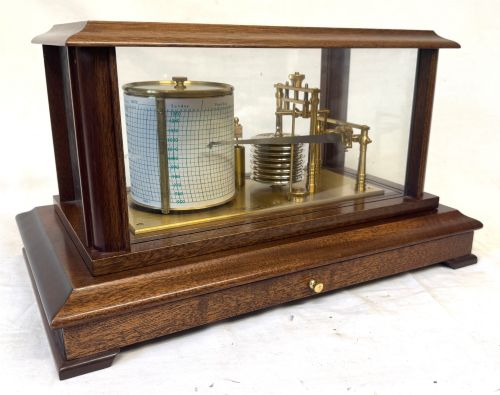
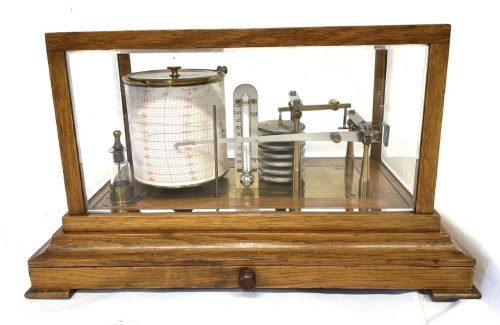
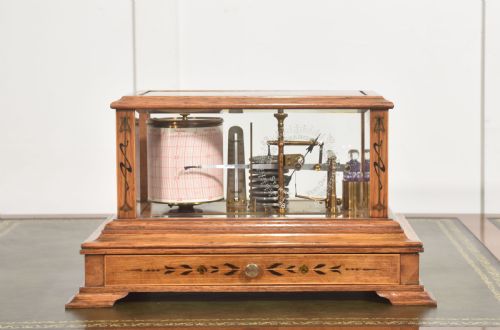
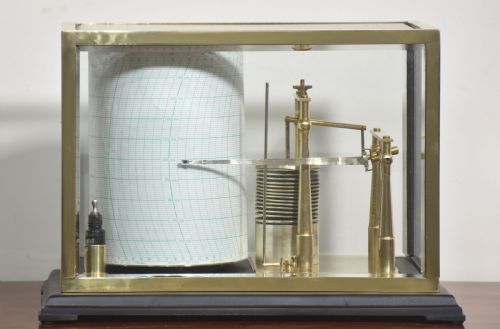
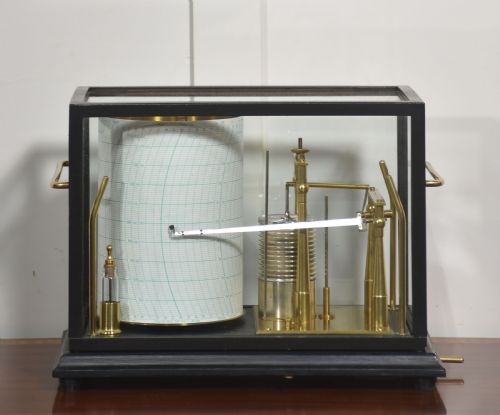
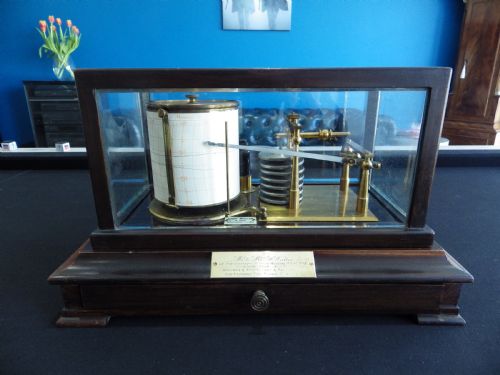
A brass barograph instrument records continuous atmospheric pressure onto a rotating drum holding a paper chart. You will most frequently meet examples housed in wood cases featuring five glass panels, dating from the Victorian and Edwardian periods.
The form brings together precision mechanics and domestic furniture, often incorporating a thermometer or an additional barometer dial alongside the main recording drum. These weather instruments were built to sit upon a library table or hang upon a wall in a reception room.
Makers ranged from notable London instrument houses to regional retailers across England and beyond, spanning dates from the nineteenth century through the interwar period and into the mid-twentieth century.
Materials and construction
The chassis relies on polished brass and steel for the delicate linkage arms, aneroid barometer diaphragms, and clockwork drums. These metal components sit inside heavy timber cabinetry constructed from oak, mahogany, or walnut.
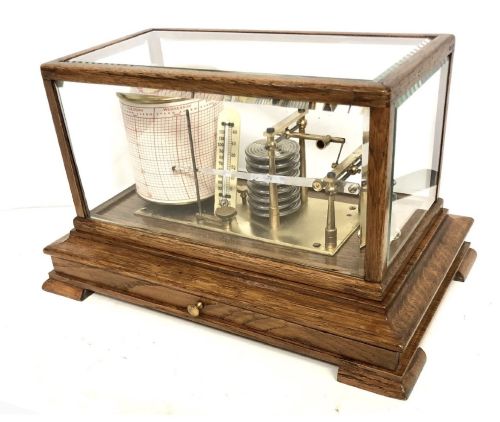
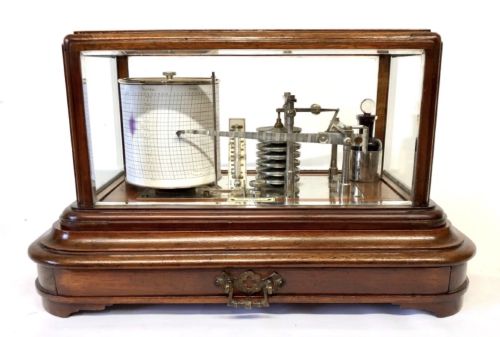
Cabinet makers framed the mechanism within five bevelled glass panels to allow a clear view of the recording needle, frequently adding a fitted lower drawer to store spare paper charts.
Listings demonstrate diverse timber choices, featuring oak, mahogany, and walnut cases paired with brass and glass mechanical housings.
Quality and execution
The distinction between standard and superior pieces rests in the reputation of the maker and the refinement of the case work. Signed movements by established makers command attention for their mechanical precision and crisp dial engraving.
Cabinet quality varies from simple light oak boxes to elaborately figured mahogany or walnut cases adorned with Art Nouveau inlay or specialised retailer signatures.
Short And Mason·Negretti And Zambra·Casella London·Richard Freres·Gaupp And Co
The Brass Barograph Instrument Glossary
- Barograph
- A self-recording aneroid barometer that traces pressure changes onto a rotating drum. This mechanical weather station operates without liquid by utilising expanding metal vacuum chambers.
- Aneroid
- Containing no liquid. The term describes barometers and barograph movements that measure air pressure through flexible metal capsules.
- Bevelled glass
- Glass panes with angled edges fitted into the timber case. This technique adds depth and light reflection to the viewing windows.
- Chart drawer
- A small compartment built beneath the main instrument platform. It houses spare weekly paper recording sheets and spare ink.
- Thermometer
- A temperature-reading scale mounted inside the wooden instrument case alongside the main pressure drum.
Brass Barograph Instrument: Frequently Asked Questions
How do I operate a barograph?
Place a fresh paper chart around the brass rotating drum and ensure the pen is lightly inked. The clockwork mechanism turns the cylinder once a week while the aneroid stack moves the arm vertically.
Wind the internal clock movement carefully through the drum face without over-tightening the spring. Adjust the pen position gently using the calibration screw to match local pressure readings.
Where should I place a barograph?
Keep the instrument on a stable, level surface away from direct sunlight, radiators, or drafts that might affect the internal metal capsules. Libraries, studies, and hallways provide ideal stable environments.
Ensure the wooden case rests firmly so the recording needle tracks accurately across the paper chart without catching or dragging.
How do I date a timber case?
Victorian and Edwardian pieces utilise solid mahogany or oak with hand-cut dovetails and traditional brass hardware. Edwardian examples often feature lighter oak tones or subtle Art Nouveau inlay.
Later interwar pieces transition to simpler framing styles, while Victorian models tend to display heavier mouldings and richer patinated wood surfaces.
What is the lower drawer for?
The integrated drawer holds spare weekly paper charts, spare ink bottles, and occasionally winding keys. Keeping supplies inside the case ensures everything stays together.
Check the drawer interior for surviving period paperwork, retailer labels, or unused charts that often accompany older instruments.