


Antique Barometer with Charts
An antique barometer with charts records atmospheric pressure over a week on paper, combining scientific precision with handsome cabinetmaking.
Antique Barometer with Charts
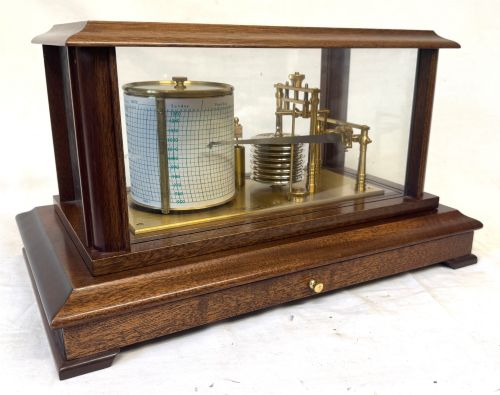
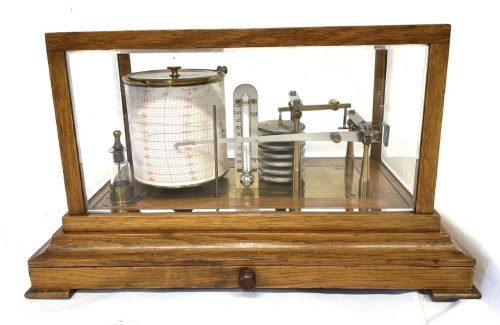
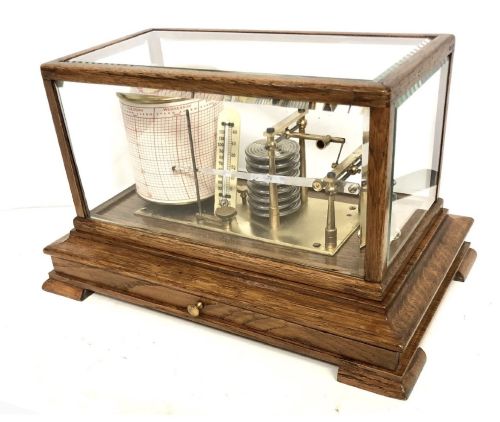
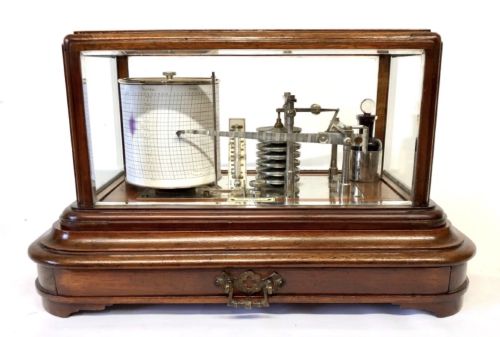
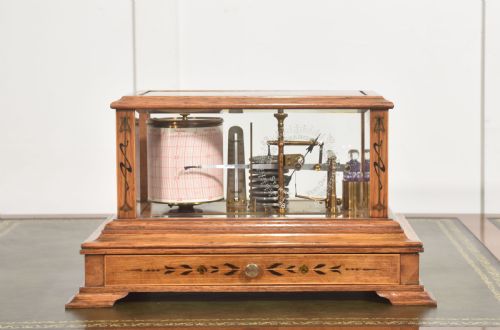
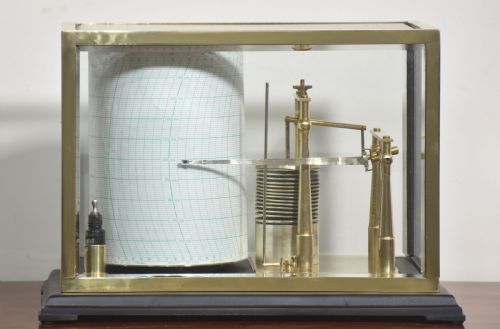
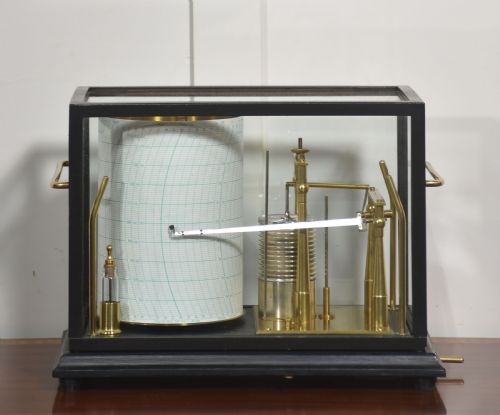
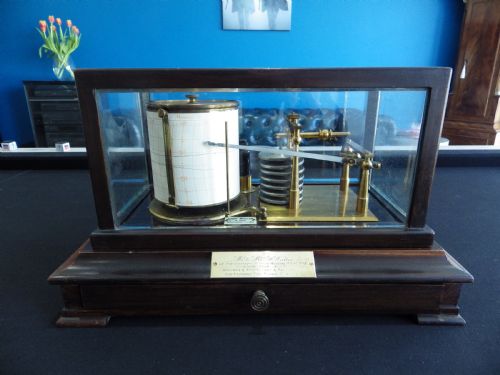
When you search for an antique barometer with charts, you are looking at recording instruments designed to track weather patterns automatically. These pieces predominantly take the form of barographs housed in wooden cases with glass panels, frequently accompanied by a thermometer and a dedicated drawer to store spare charts.
The selections span several periods, with Victorian and Edwardian examples appearing alongside pieces from the 1920s, 1930s, 1940s, and 1960s. Oak and mahogany dominate the cabinetry, whilst the mechanisms rely upon brass, steel, and glass.
Scientific instruments and barographs represent the core object types available in this category. You will frequently encounter Edwardian and Late Victorian styles, as well as early twentieth century scientific designs and mid-century production.
Materials and construction
Cabinets are constructed primarily from solid oak and mahogany, often featuring bevelled glass panels that allow an unobstructed view of the mechanical drums and arms. Some pieces incorporate decorative elements such as Art Nouveau inlay.
Internal mechanisms utilise brass and steel components to drive the recording arm across the paper charts. Maker signatures and movements are frequently engraved or stamped onto the metal plates or porcelain scales.
Listings feature oak and mahogany cases housing brass and steel mechanisms across Victorian, Edwardian, and twentieth-century periods.
Assessing quality and craftsmanship
Quality in these recording instruments rests upon the refinement of the cabinetry and the reputation of the maker. Superior pieces feature tightly joined hardwood cases, bevelled glass, and precision movements by established makers such as Short & Mason or Negretti & Zambra.
Russell Norwich·Gaupp & Co Hongkong & Singapore·Hezzanith·Short & Mason London·Casella London·Jules Richard·Negretti & Zambra·Dobbie Son And Hutton London
The Antique Barometer with Charts Glossary
- Barograph
- A recording barometer that traces atmospheric pressure onto a rotating paper chart over a period of time. This mechanical instrument provides a continuous visual history of weather changes.
- Chart drawer
- A small compartment built into the base of the instrument case designed to store spare recording papers. It keeps replacement supplies close at hand for the user.
- Bevelled glass
- Glass panes with edges cut and polished at an angle for a decorative finish. This detail adds refinement to the viewing windows of the instrument case.
- Thermometer
- A temperature-measuring instrument frequently mounted alongside the barometer dial or case. It provides simultaneous weather data alongside the barometric pressure record.
Antique Barometer with Charts: Frequently Asked Questions
How do barographs work?
A barograph uses stacked metal vacuum capsules that expand and contract with changes in atmospheric pressure. A connected pen arm translates these movements onto a rotating paper chart.
This continuous mechanical action creates a weekly visual record of weather trends without requiring manual intervention from the owner.
What are the chart drawers used for?
The drawer built into the base of the wooden case stores spare weekly paper charts. Having them underneath the instrument keeps replacement supplies organised and accessible.
Cabinetmakers integrated these drawers into Victorian and Edwardian designs for practical convenience during regular weekly chart changes.
How should I clean the glass case?
Wipe the wooden surfaces with a soft, dry cloth to remove dust without disturbing the delicate mechanical parts inside. Glass panels can be cleaned with standard window spray applied to a cloth rather than directly sprayed onto the cabinet.
Take care around the brass hinges and bevelled edges to preserve the original finish of the antique materials.
Where should I place a barograph?
Position the instrument on a stable, level surface away from direct sunlight, radiators, and heavy vibrations. Consistent indoor temperatures help the internal brass and steel mechanisms operate accurately.
Placing the case at eye level also allows you to easily view the rotating drum and read the weekly weather traces.