


Meteorological Recording Instrument
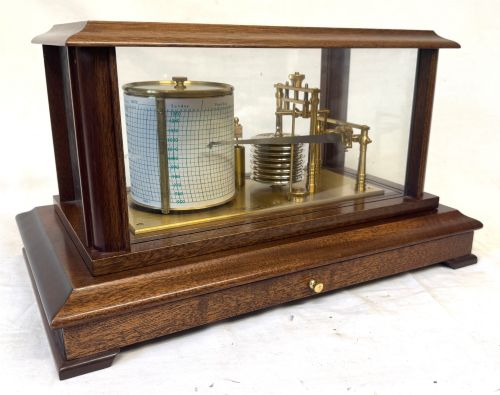
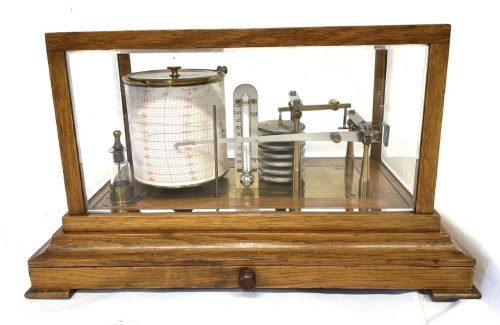
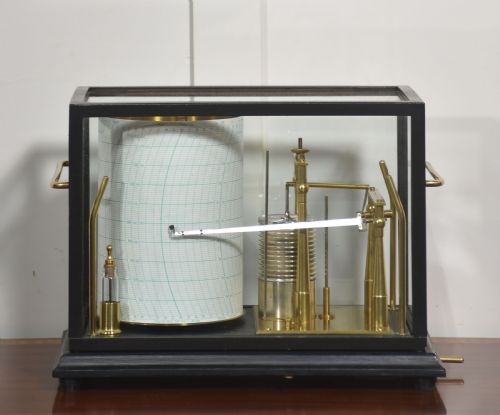
These meteorological recording instrument examples are brass and wood scientific pieces that map atmospheric pressure for domestic study.
Meteorological Recording Instrument
When you search for a meteorological recording instrument, you find scientific objects designed to track weather patterns over time. The primary form appearing here is the barograph, which traces atmospheric pressure onto paper charts.
Most pieces date from the Victorian, Edwardian, and mid-twentieth-century periods. These items combine practical forecasting tools with handsome cabinetmaking for the home or study.
How they were made
Maker workshops constructed these instruments using brass for the delicate internal mechanisms and barometer arms. Cases utilised sturdy timbers like oak, mahogany, and walnut to protect the internal workings.
Glazing typically involved bevelled glass panels fitted into five-sided wooden frames to allow a clear view of the revolving drum and recording arm. Paper charts were mounted on these drums to capture continuous atmospheric data.
What varies in quality
The distinction between standard and superior pieces rests in the precision of the brass mechanics and the quality of the timber housing. Maker signatures from established firms elevate certain examples above unsigned workshop output.
Cabinetwork finesse also separates ordinary instruments from finer specimens, particularly in the thickness of the oak or walnut cases and the clarity of the bevelled glass panes.
Short and Mason·Russell Norwich·Depree and Young Ltd Exeter
The Meteorological Recording Instrument Glossary
- Barograph
- A meteorological recording instrument that continuously logs barometric pressure onto a rotating paper chart. It uses stacked vacuum chambers to register changes in the atmosphere.
- Aneroid
- Operating without liquid. This term describes barometer mechanisms that rely on flexible metal boxes rather than mercury columns.
- Bevelled glass
- Glass panes with angled edges fitted into instrument cases. This technique adds refinement to the viewing panels.
- Chart drawer
- A small compartment built into the base of the wooden case. It holds spare recording paper for the revolving drum.
Meteorological Recording Instrument: Frequently Asked Questions
What is a meteorological recording instrument?
These pieces are mechanical devices built to track and record atmospheric pressure changes onto paper charts.
They combine brass scientific movements with wooden display cases designed for domestic interiors.
How did a barograph work?
Stack-mounted metal vacuum chambers expand and contract as air pressure shifts in the surrounding environment.
Connected levers transfer these movements to an inked arm that traces a line onto a rotating paper cylinder.
Where were these instruments placed?
Victorian and Edwardian households kept them in studies, libraries, or hallways for daily meteorological observation.
The fitted wooden cases protected the delicate brass mechanisms from dust while offering a clear view through glass panels.
How do I date a meteorological recording instrument?
Dating relies on the style of the wood casing, maker signatures, and accompanying paper records.
Edwardian and Victorian examples often feature heavy oak or mahogany frames with specific brass components typical of their decade of manufacture.