


Brass Aneroid Barograph
A brass aneroid barograph records atmospheric pressure continuously on paper, offering both scientific utility and classic mechanical beauty.
Brass Aneroid Barograph
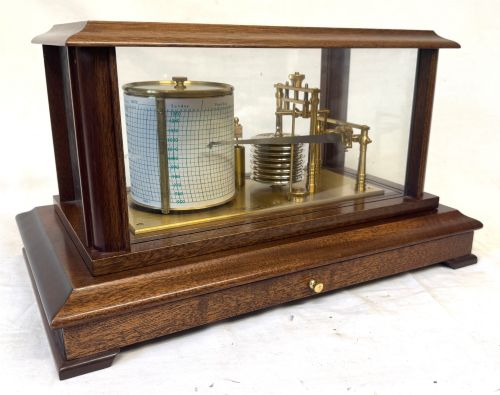
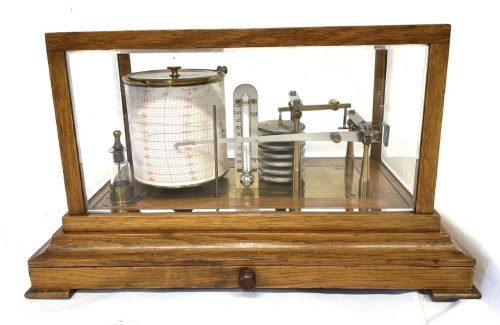
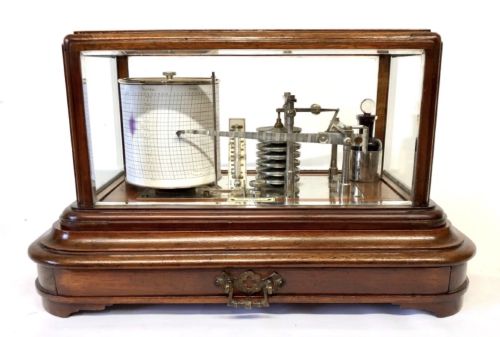
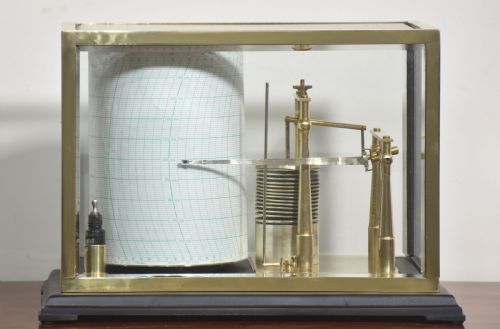
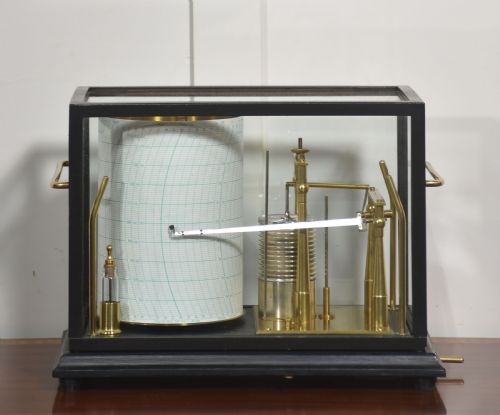
A brass aneroid barograph is a mechanical recording barometer housed in a glazed wooden case. These instruments capture changing weather patterns over a week onto a rotating drum.
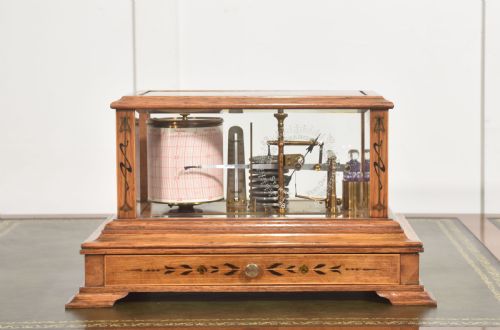
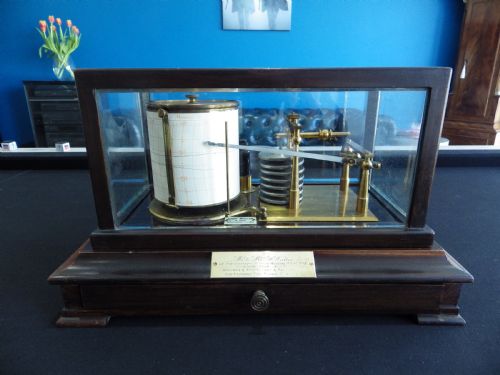
The version most commonly met on this page is the desk or table model with a mahogany or oak case, often featuring bevelled glass panels and a drawer for spare paper charts.
Makers from the late nineteenth century through the mid twentieth century produced these pieces, spanning the Victorian, Edwardian, and interwar periods.
Materials and construction
Cases utilise dense hardwoods like mahogany, oak, and walnut, frequently joined with tight corners to protect the delicate mechanism inside. Brass and steel form the levers, gears, and vacuum chambers that respond to air pressure.
Bevelled glass panes set into frames allow an unobstructed view of the movement while keeping dust away from the recording arm. Paper charts printed with grid lines wrap around the rotating brass drum.
Brass Aneroid Barograph Retail Price Guide 2026
Typical asking prices for brass aneroid barograph among the pieces listed under this phrase on Sellingantiques today, from the lower quarter to the upper quarter. They describe what is for sale here now, not the wider market.
Railway companies utilised barographs to monitor atmospheric shifts affecting track beds, proving that even paperwork had a ticket.
Judging quality and execution
Quality rests in the precision of the brass linkages and the finish of the wooden cabinetry. Finer examples display crisp maker signatures, smooth gear movement, and heavy bevelled glass.
Simpler models prioritise basic utility without decorative wood inlay or extra thermometers. The presence of original paperwork and dedicated chart drawers elevates the interest of a piece.
Short and Mason·Negretti and Zambra·Richard Freres·R Fuess·Antoine Redier
The Brass Aneroid Barograph Glossary
- Aneroid barograph
- An instrument measuring air pressure without liquid mercury, using expanding metal capsules. It traces a permanent line on a revolving drum.
- Beryllium copper
- A resilient alloy often utilised for the internal vacuum capsules that contract and expand with barometric shifts. It resists fatigue over decades of continuous use.
- Chart drawer
- A shallow compartment built into the base of the wooden case. It holds spare paper recording sheets ready for use.
- Bevelled glass
- Pane glass with edges ground and polished at an angle. This traditional glazing technique adds depth and catches light on the cabinet corners.
- Recording drum
- A cylindrical metal canister driven by an internal clockwork movement. The paper chart attaches around this cylinder to map the pressure over time.
Brass Aneroid Barograph: Frequently Asked Questions
How do I change the chart paper?
Lift the brass recording arm gently away from the drum using the small lever provided. Open the case, slide the old paper chart off the cylinder, and wrap a fresh chart in its place.
Secure the paper edge carefully so the pen nib can travel smoothly across the grid lines without catching. Ensure the clockwork drum is wound before closing the case.
How often does the drum need winding?
Most mechanical drum movements require winding once every seven to eight days. Matching this routine to the weekly chart replacement keeps the recording continuous.
Use the small key provided with the mechanism to wind the spring barrel gently. Avoid over winding the clockwork to protect the internal gears.
Where should I place a barograph?
Position the instrument on a stable, level surface away from direct sunlight, radiators, and drafts. Sudden temperature changes can affect the internal metal capsules.
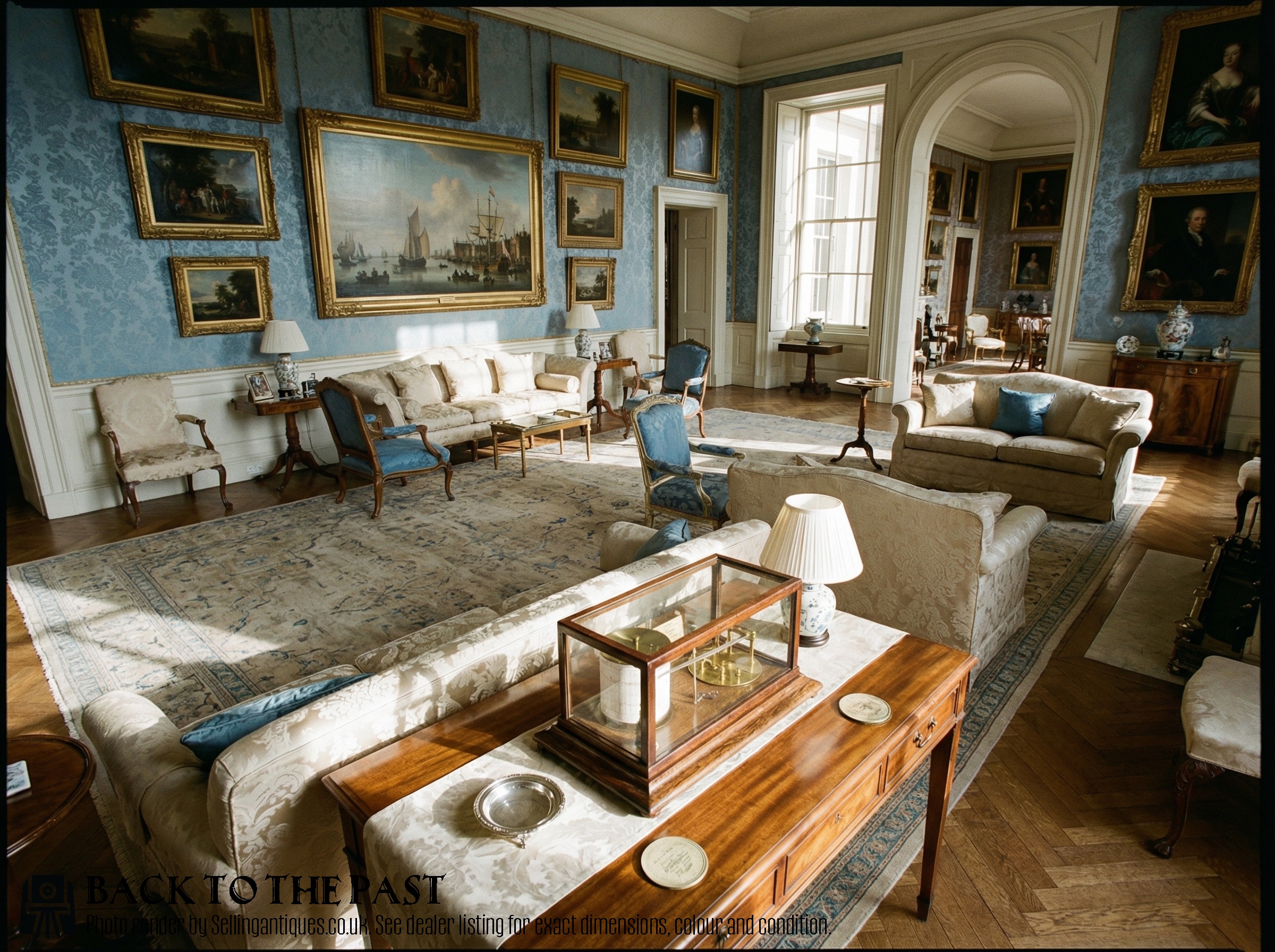
A study, hallway, or living room shelf provides a suitable environment where the gentle ticking and visible movement can be observed.
How do I read the recorded trace?
The inked line on the paper chart shows whether pressure is rising or falling over the course of the week. Steeper slopes indicate rapid weather shifts, while flat lines suggest settled conditions.
Vertical grid lines represent hours and days, allowing you to correlate weather events with specific times during the week.