





Brass and Marble Inkstand
A brass and marble inkstand brings nineteenth-century desk furniture into a modern room, offering heavy stone bases and patinated metal work.
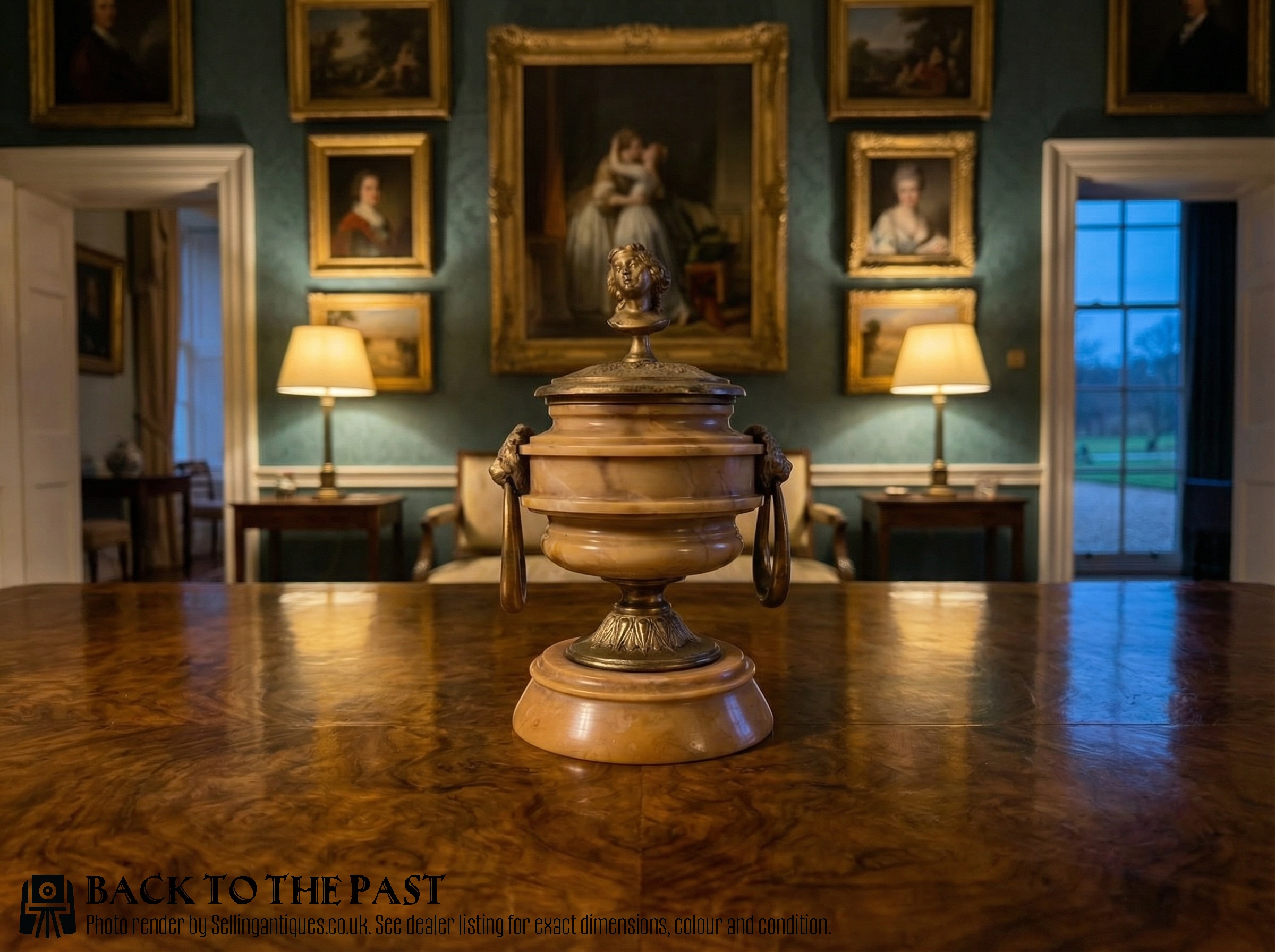
Brass and Marble Inkstand
A brass and marble inkstand is a piece of desk furniture designed to hold writing equipment, combining a heavy stone plinth with metal mounts and ink receptacles. These items serve as functional writing desk accessories and decorative desk sets.
The versions most frequently met on this page belong to the nineteenth century, including French Empire and Second Empire styles. They often incorporate Sienna marble, green onyx, or vert marble paired with brass, ormolu, or gilt bronze.
How they were made
Maker workshops shaped heavy blocks of marble and green onyx to form the sturdy bases of these desk stands. Stones such as Sienna marble and vert marble provided solid foundations for the heavier metal components.
Craftsmen cast brass, ormolu, and gilt bronze to create decorative mounts, caskets, and detailed figures like busts of Napoleon or lions. These metal elements were then secured to the stone bases to complete the desk accessories.
Brass and Marble Inkstand Retail Price Guide 2026
Typical asking prices for brass and marble inkstand among the pieces listed under this phrase on Sellingantiques today, from the lower quarter to the upper quarter. They describe what is for sale here now, not the wider market.
Desk accessories occasionally feature miniature bronze lions or small sculpted busts of Napoleon keeping watch over the ink.
What varies in quality
The standard of an inkstand rests on the precision of the metal casting and the richness of the stone base. Finer examples display crisp detail in gilt bronze mounts and well-chosen marble with distinct natural veining.
Design complexity also divides the ordinary from the exceptional, ranging from simple brass and marble trays to elaborate French Empire desk sets featuring figural ornaments or caskets.
The Brass and Marble Inkstand Glossary
- Ormolu
- A gilded bronze or brass finish applied to metal mounts, popular in French nineteenth-century decorative arts. This technique gives the metal a bright, gold-coloured sheen.
- Sienna marble
- A yellow-brown Italian marble marked by dark veining, frequently utilised in nineteenth-century desk stands. It provides a warm, decorative foundation for bronze mounts.
- Vert marble
- A dark green stone used for the bases of desk accessories and inkstands. Its deep colour contrasts with polished brass and gilt bronze.
- Desk set
- A coordinated group of writing accessories for a desk, which can include inkstands and decorative boxes. These sets match in material and style.
Brass and Marble Inkstand: Frequently Asked Questions
What is a brass and marble inkstand?
A brass and marble inkstand is a desk accessory that combines a heavy stone base with metal inkwells and mounts. They were designed for writing desks to hold ink and pens.
These pieces range from simple nineteenth-century brass stands to elaborate French Empire gilt bronze desk sets featuring sculpted lions or busts of Napoleon.
How do you date a brass and marble inkstand?
Dating relies on observing the materials, styles, and manufacturing techniques present in the piece. Nineteenth-century examples often feature French Empire or Second Empire design characteristics.
The use of specific stones like Sienna marble or green onyx, alongside ormolu mounts, helps place these items within periods such as 1850 or 1870.
Where were these inkstands made?
Many of the surviving pieces originate from France, reflecting the popularity of French classic and Art Deco styles across the nineteenth and early twentieth centuries.
Workshops in France produced these desk accessories using native and imported marbles paired with cast gilt bronze and brass.
How do you care for marble and brass desk pieces?
Caring for these items involves gentle dusting of the stone base and metal mounts to preserve the surface finish. Harsh chemical cleaners can damage the gilt bronze or ormolu.
Keeping the marble dry and avoiding abrasive cloths ensures the stone and patinated metal retain their original appearance over time.