





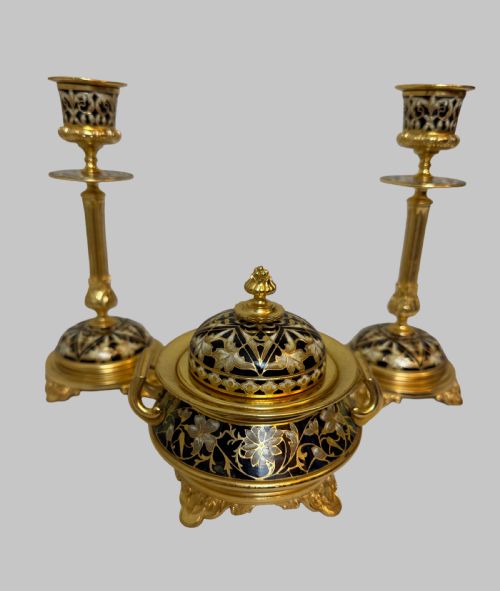


Antique French Desk Set
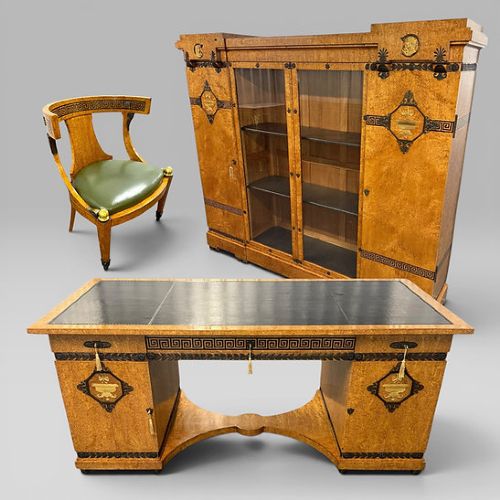
An antique french desk set brings the inkstands, trays, and garnitures of nineteenth-century writing tables directly into a modern room.
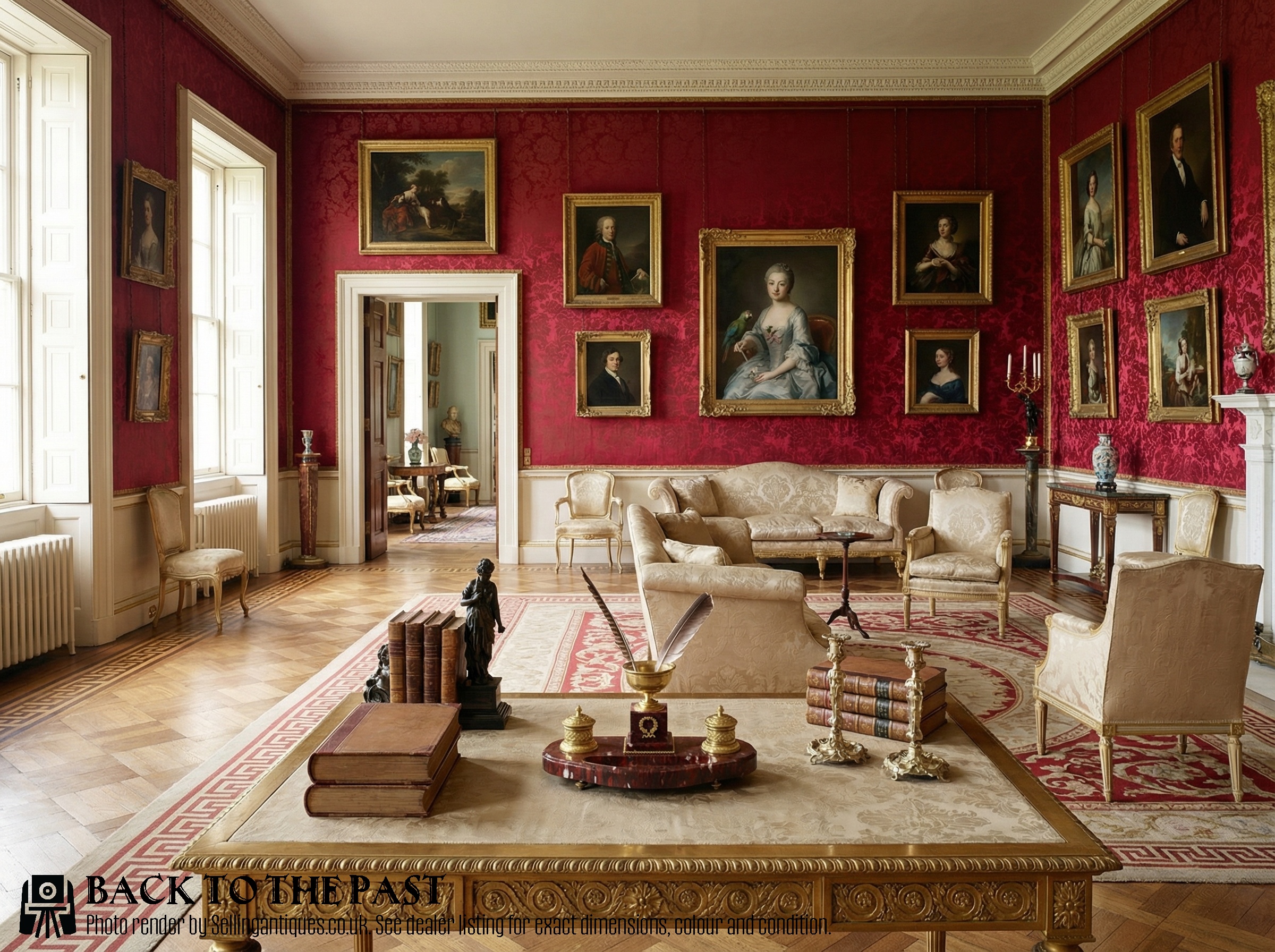
Antique French Desk Set
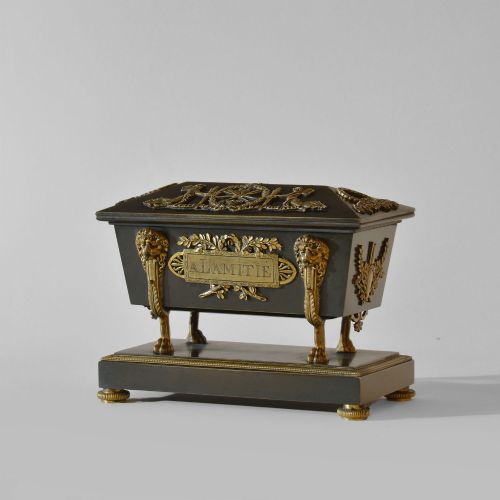
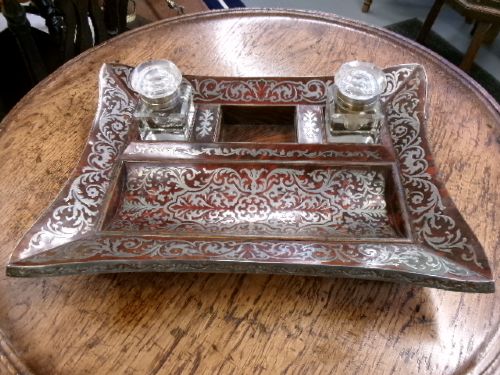
An antique french desk set gathers writing accessories onto a single platform, most commonly found as inkstands with fitted glass or bronze inkwells paired with matching trays. These pieces stem from the nineteenth century, ranging from the ornate gilt bronze and ormolu of the Napoleon III period to tortoiseshell-inlaid boullework.
Beyond simple inkwells, these assemblies often incorporate stationery racks, letter clips, and complementary candlesticks to form a complete desktop garniture. The search phrase covers both modest brass-mounted marble stands and larger architectural compendiums designed for nineteenth-century studies.
Collectors frequently encounter pieces spanning the eighteenth to the early twentieth century, with the 1850s and 1860s strongly represented. While some sets sit on simple mahogany or walnut bases, the more elaborate examples utilise heavy marble or champleve enamel.
Materials and construction
Foundry-cast bronze and ormolu form the structural chassis for many nineteenth-century sets, often chased by hand after casting to sharpen the decorative foliage. Ormolu provides a bright, mercury-gilt surface that contrasts against dark patinated bronze or natural stone.
Marble and glass feature heavily in the base plates and inkwell inserts, providing a stable, weighty foundation for daily writing tasks. Walnut, mahogany, and boulle tortoise-shell inlay add rich wood tones to the desktop ensembles.
Antique French Desk Set Retail Price Guide 2026
Typical asking prices for french desk set among the pieces listed under this phrase on Sellingantiques today, from the lower quarter to the upper quarter. They describe what is for sale here now, not the wider market.
Listings feature items spanning the 18th century through the Art Deco period, constructed from brass, marble, glass, and gilt bronze.
Assessing craftsmanship
Quality rests in the crispness of the bronze chasing and the integration of the materials within the stand. Superior pieces display deep, clean relief work on mounts and secure, well-fitted glass inserts rather than generic replacements.
The sophistication of the secondary decoration, such as intricate champleve enamel work or multi-toned tortoise-shell and brass inlay, separates standard production from exceptional studio output.
Edmé Samson·Mercier Frères·Albert Marionnet·J.M. Paillard
The Antique French Desk Set Glossary
- Ormolu
- Gilded bronze produced by applying a mercury and gold amalgam to a bronze base and heating it until the mercury vaporised. This technique creates a durable, golden surface seen on nineteenth-century mounts.
- Boulle work
- A style of marquetry utilising brass and tortoiseshell inlaid in contrasting patterns, named after the cabinetmaker André-Charles Boulle. It appears on desk stands from the mid-nineteenth century.
- Champleve
- An enamelling technique where troughs are dug into a metal surface and filled with vitreous enamel before firing. It decorates the metal frames of nineteenth-century inkstands.
- Garniture
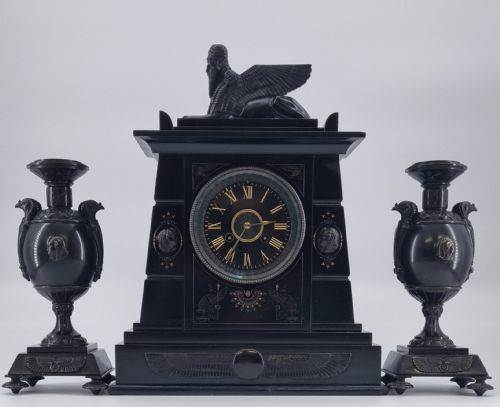
- A set of matching decorative objects, such as an inkwell accompanied by candlesticks or vases, designed to be displayed together on a desk or mantel.
- Inkstand
- The central tray or stand holding one or more inkwells, often featuring depressions for dipping pens and storage for sanders or wafers.
Antique French Desk Set: Frequently Asked Questions
How do I date an inkstand?
Dating relies on the prevailing design vocabulary, such as the heavy classical proportions of the Empire period versus the ornate naturalism of the Victorian Rococo Revival. Material combinations, such as champleve enamel paired with gilt bronze, point towards the later decades of the nineteenth century.
Maker signatures or foundry marks stamped into the bronze or brass bases provide the most precise chronological anchor for specific pieces.
How were these sets used?
These assemblies served as the functional heart of a nineteenth-century writing desk, holding liquid ink, dry sand for blotting, and sealing wax. They were kept charged for daily correspondence, ledger entry, and letter writing.
Because fountain pens were not yet common, the inkwell and pen tray were absolute necessities for anyone maintaining a household or business correspondence.
How do I clean bronze mounts?
Maintenance requires only gentle dusting with a soft, dry brush to prevent dirt accumulation in the recessed chasings of the ormolu. Moisture and chemical polishes strip the historic patina and damage the underlying mercury gilding.
Marble bases benefit from a wipe with a damp cloth followed by immediate drying to preserve the stone surface.