







Walnut Desk Set
A walnut desk set brings tactile warmth to a workspace through figured grain, polished brass, and fitted glass inkwells.
Walnut Desk Set
A walnut desk set groups writing accessories, inkstands, stationery cases, and slope boxes into a unified desktop arrangement. These pieces date predominantly from the Victorian period through to the early twentieth century, reflecting the rigorous correspondence habits of their era.
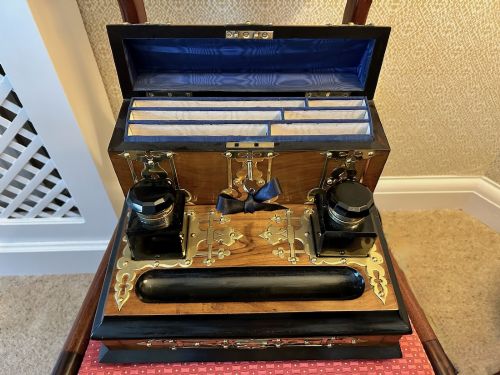
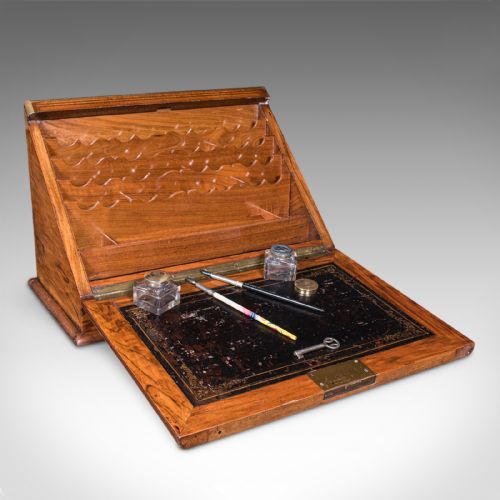
The objects take several forms, ranging from double-sided desk sets and portable writing slopes to compartmentalised stationery boxes and inkstands fitted with cut glass bottles. Burr walnut and figured timber veneers dominate the surfaces, selected for their dramatic natural patterns.
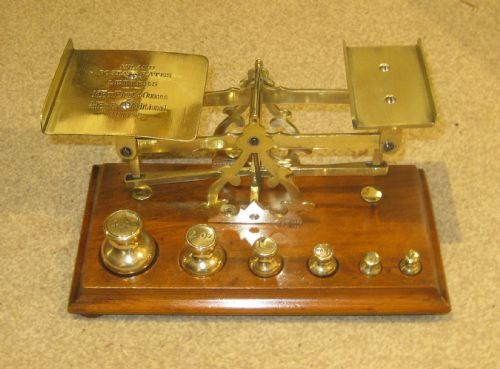
Makers integrated functional hardware in brass, malachite, and porcelain to elevate simple writing tools into ornamental desk garnitures. Some examples incorporate specialist elements such as magnifying glasses, postal scales, or novelty carvings from the Black Forest.
Materials and construction
Craftsmen built these pieces using solid walnut and applied decorative burr walnut veneers to display intricate swirling grain patterns across flat surfaces. Carved details appeared on foliage motifs and figural Black Forest ornaments, requiring patient hand-chiselling by skilled woodworkers.
Mounts, hinges, and carrying handles were cast and fashioned from brass, often securing heavy cut glass inkwells within fitted wooden compartments. Leather and fabric inserts provided a smooth writing surface for the ink-and-quill user, framed by the rigid timber carcase.
Walnut Desk Set Retail Price Guide 2026
Typical asking prices for walnut desk set among the pieces listed under this phrase on Sellingantiques today, from the lower quarter to the upper quarter. They describe what is for sale here now, not the wider market.
Black Forest carvers immortalised loyal hounds and climbing bears in walnut, turning functional inkwells into startled desktop companions.
Determinants of quality
Quality rests upon the selection of timber figures, where rich burr walnut veneer with deep chatoyancy commands greater attention than plain, straight-grained walnut boards. The precision of the joinery and the weight of the cast brass mounts further distinguish standard utility pieces from grander salon examples.
Complete sets retain their original matching cut glass inkwells, stoppers, and fitted interior trays without replacement parts or mismatched components. The integration of decorative embellishments, such as hand-painted porcelain plaques or malachite panels, elevates the ambition of the original commission.
Sampson Mordan and Co
The Walnut Desk Set Glossary
- Burr walnut
- A prized timber harvested from the gnarled growths on walnut trees, yielding complex swirling grain patterns. Cabinetmakers sliced this wood into thin veneers to ornament the most visible surfaces of writing boxes and desk stands.
- Writing slope
- A portable box with a slanted lid designed to hold writing paper, pens, and correspondence while providing an angled surface for writing. When opened, the hinged lid reveals a baize or leather-lined writing bed and hidden compartments.
- Inkstand
- A desktop tray or stand specifically designed to hold one or more inkwells alongside pen troughs and sanders. They range from simple brass-bound walnut blocks to elaborate carved figures.
- Stationery case
- An upright desktop cabinet with tiered partitions meant for organising envelopes, cards, and writing paper. These cases frequently match the timber and brass mounts of accompanying inkstands.
- Partners desk
- A large freestanding desk finished on all sides to allow two people to sit opposite each other. These architectural pieces often feature pedestal drawers and leather inset writing surfaces.
Walnut Desk Set: Frequently Asked Questions
What is included in a walnut desk set?
A standard walnut desk set typically comprises a matching inkstand with cut glass inkwells, a stationery box, and sometimes a matching writing slope or blotter. These elements were designed to sit together on a library table or partners desk.
Additional items might include brass-mounted book holders, letter scales, or novelty carved elements that share the same timber and decorative vocabulary.
How do I date a Victorian walnut desk set?
Dating relies on the prevailing style markers, lock mechanisms, and construction techniques visible across the walnut carcase. Mid-nineteenth-century examples often feature heavy brass mounts and Rococo Revival curves, while later Victorian pieces lean toward simpler architectural forms.
The presence of registered design marks or specific maker stamps on hardware helps pinpoint the decade of manufacture.
How should I care for antique walnut wood?
Walnut benefits from stable room humidity and protection from direct sunlight to prevent the timber and burr veneers from drying out or fading. Gentle dusting with a dry, soft cloth preserves the polished finish without stripping the historical patina.
Avoid using silicone-based polishes or excessive moisture, which can degrade old French polish and damage fabric or leather inserts.
Are cut glass inkwells original to these sets?
Original inkwells match the precise dimensions of the fitted wooden apertures and share the wear patterns of the main desk set. Cut glass bottles with heavy star-cut bases are typical of quality nineteenth-century production.
Replacements are common due to breakage over decades of use, though well-matched period glass preserves the integrity of the piece.