


Marble Desk Inkstand
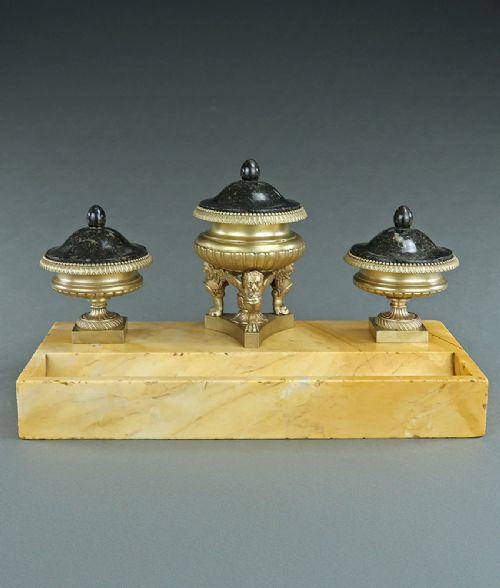
These marble desk inkstand pieces combine heavy stone bases with cast metal wells, offering a weighty and decorative centrepiece for a traditional desk.
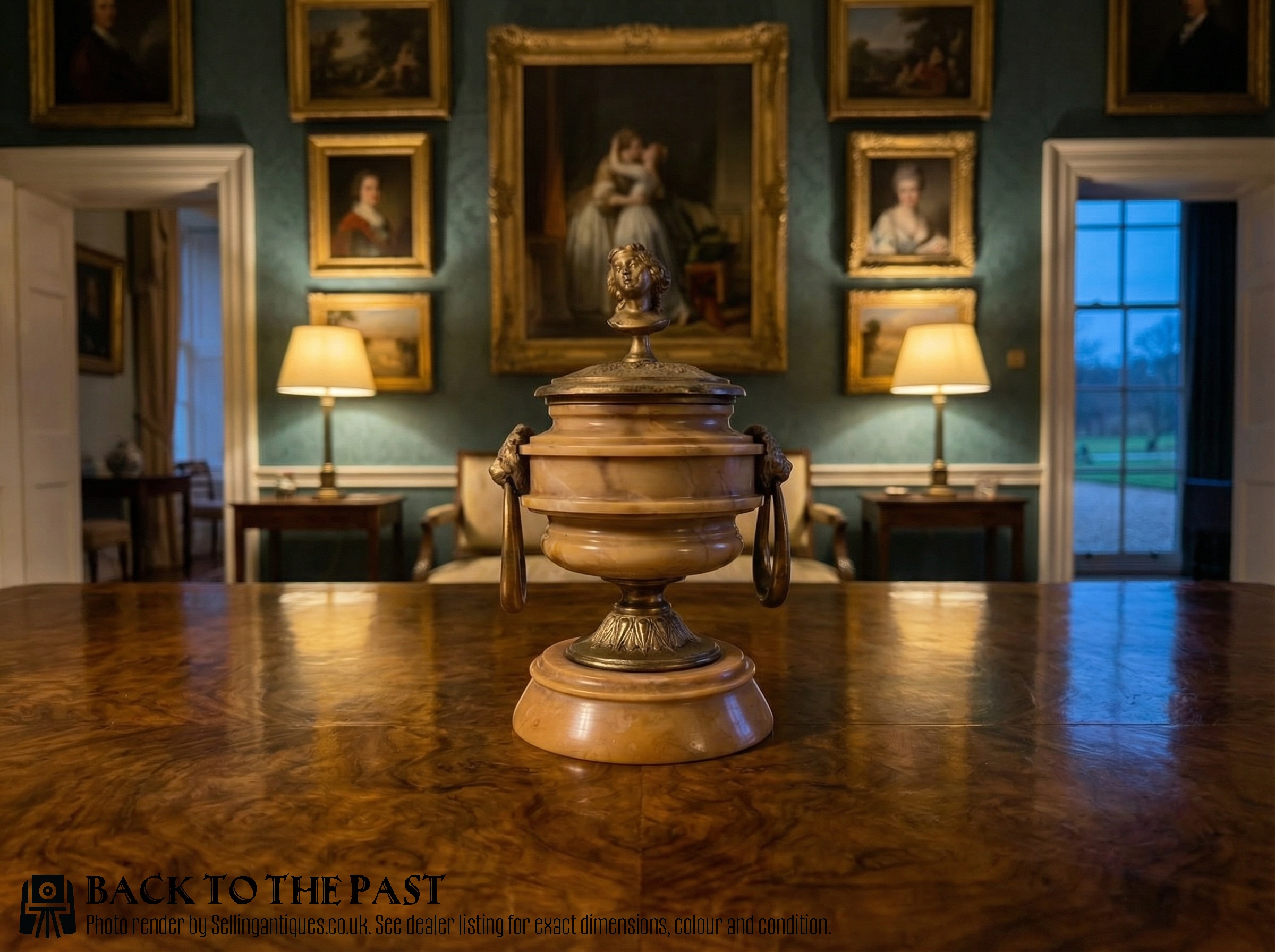
Marble Desk Inkstand
A marble desk inkstand provides a solid stone foundation for holding writing ink, often featuring fitted recesses for pens and hinged lids to prevent evaporation.
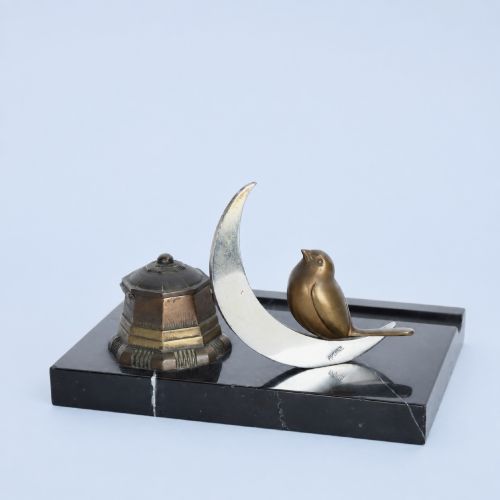
The pieces on this page span the nineteenth century through the Art Deco era, encompassing French Empire, Neoclassical, and Victorian styles alongside later geometric designs.
Common forms range from simple rectangular trays in black or green stone to elaborate architectural compositions mounted with cast figures and lidded glass reservoirs.
Materials and construction
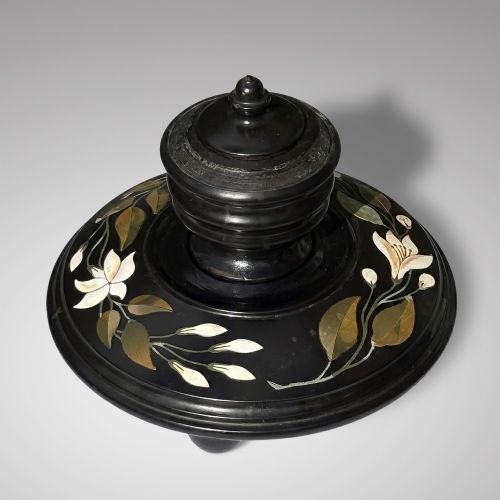
Craftsmen shaped natural stones such as Sienna marble, onyx, lapis lazuli, and Ashford marble into heavy rectangular or shaped bases, sometimes incorporating inlaid pietra dura work or carved cameos.
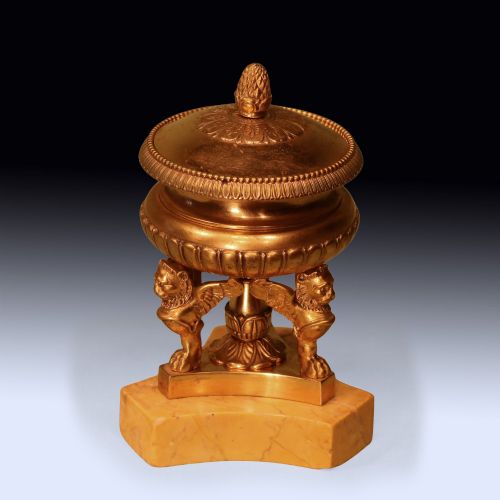
Metal mounts, figures, and inkwell lids were produced using bronze, brass, and ormolu, employing techniques like gilt casting and cold painting to add decorative contrast against the stone.
Evaluating quality and execution
Franz Bergmann·Lefebvre of Belgium·Albert Marionnet·Jules Dalou·Zimmermann
The Marble Desk Inkstand Glossary
- Ormolu
- Gilded bronze used extensively for decorative mounts on nineteenth-century furniture and desk accessories. The process involves applying a gold amalgam to the bronze surface before heating.
- Encrier
- The French term for an inkstand or inkwell set. These objects often include pen trays and matching lidded containers.
- Grand Tour
- A cultural journey undertaken by wealthy young Europeans in the eighteenth and nineteenth centuries. Souvenirs from these trips often included carved marble and bronze desk items.
- Pietra dura
- An artistic technique using cut and fitted polished coloured stones to create pictorial images. It appears on luxury marble desk bases.
- Ashford marble
- A Derbyshire limestone used for inlay work rather than true metamorphic marble. It is frequently found in nineteenth-century decorative desk pieces.
Marble Desk Inkstand: Frequently Asked Questions
How do I clean a marble desk inkstand?
Dust the stone regularly with a soft dry cloth and avoid using acidic household cleaners or excessive water, which can etch the polished surface and damage metal mounts.
For the bronze or ormolu elements, use a gentle dry brush to clear debris from crevices without disturbing any remaining gilt finish.
Can I still use these for writing?
Most antique pieces function mechanically, but original glass or ceramic liners inside the metal wells often show hairline cracks or chips from centuries of use.
If you plan to use ink, insert a modern small glass vial inside the reservoir to protect the historic metal and stone from staining.
How do I date a marble inkstand?
Examine the style of the metal castings and the type of marble used, as Neoclassical and Empire pieces feature heavier classical motifs while Art Deco examples favour geometric lines.
Signatures or foundry marks stamped into the bronze elements can also pinpoint the active years of the maker or workshop.
Why are some stones inlaid?
Inlaid stones like lapis lazuli or coloured agates were employed by makers to elevate simple desk accessories into luxury display items for wealthy patrons.
This technique demonstrated the skill of the lapidary workshop and increased the visual contrast against the darker background marble.