




Brass Altar Candlestick Pair
These brass altar candlestick pair selections bring substantial ecclesiastical presence into domestic interiors through centuries of metalwork tradition.
Brass Altar Candlestick Pair
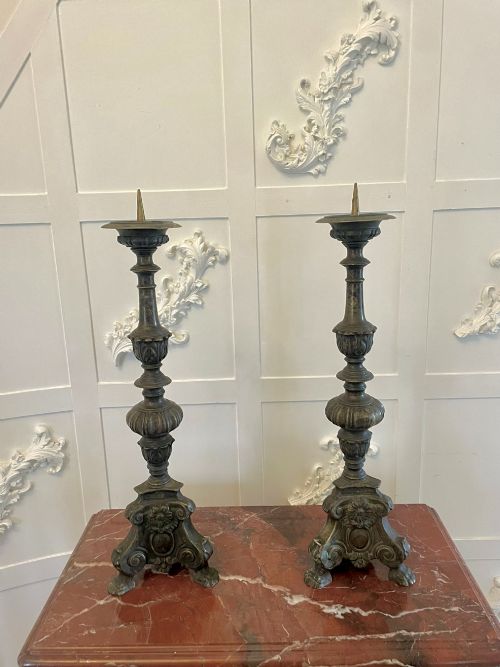
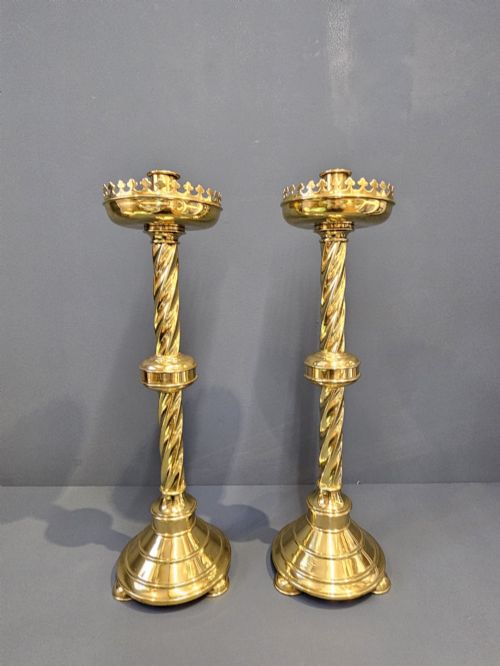
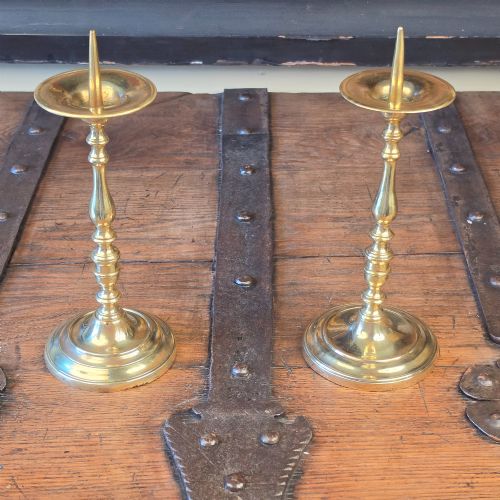
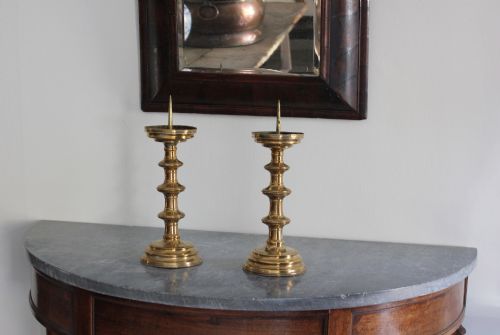
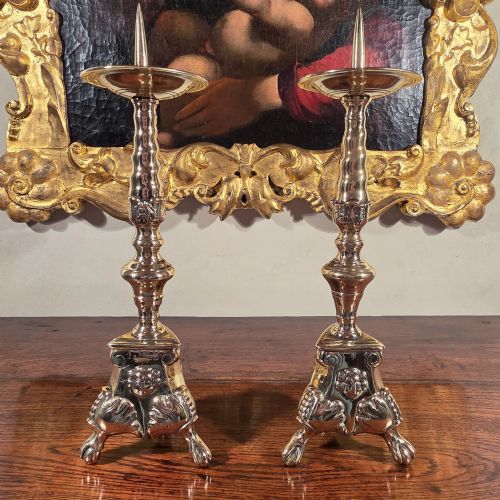
A brass altar candlestick pair comprises matched ecclesiastical or church metalwork pieces designed to hold large candles or prickets upon altars and liturgical spaces. The examples found here span from the nineteenth-century Gothic Revival and Victorian periods back to seventeenth-century styles and earlier interpretations.
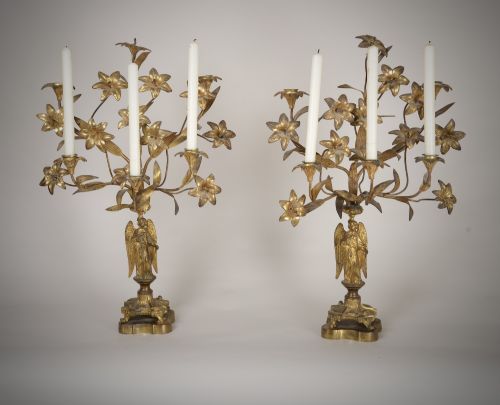
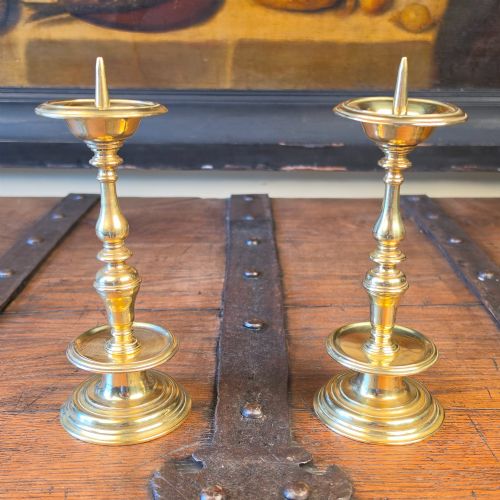
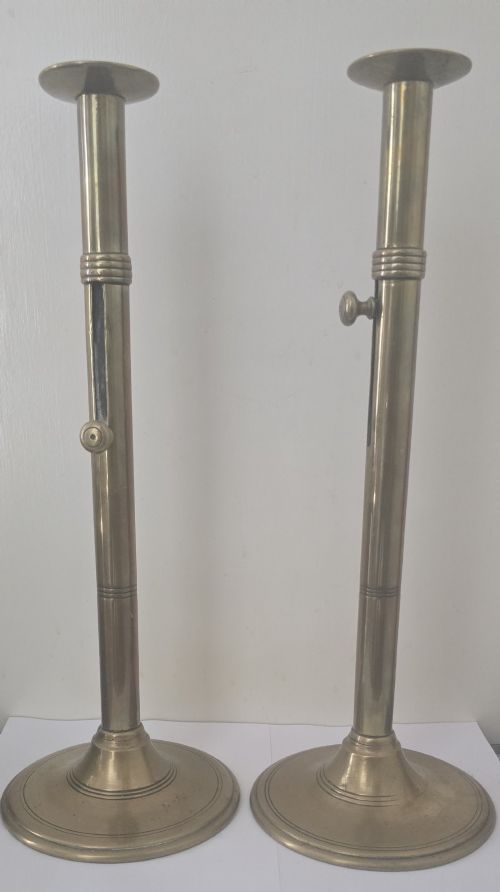
Most items you encounter on this page date from the Victorian era and the nineteenth century, often reflecting heavy church or ecclesiastical origins alongside later Edwardian and Amsterdam School variants. These objects range from standard socket candlesticks to spiked pricket designs and multi-branched candelabra.
Beyond traditional altar use, many pairs have been adapted over time into table lamps or fitted with electrical components while retaining their original brass, gilt-brass, or bronze columns and bases.
How they were made
Makers primarily utilised cast brass, wrought iron, and bronze, shaping the metal through traditional founding and turning techniques to achieve substantial weight and architectural profiles. Gilt-brass and ormolu finishes appear on select French and ecclesiastical pieces, adding surface reflection and tonal depth.
Construction methods often involved heavy casting for stability, complemented by threaded joints, side ejectors, or turned oak and barley twist elements in mixed-material pieces.
Listings here feature materials including cast brass, bronze, wrought iron, oak, and ormolu across various centuries.
What varies in quality
Subtle distinctions in metal thickness, crispness of cast ornamentation, and the integrity of original patination separate utilitarian church items from finer decorative examples. Heavier castings and deeply articulated Gothic Revival detailing indicate superior workshop production.
The presence of untouched original surfaces, authentic period mounting components, and unaltered structural proportions distinguish pieces that retain their historical character from those heavily modified by later conversions.
The Brass Altar Candlestick Pair Glossary
- Pricket
- A sharp metal spike on a candlestick designed to secure the base of a large candle rather than inserting it into a socket.
- Gothic Revival
- An architectural and decorative style popular during the nineteenth century that mimics medieval pointed arches, tracery, and structural motifs.
- Side ejector
- A mechanical lever or slot built into the stem of a candlestick to push out remaining candle wax and stub remnants.
- Amsterdam School
- An early twentieth-century architectural and design movement characterised by expressive forms, traditional craft, and heavy metal detailing.
Brass Altar Candlestick Pair: Frequently Asked Questions
How do I light my home with altar candlesticks?
These candlesticks accommodate pillar candles or heavy wax tapers placed securely upon their drip pans or prickets. Ensure they stand on stable surfaces away from drafts to manage the height of tall church pieces.
Many pairs have also been safely adapted as table lamps, providing ambient illumination while preserving the original historical metalwork columns.
Can I polish antique brass candlesticks?
Most collectors prefer to leave the accumulated patination and darker oxidation undisturbed, as it records the age and history of the metal. Aggressive cleaning can remove the desirable historic surface.
If cleaning is necessary, use a non-abrasive cloth to gently remove surface dust without stripping the underlying brass character.
How do I identify Victorian Gothic Revival pieces?
Look for architectural motifs such as quatrefoils, trefoils, pointed arches, and heavy knopped stems reminiscent of medieval cathedral stonework. These details are frequently cast directly into the brass base and shaft.
Such characteristics help distinguish nineteenth-century revival church pieces from simpler domestic table candlesticks.
Were these candlesticks originally used in churches?
Many examples on this page originated in ecclesiastical settings, serving as altar furnishings for liturgical services and ceremonial lighting. Their heavy construction and pricket tops were specifically designed for large church candles.
Over time, numerous ecclesiastical pairs transitioned into domestic interiors as decorative objects or lighting conversions.